
صناديق البريد المخصصة can reduce shipping costs when they replace oversized stock boxes without compromising protection. The distinction is between a box’s actual weight and its dimensional, or DIM, weight: one reflects what the parcel weighs on a scale; the other reflects the space it occupies in transit. For brands shipping lightweight products, the box’s exterior dimensions may matter more to the invoice than a small reduction in cardboard weight.
Actual Weight vs. DIM Weight
Carriers generally compare a parcel’s actual weight with its calculated DIM weight and use the higher figure as its billable weight. For U.S. shipments, FedEx publishes a DIM divisor of 139 cubic inches per pound. UPS lists 139 for Daily Rates but 166 for Retail Rates, so the applicable service and account terms must be checked before estimating savings.
| Measure | What it captures | Packaging implication |
|---|---|---|
| Actual weight | The packed parcel’s weight on a scale | Removing material may help when actual weight determines the charge. |
| DIM weight | The space occupied by the parcel | Reducing exterior length, width, or height may help when DIM weight determines the charge. |
| Billable weight | The higher applicable weight | A smaller box saves on weight-based charges only if it lowers this figure enough to affect the rate. |
For a 139 divisor, calculate DIM weight as length × width × height ÷ 139, using inches and the carrier’s measurement and rounding rules. Do not calculate from the product dimensions or the box’s internal cavity: the shipped parcel’s outside dimensions are what matter.
How Box Size Changes Billable Weight
Consider a hypothetical product that weighs 2 lb once packed. A stock mailer measuring 14 × 10 × 6 inches has a volume of 840 cubic inches. At a 139 divisor, its DIM weight rounds up to 7 lb. A redesigned 12 × 9 × 4-inch mailer has a volume of 432 cubic inches and a DIM weight of 4 lb. The example reduces billable weight from 7 lb to 4 lb, assuming those are the measured exterior dimensions and the same divisor applies. It does not establish a dollar saving: the shipping price still depends on the carrier, service, destination, account terms, and other charges.
This is why shaving a little paperboard weight may accomplish less than removing unnecessary height. Conversely, making a box smaller will not necessarily lower its shipping charge if actual weight already exceeds DIM weight, or if both designs fall in the same applicable price tier.
Check the Rounding Boundary
A design that measures just over a whole inch deserves special attention. UPS says to round package measurements up to whole inches for its DIM calculation. A nominal 12-inch side that measures 12.1 inches can therefore be treated as 13 inches. Prototype dimensions should leave room for manufacturing tolerances, packed contents, and any outward bulge—not merely fit a target on a dieline.
Custom Mailers vs. Stock Boxes
A stock box is often a sensible starting point for low or unpredictable order volumes. A custom mailer becomes more compelling when a product or recurring product bundle ships frequently enough for its dimensions to be optimized and tested.
| Decision factor | Stock mailer box | Right-sized custom mailer box |
|---|---|---|
| Product fit | May leave substantial unused space | Can be designed around the packed product and required protection |
| DIM exposure | A larger exterior can raise billable weight | A smaller exterior can reduce DIM weight |
| Packing process | May require more void fill | Can simplify a repeatable packing configuration |
| Upfront commitment | Usually easier to buy in small quantities | May require sampling, tooling, or a larger order |
| Best use | Changing assortments or early-stage testing | Stable, repeatable SKUs with verified shipping volume |
Right-sized does not mean tight-fitting at any cost. Products still need appropriate cushioning and room to avoid damage. UPS advises using a suitable rigid box and protective material; its packing guidance also emphasizes filling empty spaces to limit movement.
A Practical Design Test
From a packaging-development perspective, the most useful question is not “How small can we make the box?” It is “What is the smallest reliably shippable exterior size?” That requires a physical sample, not just a rendering.
1. Group orders by packing configuration. Identify the single items and bundles that account for repeat shipments.
2. Measure packed contents. Include inserts, protective wraps, paperwork, and any product variation.
3. Prototype several mailer sizes. Compare protection, assembly time, material use, and exterior dimensions.
4. Pack and measure real samples. Check the longest outside points after the box is closed; watch for bulging.
5. Calculate both weights. Apply the divisor and rounding rules in the relevant carrier agreement, then compare DIM weight with actual weight.
6. Validate the economics. Compare quoted freight charges alongside unit-box cost, damage risk, and fulfillment effort.
A useful pilot records the same information for each design: packed dimensions, scale weight, billable weight, packing time, and any transit damage. This prevents an apparent DIM improvement from hiding a slower packing process or weaker protection.
An Often-Missed USPS Threshold
Carrier rules should shape the comparison. USPS says DIM pricing applies to qualifying packages larger than one cubic foot, or 1,728 cubic inches, and publishes a 139 divisor for that calculation. A custom mailer that crosses below this threshold may therefore affect a USPS cost estimate differently from a similarly sized parcel assessed under another carrier’s rules. Confirm the current requirements for the specific USPS product before quoting a customer or projecting savings.
This also illustrates why a universal claim such as “custom boxes cut shipping by 30%” is not credible without shipment-level data. Packaging affects the inputs; the carrier’s rate structure determines the charge.
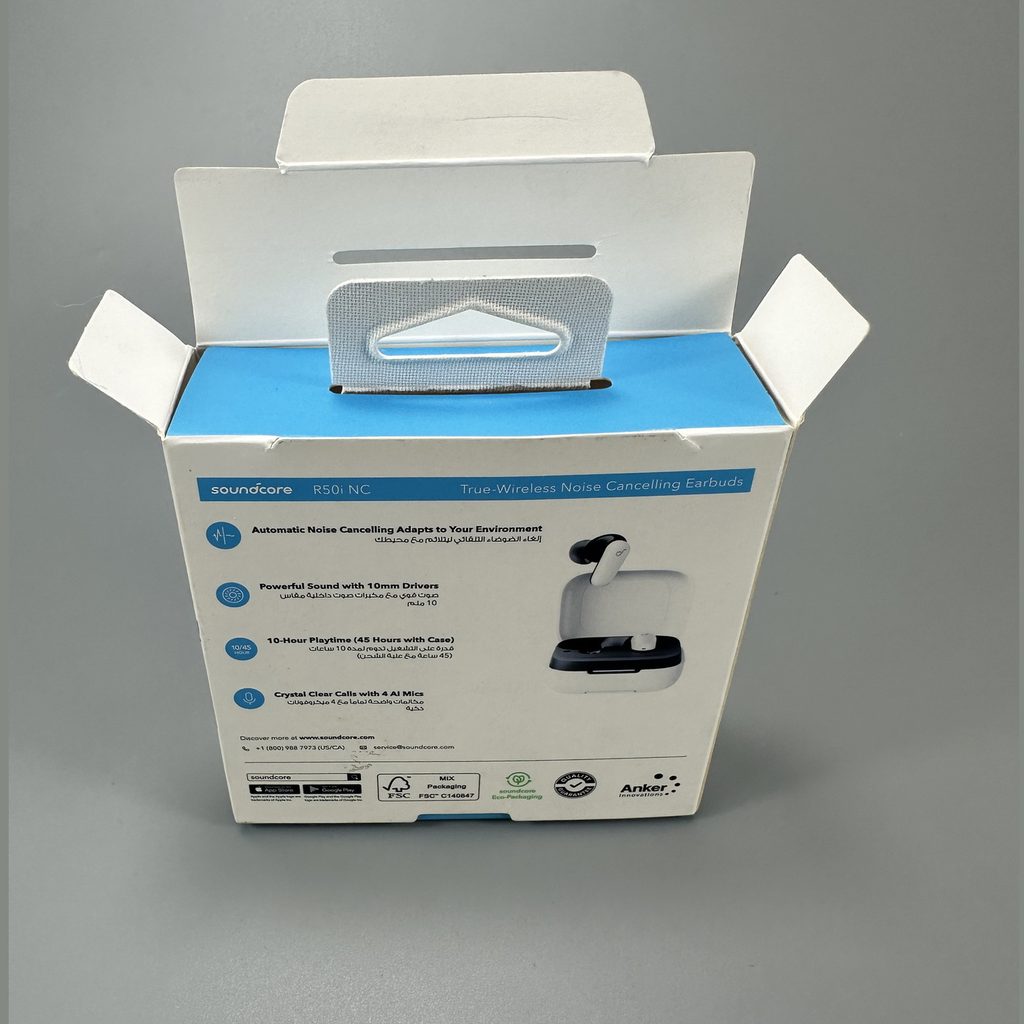
Request a Right-Sizing Review
Bonito Packaging manufactures custom paper packaging, including custom boxes. Send us your current mailer dimensions, packed product details, and shipping configuration to discuss a prototype designed around product protection and potential DIM-weight reduction. Treat any projected freight saving as a hypothesis until the finished box has been packed, measured, and rated under your carrier terms.
الأسئلة الشائعة
1. Do custom mailer boxes always reduce shipping costs?
No. They help when the new design changes the applicable billable weight or another priced dimension without creating offsetting costs.
2. What is the difference between DIM weight and actual weight?
Actual weight comes from the packed parcel on a scale. DIM weight is calculated from its exterior volume using the applicable divisor.
3. Which dimensions should a buyer give a box manufacturer?
Provide product and protection requirements for design, then verify the packed box’s exterior dimensions for shipping estimates.
4. Can a box be too small?
Yes. Insufficient space for protection or a bulging closure can undermine the design; cushioning and a sound outer box remain important.
5. Is 139 the divisor for every shipment?
No. FedEx publishes 139 for the shipments described in its U.S. guidance, while UPS lists different divisors for Daily and Retail Rates. Check the applicable terms.
6. What should I send Bonito Packaging for a quote?
Share the product dimensions, packed weight, order mix, protection requirements, estimated volume, target exterior dimensions, and a physical sample if available.
References
1. UPS, “[Shipping Dimensions and Weight].” DIM formula, measurement guidance, and Daily versus Retail divisors. [ups]
2. FedEx, “[What Is Dimensional Weight?].” Billable-weight comparison and published divisor. [fedex]
3. USPS, “[Mail & Shipping Services].” One-cubic-foot threshold and DIM calculation. [usps]
4. USPS, “[Policies, Procedures, and Forms Updates].” Updated DIM measurement and calculation provisions. [about.usps]
5. UPS, “[How to Pack a Box or Pallet for Shipping].” Box, cushioning, and packing guidance. [ups]
 English
  Spanish
  French
  German
  Russian
  Japanese
  Portuguese
  Arabic