
Content Menu
● Why Limited-Edition Sneakers Need Custom Packaging
>> What buyers expect from premium sneaker packaging
● Custom Packaging vs. Rigid Box: What Is the Difference?
>> Core comparison for sneaker brands
● The Rigid Box Advantage for Sneaker Drops
>> 1. Stronger protection for collector-grade products
>> 2. Higher perceived value at the moment of unboxing
>> 3. More room for brand storytelling
>> 4. Better customization for complex product kits
● Choosing the Right Rigid Box Style
>> Shoulder-and-neck rigid boxes
>> Magnetic closure rigid boxes
● Design Details That Make a Rigid Box Feel Premium
● Sustainability Without Losing the Premium Feel
>> Practical sustainability principles
● A Practical Development Process for Custom Sneaker Packaging
>> Step 1: Define the release objective
>> Step 2: Confirm product dimensions and components
>> Step 3: Select the box structure
>> Step 4: Develop the graphic concept
>> Step 5: Build and review a physical sample
>> Step 6: Test the full shipping configuration
>> Step 7: Plan production and delivery
● When Is a Rigid Box Worth the Investment?
● Create a Collectible Sneaker Packaging Experience
>> 1. What is the best box type for limited-edition sneakers?
>> 2. Are rigid boxes better than standard shoe boxes?
>> 3. Can a custom sneaker rigid box include accessories?
>> 4. Can rigid sneaker boxes be environmentally responsible?
>> 5. What finishing options work best for premium sneaker packaging?
>> 6. Do rigid boxes need an outer shipping carton?
>> 7. How early should a sneaker brand start custom packaging development?
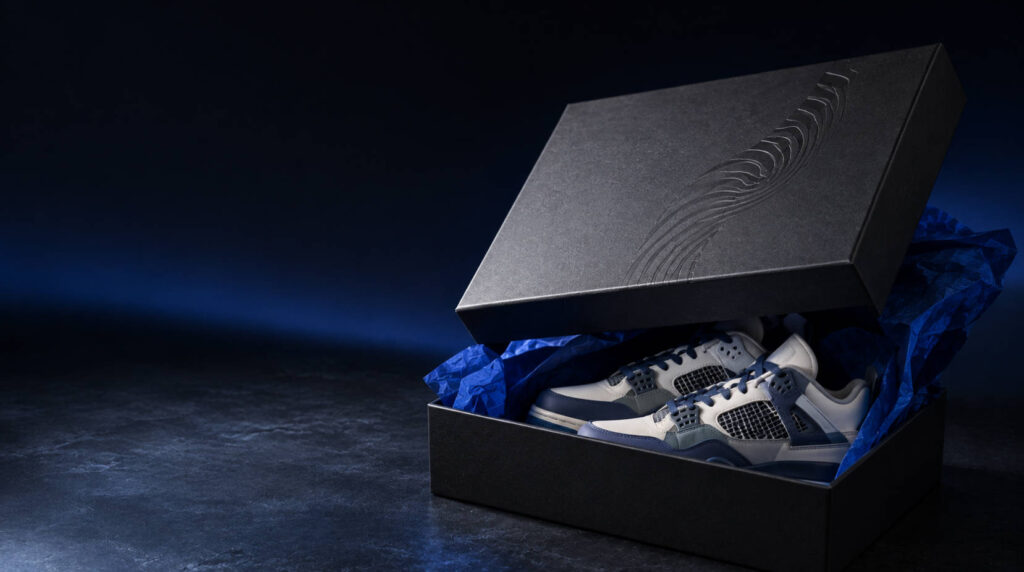
Limited-edition sneakers are not ordinary footwear. They are collectible products, cultural objects, collaboration assets, and, for many buyers, long-term display pieces. That is why تغليف مخصص has become a strategic part of sneaker branding—not simply a container for shoes.
For premium drops, collaborations, anniversary releases, and collector editions, a standard folding carton may protect the product at a basic level. However, it often lacks the structural strength, tactile quality, and storytelling potential expected from a high-value release. A صندوق جامد provides a more premium solution by combining durable construction, elevated presentation, customization freedom, and stronger perceived value.
At Bonito Packaging, we see a consistent pattern across premium paper packaging projects: when the product has scarcity, emotional value, or a higher retail price, the packaging must do more than hold the item. It must create anticipation before the box is opened and reinforce the buyer’s decision after the purchase.
Why Limited-Edition Sneakers Need Custom Packaging
A limited-edition sneaker release is usually built around a story. It may celebrate an athlete, a city, an artist, a sports moment, a music collaboration, or a heritage design. The packaging should continue that story rather than interrupt it.
A generic shoe box can make a rare product look interchangeable. By contrast, custom sneaker packaging creates an experience that signals intentionality and exclusivity.
For collectors, the box may be retained for years. It can become part of the product archive, displayed beside the shoes, photographed for social media, or included when the product is resold. This makes packaging condition particularly important in the sneaker market.
What buyers expect from premium sneaker packaging
Custom packaging for limited-edition sneakers should help a brand deliver the following:
– Strong first impressions at retail, during unboxing, and in online content
– Better protection against crushing, scuffing, and movement during handling
– A distinctive visual identity that supports the release story
– A more collectible and display-worthy product presentation
– Premium details that justify higher perceived product value
– A memorable unboxing process for customers, influencers, and community members
– Practical internal organization for shoes, accessories, certificates, or collectible extras
The goal is not to make a box unnecessarily complicated. The goal is to build packaging that feels proportionate to the sneaker’s market position.
A limited run with a special retail price deserves packaging that communicates rarity. A rigid box can do this through material weight, structure, finishing, and thoughtful details that a basic carton may struggle to achieve.
Custom Packaging vs. Rigid Box: What Is the Difference?
“Custom packaging” and “rigid box” are closely related terms, but they are not interchangeable.
التعبئة والتغليف المخصص describes the broader process of creating packaging around a brand’s specific product, visual identity, dimensions, protection requirements, and customer experience goals. It can include folding cartons, corrugated mailers, paper bags, tissue paper, sleeves, inserts, hangtags, and rigid boxes.
A صندوق جامد, also known as a set-up box, is a premium box structure made with thicker paperboard and a decorative outer wrap. Unlike a folding carton, it is delivered in its final formed shape rather than requiring the customer to assemble it.
Core comparison for sneaker brands
| Decision Factor | Custom Folding Carton | Custom Rigid Box |
|---|---|---|
| Structural feel | Lightweight to moderate | Strong, substantial, and premium |
| Material construction | Usually foldable paperboard | Thick greyboard or chipboard with wrapped paper |
| Storage before packing | Space-efficient when flat | Requires more storage space when assembled |
| Brand perception | Suitable for standard releases | Better for premium, collectible, and limited editions |
| الحماية | Works for basic product protection | Better resistance to compression and deformation |
| Finishing options | Strong but more limited by structure | Excellent for embossing, foil, textured wraps, and layered details |
| Unboxing experience | Functional and familiar | More ceremonial, memorable, and gift-like |
| Cost level | More economical | Higher unit cost, but higher perceived value |
| Best use case | Core sneaker lines and high-volume programs | Collaborations, collector drops, VIP kits, and premium launches |
The important point is that a rigid box is not automatically the right answer for every sneaker project. It is the strongest fit when packaging needs to carry a meaningful share of the product’s premium value.
The Rigid Box Advantage for Sneaker Drops
For a limited-edition sneaker brand, a rigid box offers benefits that extend beyond appearance. Its value comes from the way structure, design, and user experience work together.
1. Stronger protection for collector-grade products
Sneakers can be damaged by compression, moisture exposure, internal friction, or poor stacking during transportation. While the shoe itself may survive a basic shipping process, the box can arrive dented, split, or crushed.
For collectors, damage to the packaging can reduce satisfaction immediately. In some resale situations, a damaged original box can also affect how buyers view product completeness and condition.
A rigid box uses thicker board than a standard folding carton. This creates a more stable shell that is better suited to warehouse handling, retail stacking, and delivery preparation.
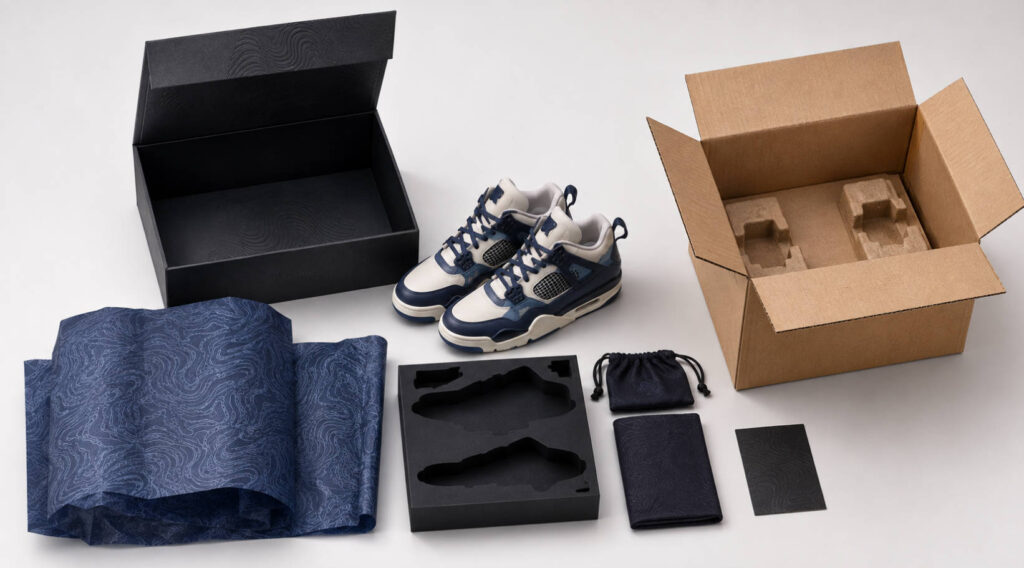
However, brands should not treat a rigid box as a replacement for shipping protection. The best approach is a layered packaging system:
1. Place the sneakers in a fitted rigid box with appropriate tissue paper or dividers.
2. Use internal inserts to reduce movement and prevent accessories from rubbing against footwear.
3. Add a corrugated mailer or outer shipping carton for e-commerce distribution.
4. Include appropriate void fill or corner protection where needed.
5. Test the complete packaging system before production approval.
A premium sneaker box should protect both the shoes and the experience. Customers should not open an expensive drop and find creased corners, loose accessories, or damaged graphics.
2. Higher perceived value at the moment of unboxing
Physical packaging affects how customers interpret a product before they even touch it. Weight, opening resistance, surface texture, print precision, and fit all contribute to perceived quality.
A rigid box creates a deliberate opening sequence. Lifting a lid, sliding open a drawer, releasing a magnetic flap, or removing a ribbon pull can turn packaging into part of the launch experience.
For sneaker brands, this matters because unboxing content is now part of product marketing. Customers regularly share new purchases through short videos, product photographs, livestreams, and community posts. A visually distinctive box gives buyers something worth sharing.
Premium custom packaging may include:
– A lift-off lid with a contrasting interior color
– A shoulder-and-neck rigid box for a refined reveal
– A drawer box with ribbon pull for collaborations or collector releases
– A magnetic closure rigid box for VIP gifting
– A printed interior message or campaign artwork
– Custom tissue paper with repeating brand graphics
– A numbered authenticity card
– A foam-free paperboard insert for accessories
– A branded envelope containing product storytelling material
The strongest designs avoid adding features only for decoration. Every element should have a purpose: protection, storytelling, collectibility, or convenience.
3. More room for brand storytelling
Limited-edition sneakers often have a deeper narrative than seasonal footwear. The release may reference a historical event, a local community, a fictional universe, or a creative collaborator.
A rigid box provides several surfaces for that story:
– Exterior wrap paper for the hero visual
– Lid interior for a campaign message
– Base interior for hidden artwork
– Tissue paper for secondary graphics
– Inserts for product specifications or care instructions
– Printed cards for edition details
– Embossed or foiled logos for a tactile brand signature
For example, a sneaker inspired by a night cityscape could use a dark navy textured wrap, blind embossing that resembles a topographic map, silver foil details, reflective accents, and tissue paper printed with a coordinate pattern. The packaging becomes an extension of the product concept instead of a separate object.
4. Better customization for complex product kits
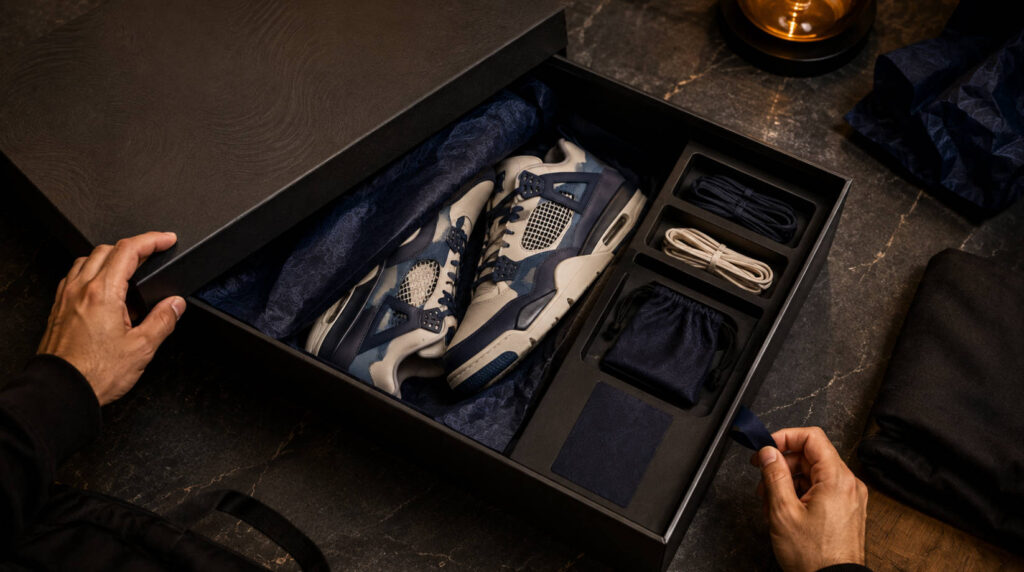
Many limited releases include more than a pair of shoes. A project may contain alternate laces, metal accessories, collectible pins, cleaning kits, apparel items, signed cards, or collaboration merchandise.
A standard box often leaves these items loose. This creates product movement, visual disorder, and a lower-end presentation.
Custom rigid boxes can be engineered with compartments, removable trays, paperboard dividers, sleeves, and layered inserts. This allows every object to have a defined place.
For Bonito Packaging clients, we recommend designing internal structures around the actual product set rather than adapting the product set to a standard box size. This improves fit, reduces unnecessary empty space, and supports a more polished reveal.
Choosing the Right Rigid Box Style
The right rigid box structure depends on the sneaker’s price point, edition size, retail channel, and storytelling concept.
Lift-off lid rigid boxes
This is the classic premium shoe box structure. The lid lifts fully from the base, creating a clean and familiar opening experience.
Best for: Premium releases, retail displays, heritage-inspired products, and medium-to-large production runs.
Key advantage: Strong visual impact with efficient production compared with more complex premium structures.
Shoulder-and-neck rigid boxes
This structure includes an inner “neck” between the base and lid. It creates a refined layered reveal and makes the box look more architectural.
Best for: Luxury sneaker collaborations, anniversary editions, and collector products.
Key advantage: A sophisticated opening experience with elevated shelf presence.
Drawer rigid boxes
A drawer box slides out from an outer sleeve, often with a ribbon pull. It provides a controlled reveal and works well for layered product sets.
Best for: Sneakers with accessories, premium gift sets, and narrative-driven collaborations.
Key advantage: Excellent for compartmentalized presentation and social-media-friendly unboxing.
Magnetic closure rigid boxes
This style uses concealed magnets to create a secure flap closure. It can feel highly premium, especially when paired with soft-touch lamination, textured papers, or foil details.
Best for: VIP gifting, influencer seeding, ultra-limited drops, and high-ticket products.
Key advantage: Strong perceived luxury, though brands should consider material separation and recycling communication during sustainability planning.
Design Details That Make a Rigid Box Feel Premium
The difference between average and exceptional custom packaging often comes from details. A high-end rigid box should feel intentional from every angle.
Material and wrap paper
Choose board thickness based on box size, product weight, expected stacking conditions, and the desired tactile experience. Larger sneaker boxes may require stronger board construction to maintain square corners and prevent deformation.
For wrap paper, brands can consider:
– Matte art paper for crisp printed artwork
– Uncoated paper for a natural, tactile finish
– Textured specialty paper for a more luxurious feel
– Kraft paper for an understated and natural visual direction
– Metallic paper for futuristic or performance-inspired releases
– Recycled-content paper options for sustainability-focused programs
Printing and finishing
Printing should support the release story, not overwhelm it. A limited-edition product often benefits from a focused design system with one hero visual element and a few carefully chosen finishing techniques.
Popular premium options include:
– Spot UV for contrast between matte and glossy areas
– Blind embossing for subtle tactile branding
– Debossing for a recessed logo or pattern
– Hot foil stamping for metallic highlights
– Edge painting for a polished boxed-set appearance
– Soft-touch lamination for a velvety surface
– Custom die-cut windows when product visibility is needed
– Metallic inks for technical or performance-themed launches
Use foil and lamination selectively. Over-finishing can make a package look busy and may complicate end-of-life material recovery.
Internal experience
The inside of the box is where the emotional payoff happens. Consider how the customer first sees the shoes, how they remove accessories, and whether the packaging remains useful after purchase.
Useful internal elements include:
– Branded tissue paper
– Paperboard shoe dividers
– Custom printed interior wraps
– Removable accessory trays
– Authenticity cards
– Limited-edition numbering
– Brand story cards
– QR codes leading to care instructions, product videos, or campaign pages
Sustainability Without Losing the Premium Feel
Premium packaging and responsible material decisions can work together. The key is to design for the entire packaging lifecycle, not only for visual impact.
Recent consumer research continues to show that recyclability is an important packaging consideration. Paper and cardboard are also widely associated with environmental benefits by consumers. For sneaker brands, this creates an opportunity to make responsible packaging choices without abandoning a premium unboxing experience.
Practical sustainability principles
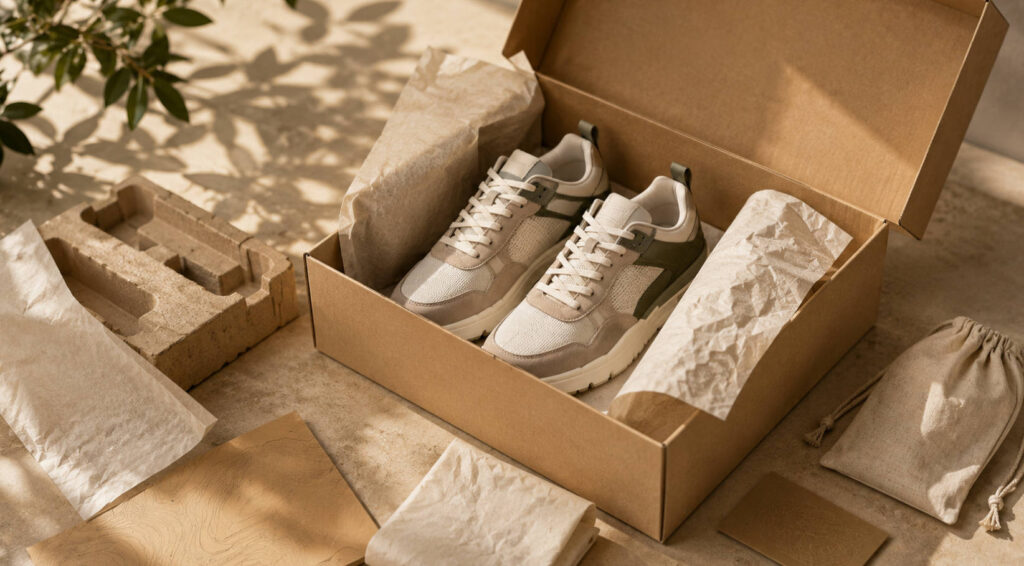
– Use right-sized boxes to reduce unnecessary material use.
– Specify recyclable paper-based components where practical.
– Consider recycled-content board and paper wraps.
– Avoid unnecessary plastic windows, foam inserts, and mixed-material decoration.
– Use paperboard dividers instead of plastic trays when product protection allows.
– Choose water-based inks or coatings where suitable for the project.
– Clearly communicate disposal instructions when the packaging contains mixed materials.
– Discuss FSC-certified material options with the packaging supplier when forest-based sourcing claims are required.
– Separate the premium product box from the transport packaging strategy.
Nike’s “One Box” approach offers a useful industry lesson: packaging innovation should consider both the customer experience and the volume of material used in e-commerce fulfillment. The goal for a limited-edition sneaker brand is not necessarily to copy one box format, but to evaluate whether each packaging layer has a clear purpose.
A Practical Development Process for Custom Sneaker Packaging
A beautiful concept can fail if the development process ignores logistics, fit, or production realities. The most successful custom packaging projects begin with clear technical information.
Step 1: Define the release objective
Start by identifying the role of the packaging.
Is it designed for a retail launch, online drop, VIP gifting, influencer seeding, or collector resale? The answer affects the structure, budget, shipping requirements, and finish selection.
Step 2: Confirm product dimensions and components
Provide accurate measurements for the shoes, tissue paper, accessories, product cards, and any additional merchandise. Include the desired orientation of the sneakers inside the box.
A well-fitted box improves presentation and reduces movement.
Step 3: Select the box structure
Choose between a lift-off lid, drawer, shoulder-and-neck, magnetic closure, or another specialized design. This decision should be based on user experience and operational practicality—not only visual preference.
Step 4: Develop the graphic concept
Create a hierarchy for exterior branding, interior storytelling, limited-edition information, and regulatory content. Make sure the design remains readable after finishing processes such as embossing or foil stamping.
Step 5: Build and review a physical sample
A sample is essential. Review color accuracy, corner quality, lid fit, insert performance, material texture, and opening experience before approving mass production.
Step 6: Test the full shipping configuration
A rigid box is a primary presentation package. For e-commerce, it should be evaluated together with the outer mailer and protective materials. ISTA-style parcel simulation testing can help brands assess shipping risk under realistic distribution conditions.
Step 7: Plan production and delivery
Confirm quantities, production lead time, shipping method, storage conditions, and destination requirements early. Limited-edition launches often operate on fixed release dates, so packaging timing must align with product fulfillment.
When Is a Rigid Box Worth the Investment?
A rigid box is most valuable when it supports a business objective larger than basic containment.
Choose custom rigid boxes when your sneaker release has one or more of these characteristics:
– A premium or luxury retail position
– A low-volume, high-value limited edition
– A major collaboration with an artist, athlete, or cultural partner
– Accessories requiring organized internal compartments
– Strong resale or collector appeal
– An influencer, media, or VIP seeding strategy
– A story-led campaign requiring more than basic printed graphics
– A product launch where unboxing is part of the marketing plan
For standard, high-volume footwear programs, a customized folding carton may deliver the better cost-to-value balance. For limited edition sneakers, however, a rigid box can turn packaging into a brand asset that supports product desirability, customer satisfaction, and long-term recall.
Create a Collectible Sneaker Packaging Experience
The best custom packaging for limited-edition sneakers does not rely on expensive finishes alone. It combines structural protection, thoughtful material selection, clear visual storytelling, and a smooth unboxing journey.
A rigid box gives sneaker brands the physical presence needed to make a launch feel rare. It can protect the shoes, organize the product set, elevate perceived value, and create a display-worthy object customers want to keep.
Bonito Packaging helps sneaker brands develop custom rigid boxes, premium shoe packaging, paperboard inserts, branded tissue paper, and coordinated shipping solutions. From structural planning and material selection to sampling and mass production, our team can help transform a sneaker release into a complete collectible experience.
Contact Bonito Packaging today to discuss your limited-edition sneaker box concept and request a custom packaging quotation.
الأسئلة الشائعة
1. What is the best box type for limited-edition sneakers?
A rigid box is often the best choice for limited-edition sneakers because it provides stronger structure, premium appearance, better customization options, and a more memorable unboxing experience. Lift-off lid and drawer rigid boxes are especially popular for collector releases.
2. Are rigid boxes better than standard shoe boxes?
Rigid boxes are generally better for premium and collector-focused releases, but they are not necessary for every sneaker project. Standard folding shoe boxes are more cost-efficient for high-volume products, while rigid boxes are ideal when presentation, durability, and brand storytelling are priorities.
3. Can a custom sneaker rigid box include accessories?
Yes. Custom rigid boxes can include paperboard dividers, removable trays, compartments, sleeves, and inserts for extra laces, care kits, certificates, apparel, collectible cards, or collaboration accessories.
4. Can rigid sneaker boxes be environmentally responsible?
Yes. Brands can use recycled-content board, FSC-certified paper options, recyclable paper wraps, paperboard inserts, and reduced-material designs. The most effective approach is to avoid unnecessary mixed materials and provide clear recycling instructions where needed.
5. What finishing options work best for premium sneaker packaging?
Popular options include embossing, debossing, hot foil stamping, spot UV, soft-touch lamination, textured paper, metallic ink, and custom tissue paper. The best choice depends on the sneaker’s design concept and target customer.
6. Do rigid boxes need an outer shipping carton?
For e-commerce deliveries, yes. A rigid box is designed primarily for product presentation and should usually be placed inside a corrugated shipping carton or protective mailer to reduce transit damage.
7. How early should a sneaker brand start custom packaging development?
Brands should begin as early as possible, ideally once product dimensions, launch timing, and creative direction are known. Allow time for structural design, artwork review, sample production, revisions, testing, mass production, and international shipping.
References
1. Paperboard Packaging Council. “Rigid Box Industry Terminology.” Defines a rigid or set-up box as a pre-formed paperboard box, typically made from chipboard and covered with paper wrap, using heavier board than folding cartons. [Read the source] [paperbox]
2. International Safe Transit Association. “Test Procedures: ISTA 3A.” Explains that ISTA 3A is a general-simulation performance test for individual packaged products shipped through parcel delivery systems. [Read the source] [ista]
3. Nike. “Nike’s One Box Cuts Packaging in Half.” Reports that Nike’s One Box approach reduced waste by 51% for single online orders compared with traditional packaging. [Read the source] [nike]
4. McKinsey & Company. “Sustainable Packaging: 2025 US Consumer Views.” Reports that 77% of surveyed US consumers considered recyclable packaging extremely or very important in sustainability decisions. [Read the source] [mckinsey]
5. Amcor. “Consumer Claims Report 2025.” Reports that 84% of surveyed European consumers check on-pack disposal instructions, while 72% understand paper-based packaging claims and use them in purchase decisions. [Read the source] [amcor]
6. Forest Stewardship Council. “FSC-STD-40-004 Chain of Custody Certification.” Details requirements for sourcing, processing, labeling, and selling certified forest-based products. [Read the source] [connect.fsc]
7. Packaging Digest. “Nike’s New Green Lobster Shoe Box Tests Packaging Limits.” Discusses the structural role of rigid packaging in limited-edition sneaker retail display and stacking requirements. [Read the source] [packagingdigest]
Hot Tags: Custom Packaging, Rigid Boxes, Manufacturers, Customized, Custom, Suppliers, Buy, Cheap, Quality, Advanced, Durable, in Stock, Made in China, Price, Quotation, Free Sample
 English
  Spanish
  French
  German
  Russian
  Japanese
  Portuguese
  Arabic