
Content Menu
● Why Holiday Custom Boxes Matter More Than Ever
● Core Holiday Packaging Keywords to Keep in Mind
>> 1. Start With the Holiday Unboxing Experience
>> 2. Add Personal Notes That Feel Genuine, Not Generic
>> 3. Use Custom Tape, Labels, and Stickers Strategically
>> 4. Build Festive Layers Inside the Box
>> 5. Play With Patterns Without Losing Your Brand
>> 6. Go Beyond Red and Green: Modern Holiday Color Stories
>> 7. Integrate Classic Holiday Cues in a Fresh Way
>> 8. Tell a Holiday Story With Your Shipping Boxes
>> 9. Design for Protection, Logistics, and Sustainability
>> 10. Add Smart, Low‑Cost Giveaways Inside the Box
>> 11. Holiday Box Design Trends for 2025–2026
>> 12. Partnering With a Custom Box Manufacturer
● Example Holiday Box Strategy Table
● Bringing It All Together for Your Next Holiday Season
● FAQs About Custom Holiday Shipping Boxes
>> Q1: When should design work for holiday shipping boxes begin?
>> Q2: Are fully printed mailer boxes worthwhile compared to plain cartons?
>> Q3: How can holiday boxes be made more sustainable without losing visual interest?
>> Q4: What is the best way to test a new holiday box design?
>> Q5: Can a single holiday box design work across multiple products?
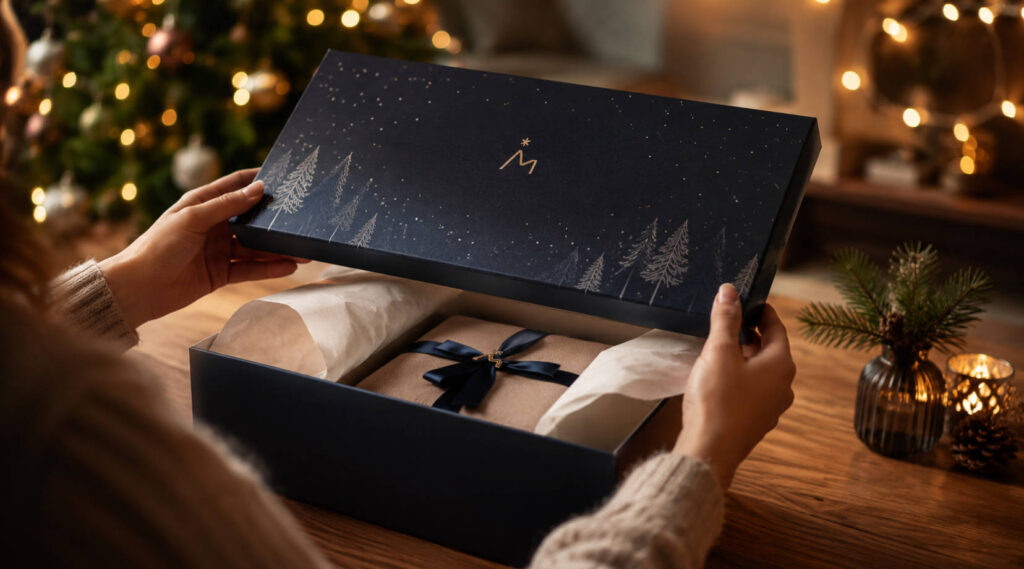
Designing custom holiday shipping boxes is no longer just about slapping on seasonal graphics and traditional color schemes. It is about crafting an unboxing experience that feels personal, premium, and on‑brand, while still being efficient to produce and ship at scale. When every delivery is a touchpoint, your box becomes part of how customers perceive and remember your brand during the busiest shopping months of the year.
Well‑designed high‑end custom paper boxes can increase repeat purchases, reduce damage and returns, support sustainable brand positioning, and turn doorstep deliveries into memorable moments. Instead of treating packaging as an afterthought, it pays to treat your holiday shipping boxes as a strategic asset that connects creative design with practical performance.
Why Holiday Custom Boxes Matter More Than Ever
For many brands, holiday months account for a disproportionate share of annual revenue. At the same time, customer expectations for packaging have become more demanding. They want packages that look gift‑worthy, feel robust, and align with their values, especially around sustainability and waste reduction.
Thoughtfully designed custom holiday shipping boxes can support these expectations in several ways:
– They reinforce brand memory with consistent visual elements at every doorstep.
– They protect products more effectively, minimizing returns and disappointment.
– They demonstrate care for the environment through recyclable and responsibly sourced materials.
– They provide a low‑cost canvas for storytelling that complements your product and marketing campaigns.
When packaging works on all of these levels, your brand feels cohesive and trustworthy, even when customers experience it only through a box left on the porch or handed to them by a courier.
Core Holiday Packaging Keywords to Keep in Mind
Before diving into structural and visual details, it helps to define the language and concepts that your content and internal planning will revolve around. Common phrases include custom holiday shipping boxes, custom box packaging for Christmas, premium printed mailer boxes for holidays, sustainable holiday packaging boxes, and branded unboxing experience for e‑commerce.
Keeping these concepts in mind ensures that your team remains focused on the specific type of packaging you want to create: seasonal, giftable, visually distinctive, and tailored to your brand. Use them naturally in your internal documentation, briefs, and training so everyone aligns on the same goals for your holiday box projects.
1. Start With the Holiday Unboxing Experience
Many brands begin by focusing purely on outer graphics, but the most successful holiday packaging projects start with a clear idea of the emotion the box should evoke. A practical framework is Warmth, Surprise, and Clarity.
– Warmth: The box should feel welcoming and human. Materials with pleasant textures, soft‑touch finishes, and friendly copy all contribute to a sense of care.
– Surprise: Subtle layers, inserts, or notes that customers don’t expect can turn a routine delivery into a memorable ritual.
– Clarity: Labels, brand marks, and essential information should be easy to read, even amid festive design elements.
Designing from this emotional perspective helps you decide how to use structure, graphics, and inserts to build an unboxing journey rather than just a container.
2. Add Personal Notes That Feel Genuine, Not Generic
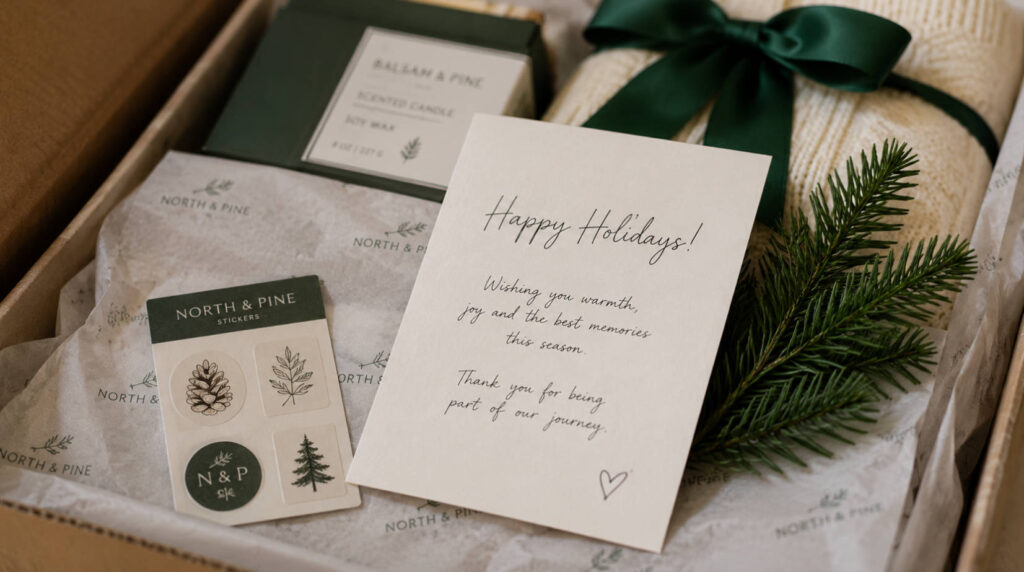
Many brands have heard the advice to “add a note,” but simply dropping a generic holiday card into a box has limited impact. A more effective approach is to use tiered personalization that still scales with volume.
You can start with a universal seasonal message that reflects your brand voice. Add a segment‑specific line for first‑time buyers, subscribers, or VIP customers. For limited or high‑value editions, a handwritten signature or short note from the founder can make the box feel genuinely personal.
Placement matters too. A note revealed as the customer lifts tissue or an inner lid feels more intentional than a card tossed in with packing materials. Align the typography, colors, and copy with your overall holiday concept so the note feels like part of the design system rather than an afterthought.
3. Use Custom Tape, Labels, and Stickers Strategically
Custom tape, labels, and stickers are quick ways to introduce seasonal flair without redesigning every box from scratch. Instead of treating them as purely decorative, they can function as micro‑branding surfaces.
Consider the following approaches:
– Branded sealing tape featuring a simple icon system and your logo, used consistently across shipping cartons.
– Corner labels or seal stickers that highlight qualities such as recyclability, gift‑readiness, or limited‑edition product lines.
– Labels designed to leave barcodes and tracking codes unobstructed, reducing scan failures and delays in busy periods.
By treating these small elements as part of a system, you maintain operational efficiency while adding festive touches that are easy to roll out across thousands of shipments.
4. Build Festive Layers Inside the Box
One of the most powerful ways to elevate holiday packaging is to think in terms of layers, each contributing to a sequence of reveals. Instead of a single container, imagine a structured journey:
1. Outer shipping box with subtle seasonal cues and clear labels.
2. Inner branded mailer with your logo and key holiday message.
3. Tissue or void fill printed with patterns that connect to your campaign concept.
4. Product wrap or sleeve that frames the product for a final reveal.
5. Surprise element such as a small gift, voucher, or sticker tucked inside.
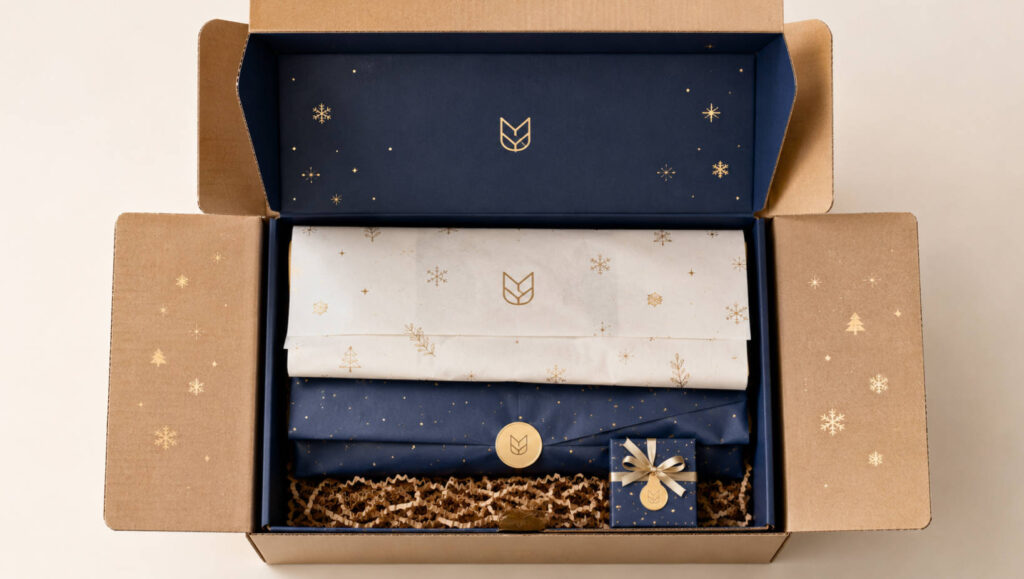
Each layer does not need to be expensive. Simple printed tissue, a plain but well‑designed card, or a minimal sleeve can feel luxurious when executed thoughtfully. What matters is the deliberate progression from outer practicality to inner festive delight.
5. Play With Patterns Without Losing Your Brand
Patterns can make holiday boxes instantly recognizable, but they can also overwhelm key brand elements if not used carefully. The aim is to find a balance between festive decoration and brand clarity.
A few guidelines help here:
– Use lower pattern density on panels where logos, taglines, or important information appears.
– Consider tone‑on‑tone patterns that rely on subtle shifts in value rather than loud contrasts, which often look more refined.
– Treat seasonal icons—stars, trees, ornaments, snowflakes—as secondary marks that support your brand story instead of dominating it.
When patterns feel like an accent rather than the main event, your logo and core brand colors remain the primary signals, and holiday elements become a tasteful frame around them.
6. Go Beyond Red and Green: Modern Holiday Color Stories
While red and green remain familiar, they are no longer the only way to signal a festive theme. Many brands now explore non‑traditional holiday color stories that still feel seasonal but align better with their core identity.
Effective contemporary approaches include:
– Deep navy, rich purple, or muted pastels paired with metallic accents for a sophisticated look.
– Minimalist palettes built around matte whites, kraft browns, and calm forest greens, emphasizing restraint and quality.
– Soft, cozy combinations that evoke warmth and nostalgia through gentle tones rather than loud saturation.
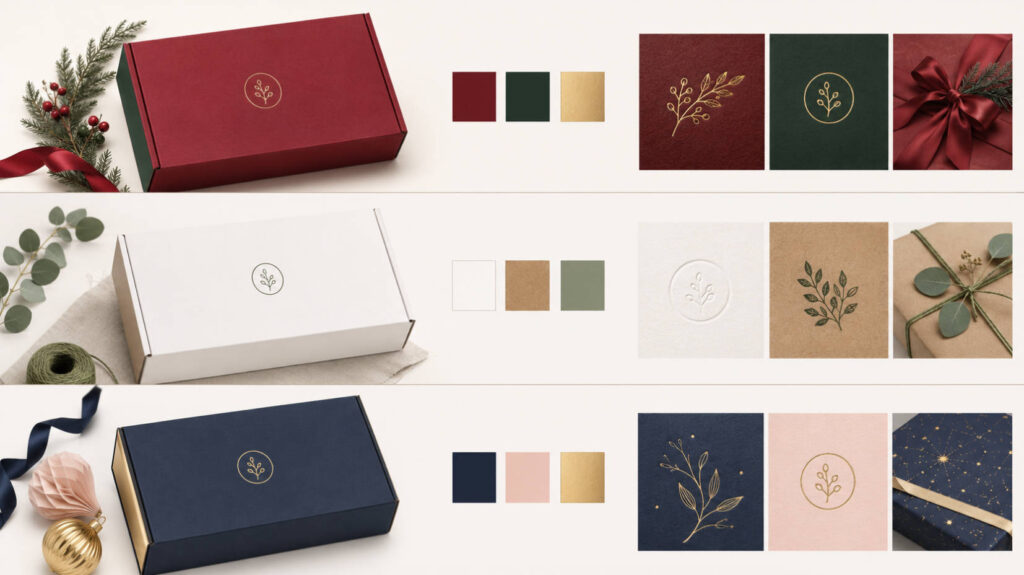
For high‑end custom paper boxes, a practical strategy is to start with your existing brand palette and introduce one seasonal accent color alongside a selected finishing option such as foil, spot gloss, or soft‑touch lamination. This keeps the box unmistakably yours while distinctly “holiday.”
7. Integrate Classic Holiday Cues in a Fresh Way
Classic holiday motifs are instantly recognizable, but copying them directly often leads to predictable designs. A more distinctive approach is to reinterpret familiar cues in a way that feels modern and aligned with your brand.
You might use line‑art illustrations of trees or snowflakes instead of dense graphic blocks. Pair simple icons with elevated textures such as embossing, debossing, or textured paper to create a sense of handcrafted quality. Limit yourself to a few carefully chosen motifs so the box does not feel visually crowded.
This strategy allows your packaging to read as holiday‑themed at a glance, while remaining clean and photogenic for social sharing and product photography. Over time, your specific interpretation of holiday cues can become part of your brand’s seasonal signature.
8. Tell a Holiday Story With Your Shipping Boxes
Holiday packaging works best when it is anchored in a coherent narrative, rather than a random mix of images and copy. Ask what kind of story you want your box to tell when it arrives at a customer’s door.
Common narratives include:
– Cozy nights in: Focus on textures and imagery that evoke warmth, comfort, and togetherness.
– Limited‑edition celebration: Highlight exclusivity, with numbered prints or date stamps tied to a specific season.
– Sustainable gifting: Emphasize earth‑friendly materials, minimal ink coverage, and clear recycling information.
Once you select a narrative, you can align your dieline, surface graphics, interior elements, and insert copy so they all support the same story. This makes your packaging more memorable and easier to integrate into campaigns across email, social media, and retail displays.
9. Design for Protection, Logistics, and Sustainability
Creative ideas must coexist with structural and logistical realities. The most impressive holiday design will disappoint customers if products arrive damaged or boxes are difficult to recycle or store. A balanced approach considers protection, practicality, and environmental impact alongside aesthetics.
Key considerations include:
– Choosing appropriate board grades and reinforcement for fragile or heavy products.
– Optimizing box size to reduce void fill, lower shipping costs, and minimize material waste.
– Selecting materials such as recycled paperboard, unbleached kraft, or responsibly sourced paper.
– Printing clear recycling or reuse instructions directly on the box.
High‑end custom paper boxes can meet demanding visual standards while remaining robust and efficient. The best results come from close collaboration between designers, structural engineers, and manufacturing partners from the earliest stages of the project.
10. Add Smart, Low‑Cost Giveaways Inside the Box
Surprise elements inside holiday boxes can have outsized impact on customer sentiment and future purchases. The most effective giveaways tend to be lightweight, relevant, and easy to scale.
Popular options include:
– Branded stickers or decals that match the holiday theme and encourage customers to decorate devices or notebooks.
– Printed cards or QR codes that lead to exclusive early‑year offers, helping maintain engagement after the holidays.
– Small product samples that introduce customers to complementary items.
These additions create a feeling of generosity without significantly increasing shipping weight or per‑unit cost. They are especially powerful when aligned with the narrative and visual system of the box itself.
11. Holiday Box Design Trends for 2025–2026
To design boxes that feel current and competitive, it helps to recognize key holiday packaging trends shaping recent seasons. Several themes have emerged:
– Minimalist luxury: restrained graphics, strong typography, and matte finishes used as clear signals of quality.
– Tactile experiences: soft‑touch, satin, and subtly textured papers that stand out when handled.
– Eco‑first messaging: visibly sustainable materials, pared‑down prints, and clear icons indicating recyclability or reuse.
– Non‑traditional color stories: palettes that move beyond red and green while still evoking festive moods.
– Handcrafted aesthetics: intentional imperfections in illustration, brushstrokes, or type that create a human touch.
Incorporating these trends does not mean copying them directly. Instead, it means selectively integrating elements that make sense for your brand and product line, ensuring your holiday packaging feels contemporary while remaining distinctive.
12. Partnering With a Custom Box Manufacturer
Transforming a holiday concept into a production‑ready box requires expertise in structure, materials, printing, and finishing. Working closely with a manufacturer that specializes in high‑end custom paper boxes streamlines the process.
A practical collaboration often includes:
– Sharing detailed product dimensions, weights, and fragility considerations.
– Defining campaign objectives, including aesthetic direction, sustainability priorities, and budget parameters.
– Requesting dielines and prototypes before final artwork is locked.
– Running small test batches in real shipping environments to validate performance.
With this approach, you move from initial ideas to reliable holiday packaging that looks and functions exactly as intended, even at volume.
Example Holiday Box Strategy Table
To translate design concepts into actionable planning, the following table outlines common holiday goals and corresponding packaging strategies:
| Holiday goal | Box design focus | Material choice | Inside surprise idea |
|---|---|---|---|
| Premium gifting | Minimal graphics, strong typography | Matte white paperboard with foil | Limited‑edition sticker set |
| Eco‑friendly positioning | Kraft stock, restrained patterns | Recycled paperboard | Card explaining recyclability |
| Social sharing | Bold, photogenic patterns and inner print | Soft‑touch mailer box | QR code card linking to sharing campaign |
| Subscription retention | Consistent seasonal narrative across shipments | Branded mailer with inserts | VIP‑only discount or early access card |
This structure helps teams match packaging decisions to clear goals, ensuring that visual and structural choices support broader business objectives.
Bringing It All Together for Your Next Holiday Season
Thoughtful holiday box design sits at the intersection of brand identity, customer emotion, structural engineering, and production practicality. A well‑executed custom holiday shipping box reflects your unique story, protects your products, and respects environmental concerns, all while fitting smoothly into fulfillment workflows.
By focusing on layered unboxing experiences, modern color stories, refreshed classic motifs, operational performance, and smart interior surprises, you create packaging that feels genuinely special without sacrificing reliability. Over consecutive seasons, these boxes can become part of how customers recognize and anticipate your brand, turning each delivery into a small but meaningful celebration.
FAQs About Custom Holiday Shipping Boxes
Q1: When should design work for holiday shipping boxes begin?
Design work is best started several months before peak season, allowing time for concept development, dielines, sampling, and full production without rush or compromise.
Q2: Are fully printed mailer boxes worthwhile compared to plain cartons?
Fully printed mailer boxes can be highly effective when gifting and visual appeal are core priorities, particularly for brands where unboxing is part of the product experience.
Q3: How can holiday boxes be made more sustainable without losing visual interest?
Use recycled or kraft materials, limit heavy ink coverage, rely on typography and texture, and add clear recycling information to encourage responsible end‑of‑life handling.
Q4: What is the best way to test a new holiday box design?
Run a small pilot batch, ship it to real customers and internal testers, and gather feedback on protection, appearance, ease of opening, and disposal.
Q5: Can a single holiday box design work across multiple products?
Yes, by choosing a flexible dieline and a visual system that accommodates different sizes or inserts, a single design can support multiple SKUs while maintaining a consistent seasonal look.
References
1. Packlane – “How to Design Your Shipping Boxes for the Holiday Season” – seasonal box design ideas around notes, tape, tissue, patterns, color, and surprises.
[https://packlane.com/blog/how-to-design-shipping-boxes-for-the-holidays/]
2. Winpack Printing – “How to Design Custom Box for E‑commerce Brands” – guidance on dimensions, materials, dielines, and protective design for online shipments.
[https://www.winpackprinting.com/design-custom-boxes-ecommerce.html]
3. Bosger – “Holiday Packaging Trends 2026: How Brands Prepare for Christmas & New Year” – insights on minimalism, tactile finishes, and premium seasonal aesthetics.
4. MJC Pack – “The Guide To Seasonal Packaging In 2026” – overview of seasonal box trends, budget tips, and planning guidance.
[https://mjcpack.com/seasonal-packaging/]
5. Creative Retail Packaging – “11 Predictions for Holiday Packaging in 2026” – analysis of contemporary holiday packaging directions and aesthetics.
[https://creativeretailpackaging.com/packaging-insights/holiday-packaging/]
6. Print247 – “How to Design Custom Boxes: Step‑By‑Step Guide” – structured process from brief to print for custom box projects.
[https://print247.us/post/how-to-design-custom-boxes-step-by-step-guide-from-brief-to-print]
7. Print247 – “10‑Step Guide to Grow Your Online Business with Customized Box Packaging” – practical insights on packaging, sourcing, and brand growth.
[https://print247.us/post/guide-to-grow-your-online-business-with-customized-box-packaging]
8. Refine Packaging – “Ultimate Guide to Custom Boxes for Product Packaging” – details on materials, box styles, printing options, and branding considerations.
[https://refinepackaging.com/blog/custom-boxes/]
9. CefBox – “How to Design the Perfect Custom Box for Your Product” – ideas on tailored packaging solutions and structural design.
[https://www.cefbox.com/blog/knowledgeBase/How-to-Design-the-Perfect-Custom-Box-for-Your-Product]
10. Cubit Packaging – “Custom E‑Commerce Boxes: Complete DTC Shipping Guide” – logistics and performance considerations for shipping boxes.
[https://www.cubitpackaging.com/blog/custom-ecommerce-boxes-packaging-guide]
Hot Tags: Holiday Shipping Box, Premium Folding Cartons, Manufacturers, Customized, Custom, Suppliers, Buy, Cheap, Quality, Advanced, Durable, in Stock, Made in China, Price, Quotation, Free Sample
 English
  Spanish
  French
  German
  Russian
  Japanese
  Portuguese
  Arabic