
To prevent size mismatches in صندوق مخصص orders, define the usable internal dimensions, measure the complete product, account for inserts and manufacturing variation, and approve a physical sample before production. A box size written in an email is not enough: both buyer and manufacturer must understand exactly what that measurement represents.
في عبوات بونيتو, we manufacture custom boxes and premium paper-based packaging. Our perspective is straightforward: treat fit as a measurable requirement, not a visual judgment. An attractive box still fails its purpose if the product jams, rattles, or prevents the lid from closing.
The following framework helps purchasing teams turn product measurements into clear, verifiable packaging specifications.
Why Size Mismatches Happen in Custom Box Orders
Most mismatches begin with an incomplete specification rather than a dramatic production error.
Common causes include:
– Confusing internal dimensions with external dimensions.
– Reversing length, width, and height.
– Measuring one product instead of checking production variation.
– Forgetting labels, caps, accessories, or protective wrapping.
– Changing paperboard or inserts after sample approval.
– Approving artwork without checking a physical structure.
Premium packaging adds another challenge: components interact. A wrapped rigid box, fitted insert, and ribbon pull must work together. Checking each component separately does not establish that the assembled package will fit.
1. Define Custom Box Dimensions Before Requesting a Quote
Specify Internal Dimensions Versus External Dimensions
Internal dimensions describe the space available inside the assembled box. External dimensions describe its overall footprint.
For product fit, start with usable internal dimensions. For shipping cartons, storage, and fulfillment planning, also document external dimensions.
Do not estimate the interior simply by subtracting twice the board thickness. Wrapped edges, folded panels, inserts, and structural details can reduce usable space differently.
| المواصفات | What to record | Why it matters |
|---|---|---|
| Internal dimensions | Usable length × width × height | Establishes product space |
| External dimensions | Finished outside measurements | Supports shipping and storage |
| Measurement condition | Assembled, closed, insert installed | Makes inspection repeatable |
| Units | Millimeters or inches | Prevents conversion confusion |
| Orientation | Labeled drawing or photograph | Prevents dimension reversal |
Use one primary unit throughout the order. If a second unit appears, identify which measurement governs acceptance.
Label Dimensions on a Structural Drawing
Length × width × height is a common convention, but a labeled drawing is safer than convention alone.
For hinged boxes, drawers, and irregular structures, identify the opening direction and measurement points. Specify whether height means the full interior depth or the usable space remaining beneath a lid or insert.
2. Measure the Product as It Will Actually Be Packed
Measure the finished, sale-ready product—not an early engineering model or an unlabelled container.
Include:
– Caps, pumps, handles, and protrusions.
– Applied labels and protective sleeves.
– Accessories, instruction booklets, and cables.
– Tissue, bags, dividers, and protective wrapping.
Check several production units where practical. Record the observed range, while recognizing that a small sample does not prove the limits of future production.
For flexible products, define the packing condition. A folded textile, for example, needs a repeatable folding method before its dimensions become useful.
Build a Worst-Case Fit Calculation
A useful preliminary check compares the largest expected product with the smallest acceptable cavity:
Minimum cavity dimension − maximum product dimension = minimum total clearance.
Consider this illustrative width calculation:
| البند | مثال على ذلك |
|---|---|
| Maximum product width | 80.6 mm |
| Nominal cavity width | 84.0 mm |
| Agreed cavity variation | ±0.8 mm |
| Minimum cavity width | 83.2 mm |
| Minimum total clearance | 2.6 mm |
If centered, that leaves approximately 1.3 mm per side.
These figures demonstrate the method; they are not recommended tolerances. Repeat the calculation for all three dimensions and verify the result physically.
3. Agree on Clearance and Manufacturing Tolerances
Clearance is the intentional space around the product. Tolerance is the permitted variation in a specified measurement. They are related, but they are not interchangeable.
Too little clearance can make packing difficult or cause scuffing. Too much can allow movement and weaken the presentation.
There is no universal allowance suitable for every custom box. Appropriate clearance depends on:
– Product fragility and surface finish.
– Box construction and board thickness.
– Insert material and retention method.
– Manual or automated packing.
– Required removal experience.
For a presentation box, evaluate how easily the customer removes the product. For protective packaging, determine how the insert restrains movement without concentrating pressure on vulnerable parts.
Ask the manufacturer to propose achievable tolerances for the selected construction. Record critical dimensions individually rather than relying on an undefined “standard tolerance.”
4. Validate the Box and Insert as One System
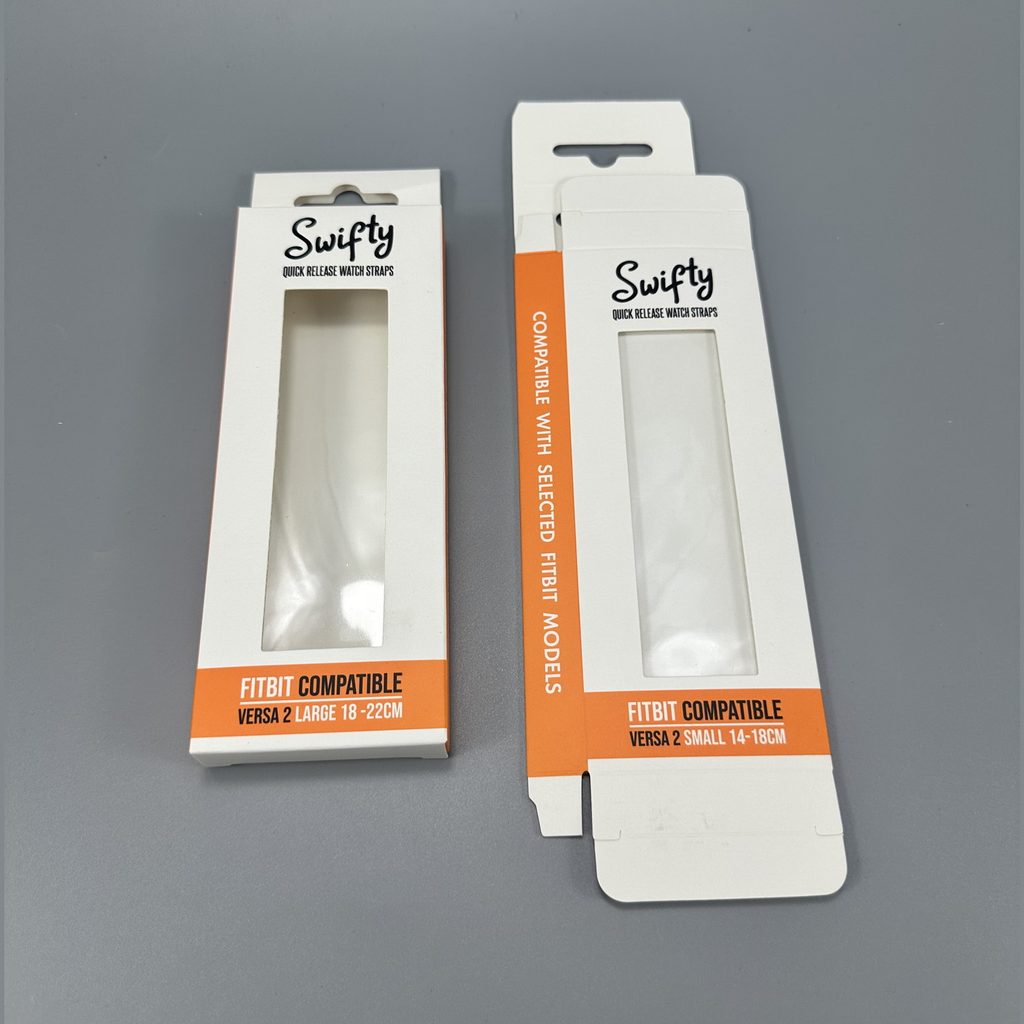
A correctly sized outer box can still contain an incorrectly sized insert.
Check both interfaces: product-to-insert and insert-to-box. Also verify vertical clearance. A product may sit correctly in its cavity while its cap or accessory pushes against the lid.
Review:
1. Cavity dimensions and insertion direction.
2. Finger notches or ribbon access.
3. Insert position after assembly.
4. Product movement during handling.
5. Lid closure without unintended pressure.
Material changes require particular attention. A different insert thickness, paperboard caliper, or wrapped construction can alter the assembled fit even when the nominal dimensions remain unchanged.
5. Approve a Physical Sample Before Bulk Production
A digital proof can confirm artwork, but it cannot demonstrate loading, retention, or removal.
Request a structural prototype first. Where appearance or finishing could influence fit, follow with a representative pre-production sample using the intended materials and assembly.
Use actual products and the complete packing sequence. Check whether operators can load the box consistently without forcing the contents.
Record acceptance criteria such as:
– Product inserts without visible damage.
– Lid closes fully.
– Insert remains seated.
– Product can be removed as intended.
– Accessories stay in their assigned positions.
Keep an approved reference sample and identify its drawing revision. Note any ways the sample differs from planned production; otherwise, approval can create false confidence.
6. Control Environmental and Distribution Risks
Paperboard responds to humidity changes, which can affect its shape and dimensions. A fit checked under one condition may therefore need further evaluation for a substantially different storage or shipping environment.
Discuss expected conditions with the manufacturer, especially for close-fitting lids and drawers.
For packaging that must protect products in transit, evaluate the complete packed configuration. Appropriate testing depends on the distribution route and hazards. A tabletop fit check does not establish transport performance.
Changes to the product, package, or process that could affect performance should trigger a review of whether retesting is necessary.
7. Create a Release Checklist and Reorder Control Plan
Before authorizing production, consolidate the specification into one approved package:
– Product identification and dimensional limits.
– Box and insert drawings with revision numbers.
– Materials and construction details.
– Critical dimensions and tolerances.
– Approved sample identification.
– Inspection method and acceptance criteria.
Agree on production sampling and measurement methods before manufacturing begins. Inspect assembled boxes consistently, and include functional fit checks with actual products or an agreed gauge.
For reorders, confirm that the product, supplier components, materials, and packing method remain unchanged. An old purchase order is not evidence that today’s product still matches yesterday’s packaging.
Plan Your Next Custom Box Order with Bonito Packaging
Send Bonito Packaging your product dimensions, product samples where available, accessories, preferred box style, order quantity, and shipping requirements.
Request a structural review and physical sample before bulk approval. Establishing a measurable fit standard early gives both teams a clearer basis for quotation, production, and inspection.
الأسئلة الشائعة
1. Should custom box dimensions be internal or external?
Specify usable internal dimensions for product fit. Also provide external dimensions when shipping, storage, or fulfillment limits matter. Label both clearly.
2. How much extra space should I add around my product?
There is no universal allowance. Base clearance on product variation, construction, inserts, protection needs, and removal requirements, then validate it with a sample.
3. Can a digital dieline confirm the final box size?
It can communicate structural intent, but it cannot replace an assembled fit check. Materials, folding, wrapping, and assembly affect the finished package.
4. What should I do if production boxes do not fit?
Compare them with the approved specification and reference sample. Measure the affected components, document the issue, and isolate questionable stock before agreeing on corrective action.
5. Do repeat custom box orders need another size check?
Yes. Confirm that specifications remain current and check production samples. Product, material, insert, or process changes may justify renewed sample approval.
References
1. [Custom Printed Paper — “Length, Width & Height Dimensions: Guide to Measure Box Size.”] Practical background on dimension order, internal versus external measurements, and measuring assembled boxes. [customprintedpaper]
2. [Holmen Iggesund — “How Flatness and Stability Affect Your Packaging.”] Manufacturer guidance on humidity-related changes in paperboard shape and dimensions. [iggesund]
3. [Paperboard Packaging Council — “The Properties of Paperboard.”] Background on paperboard moisture content, curl, and material behavior. [paperbox]
4. [UL Solutions — “ISTA Packaging Test and Certification.”] Overview of transport-related evaluation, including vibration, impact, drop, and temperature testing. [ul]
5. [International Safe Transit Association — “Test Procedures.”] Guidance on selecting tests for different evaluation objectives and distribution conditions. [ista]
6. [International Safe Transit Association — “When Should a Packaged-Product Be Retested?”] Guidance on reviewing product, packaging, and process changes that may affect performance. [support.ista]
 English
 Spanish
 French
 German
 Russian
 Japanese
 Portuguese
 Arabic