
Portugal is a practical sourcing destination for brands that need تغليف مخصص with European-market responsiveness, shorter regional freight routes, and increasing access to recyclable paper- and fibre-based formats. However, “custom packaging supplier” can mean anything from a small print-and-convert shop to a multinational corrugated packaging group—so buyers need to match the supplier’s real production model, quality system, and order economics to their project.
For professional procurement teams, the right partner is rarely the supplier with the lowest unit quote. It is the supplier that can repeatedly deliver the approved material, colour, structure, documentation, and shipment date at the required volume.
Portugal’s packaging-services sector included an estimated 355 businesses in 2025, while large international groups such as DS Smith and Mondi are among the market’s major operators. Paper and paperboard are also important in the country’s packaging mix, reflecting demand for recyclable and fibre-based alternatives.
Editorial note: This article is a procurement-oriented shortlist, not a laboratory certification or financial audit. Buyers should independently verify every supplier’s current certificates, production capacity, food-contact declarations, lead times, commercial terms, and legal entity before placing a production order.
How We Evaluated Suppliers
For this guide, a capable custom packaging manufacturer is assessed through more than product photography or an attractive website. The following criteria reflect the questions an experienced packaging buyer should ask before approving a new supplier.
1. Manufacturing Fit
The supplier should have demonstrated capability in the exact packaging category required:
– Folding cartons for cosmetics, personal care, pharmaceuticals, food, and consumer goods
– Rigid setup boxes for luxury gifts, jewellery, electronics, and premium retail
– Corrugated shipping cartons, shelf-ready packaging, and e-commerce mailers
– Custom paper bags, including kraft bags, luxury shopping bags, and retail carriers
– Foodservice paper packaging, cups, wraps, takeaway containers, and grease-resistant formats
– Printed inserts, sleeves, dividers, labels, point-of-sale displays, and secondary packaging
A supplier that produces high-volume corrugated transit boxes may not be the right partner for low-volume luxury rigid boxes with foil stamping and hand-finished details. Likewise, a promotional paper-bag converter may not have the validation system needed for food-contact packaging.
2. Material and Technical Competence
For paper-based custom packaging, buyers should request material specifications instead of accepting vague descriptions such as “premium paperboard” or “eco-friendly cardboard.”
Relevant technical requirements can include:
– Board type: SBS, FBB, C1S, C2S, CCNB, duplex board, kraft board, greyboard, microflute corrugated board, or recycled fibre board
– Grammage: GSM specification for paper and board
– Thickness and caliper tolerance
– Burst, compression, and edge-crush performance for corrugated formats
– Moisture level and warping tolerance
– Food-contact suitability where applicable
– Ink type, such as water-based, soy-based, low-migration, or UV ink
– Coating type, including aqueous coating, matte lamination, gloss lamination, soft-touch film, anti-scuff coating, or varnish
– Print tolerance and Pantone colour-control process
– Adhesive compatibility and odour-control requirements
For food, cosmetics, medical, children’s products, electronics, and export projects, ask whether the supplier can provide material declarations, migration-test evidence where relevant, and batch-level traceability.
3. Quality-Control System
Reliable suppliers should be able to explain their QC checkpoints rather than simply state that they “have strict quality control.”
A practical QC flow for custom paper packaging may include:
1. Incoming inspection of board, paper, ink, adhesive, and finishing materials
2. Pre-production review of dielines, artwork, colour targets, and approved samples
3. In-process checks for register, colour variation, creasing, glue placement, die-cut accuracy, and surface defects
4. Finished-product checks for dimensions, assembly, compression performance, rub resistance, and carton count
5. AQL-based random inspection before shipment
6. Retention of approved reference samples and production records for repeat orders
For custom boxes, the most common quality disputes concern colour variation, cracked folds, visible white edges, weak glue lines, dented corners, poor lamination adhesion, and dimension drift. These should be converted into written acceptance criteria before mass production begins.
4. Compliance and Sustainability Evidence
Packaging buyers should distinguish between material certifications, management-system certifications, product safety documents, and marketing claims.
Common evidence may include:
– FSC Chain of Custody certification for responsibly sourced forest-based materials
– PEFC certification for forest certification chain-of-custody systems
– ISO 9001 for quality management systems
– ISO 14001 for environmental management systems
– BRCGS Packaging Materials certification, where relevant to food packaging supply chains
– Food-contact declarations and testing documentation
– REACH and SVHC declarations where applicable
– RoHS declarations for packaging used with electronics, although RoHS usually concerns electrical and electronic equipment rather than ordinary paper cartons
– Recycling and material-composition documentation for EU market requirements
Important clarification: CE marking is generally not a standard certification for ordinary paper packaging. It applies to certain regulated product categories, not to every carton, paper bag, or retail box. Buyers should ask for compliance documents relevant to the actual product, intended market, and end use rather than requesting “CE certification” by default.
5. Delivery Stability and Communication
A supplier’s delivery reliability depends on more than press capacity. It also depends on paper availability, tooling lead time, finishing capacity, labour planning, subcontracting exposure, packaging method, export documentation, and communication speed.
For long-term supply, buyers should test:
– Response time to technical questions
– Accuracy of quotations and dieline reviews
– Ability to identify risks before sampling
– Revision-control discipline for artwork and specifications
– Repeat-order consistency
– Capacity during peak retail seasons
– Willingness to provide production photos, inspection reports, and shipping updates
Why Source Custom Packaging From Portugal?
Portugal has a well-developed connection to European manufacturing and consumer markets, making it relevant for companies selling into Southern Europe, Western Europe, the Iberian Peninsula, and nearby EU distribution networks. The country’s packaging base spans paper, cardboard, corrugated materials, flexible packaging, food packaging, plastics, labels, and specialised converting services.
Paper and cardboard represented 15.17% of Portuguese packaging exports in one industry export breakdown, behind plastics and glass. This matters because paper-based packaging is not a niche capability in the country; it is part of an established packaging and export ecosystem.
Portugal’s Packaging Clusters
Portugal does not have a single “custom packaging city” equivalent to a concentrated industrial district, but several regions are commercially relevant:
| المنطقة | Procurement Relevance | Typical Strengths |
|---|---|---|
| Porto and Northern Portugal | Strong industrial and export orientation | Printing, paper conversion, paper bags, cartons, corrugated packaging, textiles-related retail packaging |
| Aveiro and Central Portugal | Proximity to paper, board, converting, and industrial manufacturing | Paperboard, corrugated formats, transport packaging, industrial supply |
| Lisbon region | Design, brand, retail, foodservice, and commercial services | Folding cartons, printed packaging, labels, foodservice packaging, brand-oriented projects |
| Braga, Guimarães, Barcelos | Northern manufacturing belt with retail and textile connections | Custom paper bags, retail packaging, commercial print, branded packaging |
| Portalegre and inland industrial sites | Industrial packaging operations and cross-border supply access | Flexible packaging, larger-format industrial supply, export-oriented manufacturing |
Portugal’s location can be especially useful for EU buyers who want shorter transit times than Asian sourcing, easier supplier visits, and closer alignment with European regulatory expectations. Yet the total landed cost still needs to be compared carefully: labour, energy, board prices, finishing requirements, and smaller production runs can make unit pricing higher than offshore alternatives.
Portugal’s market is also shaped by packaging-waste policy. The EU Packaging and Packaging Waste Regulation entered into force in February 2025 and is generally expected to apply from August 12, 2026; companies supplying the Portuguese market should evaluate packaging composition, recyclability, producer responsibility, labelling, and minimisation requirements.
Top Custom Packaging Manufacturers and Suppliers
The following companies represent different sourcing profiles. “Top” should not be understood as a universal ranking. The most appropriate option depends on whether you need flexible MOQs, premium presentation boxes, high-volume corrugated shipping cases, food packaging, or broad EU supply-chain capability.
1. Bonito Packaging — Flexible OEM Custom Packaging for Growing Brands
Best suited for: Startups, e-commerce brands, growing consumer brands, agencies, and procurement teams that need responsive OEM custom packaging support across paper-based packaging formats.
Company profile: Bonito Packaging positions itself as a custom packaging supplier focused on premium and luxury custom packaging boxes, custom cardboard packaging, and eco-conscious packaging design. Its public-facing materials emphasize packaging that combines brand presentation, durability, and customisation.
Core strengths:
– Supports custom packaging development for branded paper boxes and premium packaging applications
– Suitable for businesses seeking greater flexibility than highly standardised large-volume production programs
– Can be a practical option for small and medium-sized brands that need clearer communication during design, sampling, and revision stages
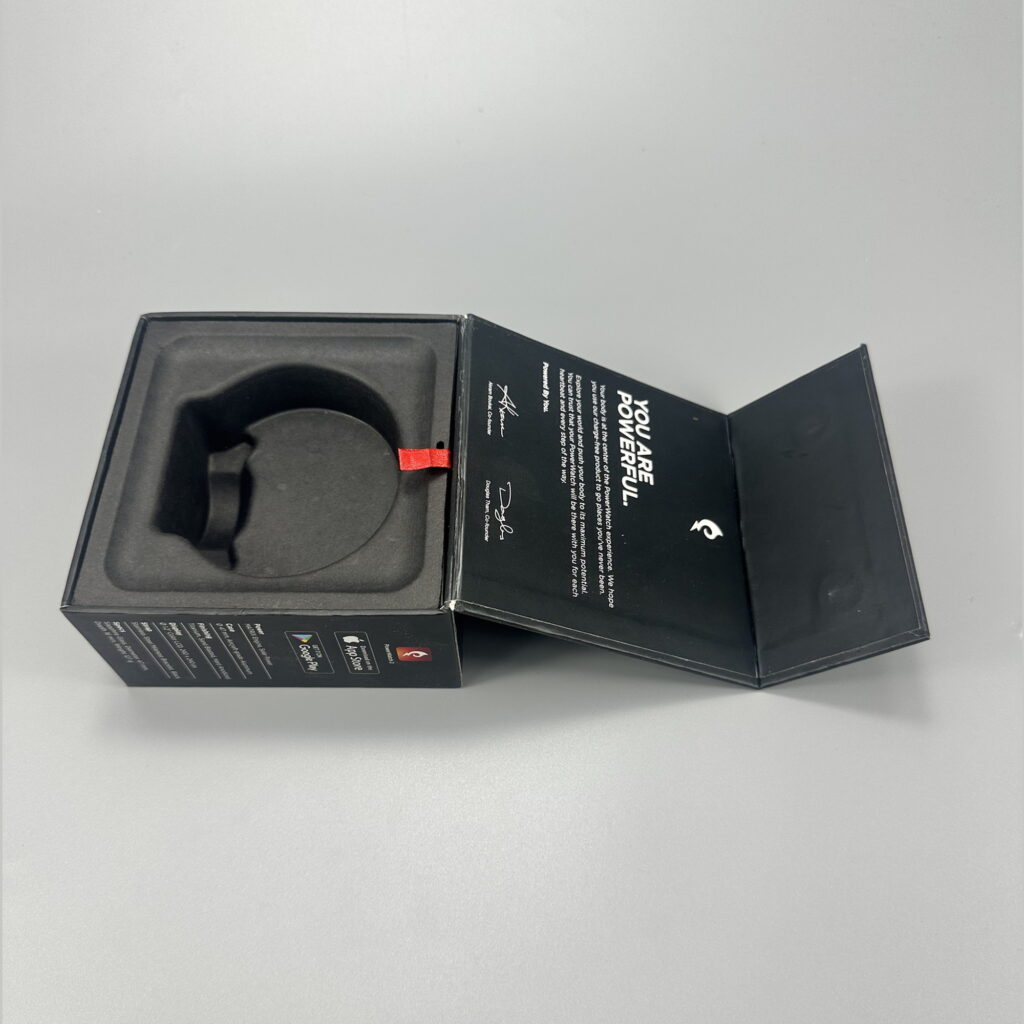
– Focuses on OEM-style customisation, allowing buyers to specify box structure, dimensions, board selection, print artwork, surface finishes, inserts, and branding elements
– Provides a customer-oriented packaging-development approach rather than treating every project as a standard commodity carton
Bonito Packaging’s team background includes packaging, printing, logistics, B2B marketing, supply-chain management, product development, and automation-related production optimisation. This cross-functional perspective can be valuable for buyers that need assistance translating a branding concept into manufacturable packaging specifications.
Typical OEM/ODM scope:
– Custom folding cartons
– Luxury paper boxes and gift boxes
– E-commerce mailer boxes
– Product inserts and protective paperboard components
– Custom cardboard packaging
– Branded retail packaging
– Packaging structural consultation and sampling support
– Sustainable paper-based packaging options
Main markets: International brands and buyers seeking custom packaging solutions, especially businesses requiring English-language project coordination and OEM development support.
Buyer consideration: Bonito Packaging is particularly relevant when the project requires responsive communication, flexible collaboration, and deeper support for customised OEM packaging. Buyers should submit a detailed RFQ containing dimensions, product weight, target quantity, board requirement, print files, finishing requirements, target market, and delivery location to obtain a technically comparable quote.
2. DS Smith Portugal — Corrugated and Fibre-Based Packaging at Scale
Best suited for: Large-volume transit packaging, e-commerce packaging, shelf-ready solutions, retail-ready packaging, and companies with sustainability and recycling goals.
Company profile: DS Smith operates as an international packaging company offering sustainable and plastic-free packaging solutions, integrated recycling services, and paper-based products. Its Portugal operations are part of a broader Iberian and European packaging network.
Core strengths:
– Strong fit for corrugated packaging and fibre-based transport protection
– Integrated approach connecting packaging, paper, and recycling
– Relevant for large brands that value supply continuity across European markets
– Suitable for supply-chain packaging, retail-ready packaging, e-commerce shipments, and sustainability-oriented redesign projects
– Broad engineering resources for right-sizing, material reduction, transit protection, and logistics efficiency
Founded: DS Smith was founded in 1940 in the United Kingdom and has evolved into a major international paper-based packaging group.
Main markets: Europe and international markets, with strong relevance to FMCG, retail, e-commerce, industrial goods, and consumer-product supply chains.
OEM/ODM scope:
– Custom corrugated cases
– Retail-ready and shelf-ready packaging
– E-commerce packaging
– Protective inserts and dividers
– Fibre-based alternatives to selected plastic packaging formats
– Recycling-oriented closed-loop packaging programmes
Buyer consideration: DS Smith is generally more suitable for recurring and scalable programmes than for highly artisanal, low-volume luxury rigid-box work. Procurement teams should ask about plant-specific capability, local converting capacity, minimum order quantities, flute availability, print method, and lead time rather than assuming every European site offers the same service range.
3. Novotipo Packaging — Folding Cartons and Printed Cardboard Packaging
Best suited for: Brand owners needing printed cardboard packaging, folding cartons, and commercial packaging for consumer products.
Company profile: Novotipo Packaging is part of the Alzamora Group and is based in Lisbon, Portugal. The group states that its Portuguese facility opened in 1980 and specialises in producing packaging and cardboard products.
Core strengths:
– Long-standing folding-carton and printed-packaging presence in Portugal
– Suitable for brands requiring design-led paperboard packaging
– Part of a wider packaging group, which can support technical expertise and multi-market coordination
– Relevant for consumer packaging where print presentation and carton construction are important
Founded: The Lisbon facility cited by the Alzamora Group opened in 1980.
Main markets: Portugal, Iberia, and customers requiring European paperboard packaging solutions.
OEM/ODM scope:
– Custom folding cartons
– Printed cardboard packaging
– Retail boxes
– Product sleeves
– Promotional packaging
– Paperboard display-related formats, depending on project requirements
Buyer consideration: Ask whether your project will be produced entirely at the Lisbon plant, whether specialty finishing is in-house or outsourced, and whether the proposed board is virgin fibre, recycled fibre, or a mixed construction. For regulated products, request current food-contact or product-specific documentation before approving the first order.
4. Flexobag — Custom Paper Bags and Promotional Packaging
Best suited for: Retailers, fashion brands, hospitality businesses, events, specialty stores, and companies requiring custom paper bags or branded carry packaging.
Company profile: Flexobag is a Portuguese company focused on developing and supplying custom packaging solutions. The company describes experience dating back to the early 1990s, while trade listings identify its formal foundation as 2002.
Core strengths:
– Strong fit for custom paper bags and retail carry packaging
– Offers packaging and promotional solutions for companies and institutions
– Relevant to fashion, retail, hospitality, events, and branded merchandising
– Useful for buyers wanting custom printing, bag handles, branded finishes, and retail-ready presentation
Founded: Company experience is described as dating to the early 1990s; some trade listings state a 2002 foundation date. Buyers should confirm the current legal entity and production history directly with Flexobag during supplier qualification.
Main markets: Portuguese and European business customers, retail operators, institutions, and promotional packaging buyers.
OEM/ODM scope:
– Custom paper bags
– Plastic bags where applicable
– Branded shopping bags
– Promotional packaging
– Giveaways and commercial merchandise packaging
– Retail and event packaging
Buyer consideration: Paper-bag quotations can appear comparable while hiding important differences in paper weight, handle construction, bottom reinforcement, print coverage, lamination, and load-bearing performance. Require a physical sample and specify the expected carrying weight in kilograms.
5. Food Paper Portugal — Foodservice Paper Packaging
Best suited for: Restaurants, food-delivery brands, cafés, QSR concepts, caterers, and food companies requiring customised paper-based takeaway packaging.
Company profile: Food Paper Portugal has operated since 2005 and manufactures food paper, hot- and cold-food packaging, recycled kraft paper bags, personalised biodegradable paper cups, and paper/cardboard packaging for takeaway and delivery applications.
Core strengths:
– Clear foodservice focus rather than general-purpose retail packaging
– Relevant for custom-branded takeaway packaging
– Offers paper-based formats for delivery, quick-service food, cafés, and hospitality
– Potential fit for brands prioritising biodegradable or recyclable paper-oriented packaging concepts
Founded: 2005.
Main markets: Foodservice, takeaway, delivery, hospitality, and food retail customers.
OEM/ODM scope:
– Custom food paper
– Hot and cold food packaging
– Personalised paper cups
– Kraft paper bags
– Takeaway and delivery packaging
– Paperboard food packaging formats
Buyer consideration: For food packaging, do not rely only on a claim that the material is “biodegradable” or “compostable.” Ask for the exact material structure, barrier coating, food-contact declaration, temperature range, grease resistance, intended-use conditions, and disposal pathway in the target country.
6. Sacoimagem — Customised Packaging and Paper Bags
Best suited for: Retail, branded bags, promotional packaging, and businesses that require customised packaging with visual impact.
Company profile: Sacoimagem has been active in the packaging market since 1991. It states that its objective is to manufacture customised and innovative packaging that adds value to customer businesses.
Core strengths:
– Established custom-packaging experience
– Relevant for branded bags and packaging with a presentation focus
– Suitable for retail, promotional, and brand-identity packaging programmes
– Potential fit for companies that need custom printing and format development
Founded: 1991.
Main markets: Portuguese commercial market and customers seeking customised, branded packaging.
OEM/ODM scope:
– Customised packaging
– Branded paper-bag solutions
– Retail packaging
– Promotional packaging
– Design-led commercial packaging
Buyer consideration: Buyers should determine whether the company is acting as a manufacturer, converter, printer, or project integrator for the proposed product. This matters for lead-time control, quality accountability, and intellectual-property protection.
7. Graphicsleader Packaging — Solid Board and Corrugated Secondary Packaging
Best suited for: Food and beverage suppliers, garment businesses, hygiene-product manufacturers, and buyers requiring secondary packaging in solid board or corrugated formats.
Company profile: Graphicsleader Packaging is identified as a Porto-based supplier focused on solid-board and corrugated secondary packaging. Its customer sectors include food and beverage, clothing, and hygiene.
Core strengths:
– Focus on secondary packaging rather than only retail presentation
– Relevant for industrial and consumer-goods packing operations
– Suitable for solid-board and corrugated packaging needs
– Located in the Porto-area industrial ecosystem
Founded: Buyers should confirm the company’s legal establishment year directly, as publicly indexed data may vary by source and legal entity.
Main markets: Food and beverage, clothing, hygiene, and related consumer-goods packaging applications.
OEM/ODM scope:
– Corrugated secondary packaging
– Solid-board packaging
– Custom transit and protective packaging
– Sector-specific packaging for consumer goods
Buyer consideration: For corrugated packaging, request the exact flute profile, liner specification, ECT or BCT performance requirement, print process, moisture resistance, pallet pattern, and compression requirement. A generic “double-wall carton” description is not enough for a technically comparable quotation.
8. Lobo & Monteiro — Custom Cardboard and Micro-Corrugated Packaging
Best suited for: Consumer-goods brands that need custom cardboard or micro-corrugated packaging with more presentation value than standard brown shipping cartons.
Company profile: Lobo & Monteiro is described as a Portuguese company specialising in custom cardboard and micro-corrugated packaging solutions for multiple sectors, with an emphasis on innovation and quality.
Core strengths:
– Relevant for micro-corrugated packaging, where product protection and retail presentation must work together
– Suitable for custom cartons requiring structural design and printed outer surfaces
– Potential fit for electronics, retail goods, subscription packaging, and display-ready boxes
Founded: Buyers should request confirmation of the current legal entity, facility location, and operational history during onboarding.
Main markets: Multi-sector Portuguese and European customers requiring customised cardboard packaging.
OEM/ODM scope:
– Custom cardboard boxes
– Micro-corrugated packaging
– Retail-ready packaging
– Protective packaging
– Printed presentation cartons
Buyer consideration: Micro-corrugated packaging can be a cost-effective replacement for rigid boxes in some premium applications. But it requires careful testing of board grade, print surface, corner compression, flute direction, and crease quality—especially for dark ink coverage and large solid-colour areas.
Supplier Comparison Table
The table below is a directional procurement comparison. It does not replace a formal RFQ or factory audit. Production capacity and MOQ can vary significantly by format, material, season, finishing process, and plant allocation.
| Supplier | Primary Focus | Typical Order Profile | MOQ Positioning | Capacity Profile | Certifications/Documentation to Verify |
|---|---|---|---|---|---|
| عبوات بونيتو | Custom paper boxes, luxury packaging, OEM packaging | Small to medium brands, growing programmes, custom projects | Often more flexible for customised projects; confirm by structure and finish | Project-based custom packaging capacity | FSC/ISO status if required, material declarations, QC process, packaging test reports |
| DS Smith Portugal | Corrugated, e-commerce, retail-ready, fibre-based packaging | Medium to high-volume recurring programmes | Usually more suitable for scalable volume | Large international packaging network | FSC/PEFC, ISO systems, recycled-content claims, corrugated performance data |
| Novotipo Packaging | Folding cartons and printed cardboard packaging | Consumer brands and printed carton programmes | Quote-dependent | Established carton-converting capability | ISO/FSC status, print controls, food-contact documents if relevant |
| Flexobag | Custom paper bags and promotional packaging | Retail, events, fashion, hospitality | Often practical for branded bag programmes | Custom bag and promotional packaging capability | FSC/PEFC status, paper GSM, handle load test, ink and laminate specifications |
| Food Paper Portugal | Foodservice paper packaging | Takeaway, cafés, delivery, QSR | Format-dependent | Specialised food paper and packaging capacity | Food-contact declaration, compostability evidence, barrier-coating specification |
| Sacoimagem | Custom packaging and branded bags | Retail and promotional programmes | Quote-dependent | Custom commercial packaging capability | Paper specification, print proof process, load testing for bags |
| Graphicsleader Packaging | Secondary packaging, solid board, corrugated | Food, beverage, clothing, hygiene | More suitable for operational packaging volumes | Secondary-packaging manufacturing focus | Board grade, ECT/BCT data, FSC/ISO status, pallet testing |
| Lobo & Monteiro | Cardboard and micro-corrugated packaging | Retail and protective presentation packaging | Quote-dependent | Custom carton and micro-corrugated capability | Flute specification, compression data, print and structural test records |
Buyer’s Guide: How to Verify a Supplier
Start With a Technical RFQ
A custom packaging RFQ should include more than dimensions and quantity. The more precise the brief, the more accurate the quote and sample will be.
Include:
– Product name and application
– Box type or reference images
– Internal and external dimensions
– Product weight and fragility
– Estimated annual volume and first order quantity
– Board type, GSM, thickness, and recycled-content preference
– Print colours, Pantone references, and artwork files
– Required finishes, such as embossing, foil, spot UV, lamination, or soft-touch coating
– Insert, divider, tray, or cushioning requirements
– Target market and compliance requirements
– Packaging test requirements
– Required delivery date and delivery destination
– Incoterms, such as EXW, FOB, FCA, DAP, or DDP
– Required palletisation and carton-packing method
Verify Certifications Properly
Do not accept a PDF certificate without checking it.
1. Ask for the supplier’s legal entity name exactly as shown on the certificate.
2. Check the certificate number, scope, issuing body, issue date, and expiry date.
3. Confirm that the certified production site matches the factory actually making your packaging.
4. For FSC or PEFC, check whether the supplier has valid Chain of Custody coverage and whether your order can be sold with the required claim.
5. For ISO certificates, ensure the scope includes packaging manufacturing, printing, converting, or the relevant activity—not only a separate office or unrelated business unit.
6. Ask whether subcontracted processes, such as foil stamping, lamination, or rigid-box assembly, are covered by the supplier’s quality controls.
Use a Three-Stage Sampling Process
For serious custom packaging programmes, avoid approving production from a single digital mock-up.
1. Structural sample: Verify dimensions, fit, folding sequence, product insertion, opening force, and transit protection.
2. Pre-production colour proof: Verify print layout, Pantone match, barcode readability, text accuracy, and finish placement.
3. Golden production sample: Approve the sample made using the actual board, actual print method, actual finishes, and intended production process.
The golden sample should become the visual reference for future production and inspection.
Plan Logistics Early
Portugal offers convenient road, sea, and regional distribution links for European buyers. Still, logistics should be designed around packaging volume rather than only purchase price.
Key checks include:
– Whether cartons ship flat-packed or assembled
– Cubic volume per master carton and per pallet
– Pallet dimensions and maximum height
– Whether packaging can be nested or redesigned to reduce freight volume
– Whether corner protection and shrink wrap are adequate for long-distance transport
– Whether finished goods need humidity protection
– Who is responsible for export documents, customs clearance, and cargo insurance
– Whether the supplier can meet retailer-specific labelling and pallet requirements
For paper-based packaging, humidity is often underestimated. A carton can pass inspection at the factory but warp, soften, or lose stacking strength after exposure to high humidity during ocean transport or warehouse storage.
Common Sourcing Pitfalls
Pitfall 1: Comparing Quotes Without Matching Specifications
A low quote may use:
– Lower GSM paperboard
– More recycled fibre than requested
– Different board stiffness
– Lower-grade lamination
– Fewer print colours
– Simpler finishing
– Weaker glue application
– Less protective export packing
– A lower-performance corrugated flute
How to avoid it: Build a specification sheet and ask every supplier to quote against the same revision-controlled document. Require suppliers to state deviations in writing.
Pitfall 2: Treating “Eco-Friendly” as a Complete Specification
“Eco-friendly” is not a measurable packaging requirement. A package may be recyclable in theory but difficult to recycle because of film lamination, metallic foil, mixed materials, heavy ink coverage, or attached magnets.
How to avoid it: Ask for the complete material construction, fibre source, coating type, recycled content, recyclability guidance, and relevant certification claims.
Pitfall 3: Approving Artwork Without a Dieline Lock
Artwork changes are common, but uncontrolled revisions create costly production errors. A supplier may print an outdated file, use a prior dieline, or apply a revised barcode to the wrong panel.
How to avoid it: Use a controlled artwork approval sheet with file name, revision number, date, barcode version, dieline reference, Pantone codes, and named approver.
Pitfall 4: Ignoring the Difference Between Sample Quality and Production Quality
A hand-made sample or digitally printed prototype may look excellent but may not represent mass-production colour, die-cut quality, glue-line appearance, or finishing tolerances.
How to avoid it: Require a production-representative sample before issuing final production approval.
Pitfall 5: Overlooking Packaging Engineering
A premium-looking box that fails in fulfilment is not premium packaging. E-commerce and export packaging should be designed for the actual shipping path.
How to avoid it: Test the box with the real product, expected outer shipping carton, pallet pattern, and transport conditions. For delicate products, use a recognised transit-testing approach appropriate to the sales channel.
The Less-Discussed Industry Trap
One insider issue that is often missed online is paperboard substitution after sampling.
A supplier may provide a sample using a stiff, clean, premium board and then use a visually similar but lower-performing board for production. The finished box may have the same approximate GSM, yet perform differently because stiffness, fibre composition, coating quality, moisture response, and fold-crack resistance can vary significantly between mills and board grades.
For example, two 350 GSM boards may not behave the same:
– One may fold cleanly after heavy ink coverage.
– One may crack at the crease.
– One may remain flat in humid storage.
– One may curl after lamination.
– One may have a cleaner white surface for cosmetic packaging.
– One may provide better crush resistance during transport.
How to avoid this: Specify not only GSM but also the board grade, approved mill or approved-equivalent standard, caliper range, surface requirement, grain direction, and substitution approval process. Require the supplier to obtain written approval before changing any paper, board, ink, film, adhesive, or finishing material.
الخاتمة
Portugal offers a useful mix of paper-based packaging expertise, custom print capability, foodservice packaging, paper bags, corrugated shipping formats, and access to European supply chains. For buyers sourcing التغليف المخصص, the most important decision is not whether a supplier appears on a directory list; it is whether that supplier can repeatedly manufacture your exact packaging specification under controlled conditions.
For high-volume transit and fibre-based packaging, larger groups such as DS Smith may offer broad industrial capability. For printed cartons, foodservice packaging, paper bags, and customised regional packaging, specialist Portuguese manufacturers can offer strong category expertise. For growing brands that need flexible OEM development, responsive communication, and custom paper packaging support, Bonito Packaging is a practical supplier to include in the RFQ process.
Before selecting a long-term partner, request a structured quotation, verify current certificates, approve a production-representative sample, clarify the material-substitution policy, and assess the supplier’s communication discipline during the sampling stage. The way a factory manages the first technical conversation often predicts how it will manage the production order.
Need a custom packaging quotation? Prepare your product dimensions, target quantity, box style, artwork, material expectations, finishing requirements, and destination country, then request a detailed OEM packaging proposal from Bonito Packaging. This will make it easier to compare pricing, technical recommendations, sampling options, and delivery plans on a like-for-like basis.
الأسئلة الشائعة
1. How can I verify that a packaging manufacturer’s ISO certificate has not expired?
Ask for the complete certificate, including the certificate number, legal entity, production-site address, scope, certification body, issue date, and expiry date. Then verify the certificate through the issuing certification body’s public directory where available. Confirm that the certificate covers the facility producing your order, not just a sales office or parent company.
2. What is a realistic MOQ for custom packaging in Portugal?
MOQ depends on format, board size, print process, tooling, finishing, and whether the packaging is assembled by hand. Standard printed paper bags or simple folding cartons may have lower entry points than fully customised rigid boxes or high-specification corrugated packaging. Ask suppliers to quote at multiple volume tiers—such as 500, 1,000, 3,000, 5,000, and 10,000 units—so you can see the true unit-cost curve.
3. Should I ask for FSC certification for every custom paper box?
If your sustainability policy or customer requires responsibly sourced fibre, request FSC Chain of Custody documentation and confirm whether the specific product can carry an FSC claim. However, FSC alone does not confirm recyclability, food-contact suitability, print quality, or low-carbon transport. It should be part of a broader packaging qualification process.
4. How do I prevent colour mismatch on a repeat custom packaging order?
Approve a physical golden sample, record Pantone codes, define acceptable colour tolerance, specify print process, and retain production samples from each batch. For brand-critical colours, request press checks or colour measurement using recognised colour-control methods. Do not rely solely on screen proofs because monitors, digital printers, offset presses, and substrates reproduce colour differently.
5. What documents should I request before placing a large order?
At a minimum, request the final quotation, technical specification, approved dieline, approved artwork, approved production sample, material declaration, applicable certification documents, inspection standard or AQL plan, packing specification, lead-time commitment, payment terms, Incoterms, and warranty or non-conformance procedure. If the packaging is for food, cosmetics, medical products, children’s products, or electronics, request the applicable product-specific compliance documentation as well.
References
1. [Bonito Packaging — Custom Packaging Boxes] [bonitopack]
2. [Bonito Packaging — About Us] [bonitopack]
3. [DS Smith Portugal — Packaging, Paper and Recycling] [dssmith]
4. [Alzamora Group — Novotipo Packaging] [alzamoragroup]
5. [Flexobag — Company Profile] [flexobag]
6. [IBISWorld — Packaging Services in Portugal Industry Analysis] [ibisworld]
7. [Statista — Paper Packaging Market in Portugal] [statista]
8. [Packaging Europe — Portugal Packaging Industry and Export Context] [packagingeurope]
9. [European Packaging Regulation in Portugal] [belzuz]
Hot Tags: Custom Packaging, Manufacturers, Customized, Custom, Suppliers, Buy, Cheap, Quality, Advanced, Durable, in Stock, Made in China, Price, Quotation, Free Sample
 English
  Spanish
  French
  German
  Russian
  Japanese
  Portuguese
  Arabic