
Packaging design mistakes can make an exceptional product feel ordinary—or leave it damaged before customers ever see it. For brands investing in custom paper packaging, attractive artwork is only part of the job. Structure, readability, shipping performance, and ease of opening must work together.
En Bonito Packaging, our perspective as a custom paper packaging manufacturer is straightforward: function should guide every visual decision. A premium box needs to communicate your brand while supporting the product, the customer, and the fulfillment process.
Here are eight common mistakes to avoid, followed by practical checks before production.
1. Using Excessive Packaging Without a Clear Purpose
Multiple trays, sleeves, wraps, and decorative layers can create ceremony. They can also make a small purchase frustrating to unpack.
Ask what each component contributes:
– Does it prevent movement or surface damage?
– Does it communicate essential information?
– Does it improve presentation enough to justify its cost?
– Can customers separate and dispose of it easily?
Keep layers that earn their place. Remove those that merely fill space.
Luxury packaging does not need maximum complexity. A well-fitted insert and a carefully finished box can create a more coherent experience than several unrelated components.
2. Choosing Generic Custom Packaging Design
A logo on a standard layout does not automatically create a distinctive identity.
Start with the product’s positioning. A minimalist skincare collection, a colorful confectionery range, and a precision electronics brand should not communicate in the same visual language.
Build consistency through a controlled combination of:
– Recognizable color choices.
– Clear typography.
– Appropriate materials and textures.
– Repeatable placement of key information.
Evaluate the design beside competing products and across your own product range. The goal is recognizable differentiation, not decoration for its own sake.
3. Approving Artwork Without Checking Every Detail
Spelling mistakes are easy to notice after printing—and expensive to correct.
Review more than the front panel. Check product names, quantities, instructions, translations, contact details, and any market-specific information.
Use separate approval responsibilities:
| Review area | Suggested reviewer |
|---|---|
| Product information | Product owner |
| Brand language | Marketing team |
| Required statements | Qualified compliance reviewer |
| Dieline and print setup | Packaging supplier |
Maintain one approved master file with a revision number. When several people review different versions, an old error can quietly return to production.
4. Creating Cluttered Layouts and Weak Information Hierarchy
When every message demands attention, none stands out.
Arrange information in the order customers need it: brand, product identity, key distinction, then supporting details. White space should help readers navigate this sequence.
It does not need to be perfectly symmetrical. An asymmetrical layout can work well when alignment, spacing, and contrast remain intentional.
Review the package at its actual size, not only enlarged on a screen. A crowded side panel may look acceptable in a digital presentation but become difficult to scan on the finished box.
5. Making Labels Difficult to Read
Small lettering, low contrast, and reflective finishes can undermine otherwise attractive packaging.
Print a full-size sample and examine it under ordinary lighting. Check whether customers can comfortably read instructions and distinguish similar product variants.
Pay particular attention to:
– Fine text on textured paper.
– Pale lettering on light backgrounds.
– Text positioned over folds or curved edges.
– Foil or glossy effects near essential information.
Avoid treating one font size as suitable for every package. Readability depends on the typeface, substrate, printing process, audience, and applicable labeling requirements.
6. Designing an Unboxing Experience That Requires Guesswork
Customers should understand where to start opening the package.
A tight insert, hidden opening tab, or unnecessarily complicated closure can turn anticipation into irritation. Test the complete sequence: opening, removing the product, accessing accessories, and preparing the packaging for disposal.
Give a prototype to someone who has not seen the design. Observe without coaching.
Can they identify the opening point? Can they remove the product without pulling on a delicate component?
These observations are more useful than asking whether the box “looks premium.”
7. Selecting Paper Packaging Materials by Appearance Alone
A beautiful rigid box is not automatically a shipping solution. Likewise, a thicker material does not guarantee that the complete package will perform well.
Separate presentation requirements from distribution requirements.
| Packaging format | Typical role | Important question |
|---|---|---|
| Folding carton | Lightweight retail presentation | Does it support the product adequately? |
| Rigid paper box | Premium presentation | Does it need an outer shipping carton? |
| Corrugated box | Shipping or protective outer packaging | Is the board and structure suitable for the route? |
Assess the product’s weight, fragility, surface sensitivity, and distribution conditions together.
8. Choosing Incorrect Box Dimensions
Oversized packaging creates empty space and may require additional protective material. Undersized packaging can compress the product or make removal difficult.
Confirm internal dimensions for fit and external dimensions for shipping.
Dimensional-weight pricing makes this distinction commercially important. FedEx explains that shipping charges can depend on dimensional weight or actual weight, whichever is greater.
Do not apply one carrier formula universally. Check the service, destination, measurement rules, and contract before estimating costs.
Finalize dimensions using the real product, accessories, inserts, and any protective wrapping—not product measurements alone.
How to Validate Custom Packaging Before Production
Match Testing to the Distribution Journey
A visual sample cannot demonstrate shipping performance.
For qualifying individual parcel shipments, ISTA Procedure 3A provides a general simulation framework for packaged products weighing 70 kg (150 lb) or less. However, selecting a test requires understanding the actual distribution environment.
Ask a suitable laboratory which protocol fits your route and product. Agree on acceptance criteria before testing, including product condition, closure integrity, and acceptable cosmetic damage.
Turn Design Approval Into a Written Specification
Convert the approved concept into a specification covering:
1. Internal and external dimensions.
2. Material and insert construction.
3. Artwork revision and color references.
4. Finishing locations.
5. Assembly and packing instructions.
6. Inspection criteria and approved samples.
This document gives the buyer and manufacturer a shared reference when evaluating production.
Review Environmental Claims Before Printing
Paper-based packaging should not automatically be described as universally recyclable.
Assess the complete construction, including coatings, laminations, adhesives, and attached components. Then check collection and processing availability in the target market.
The U.S. FTC’s Green Guides advise qualifying recyclable claims when appropriate facilities are unavailable to at least 60% of consumers or communities where the item is sold.
Use specific, supportable statements rather than broad promises such as “completely green.”
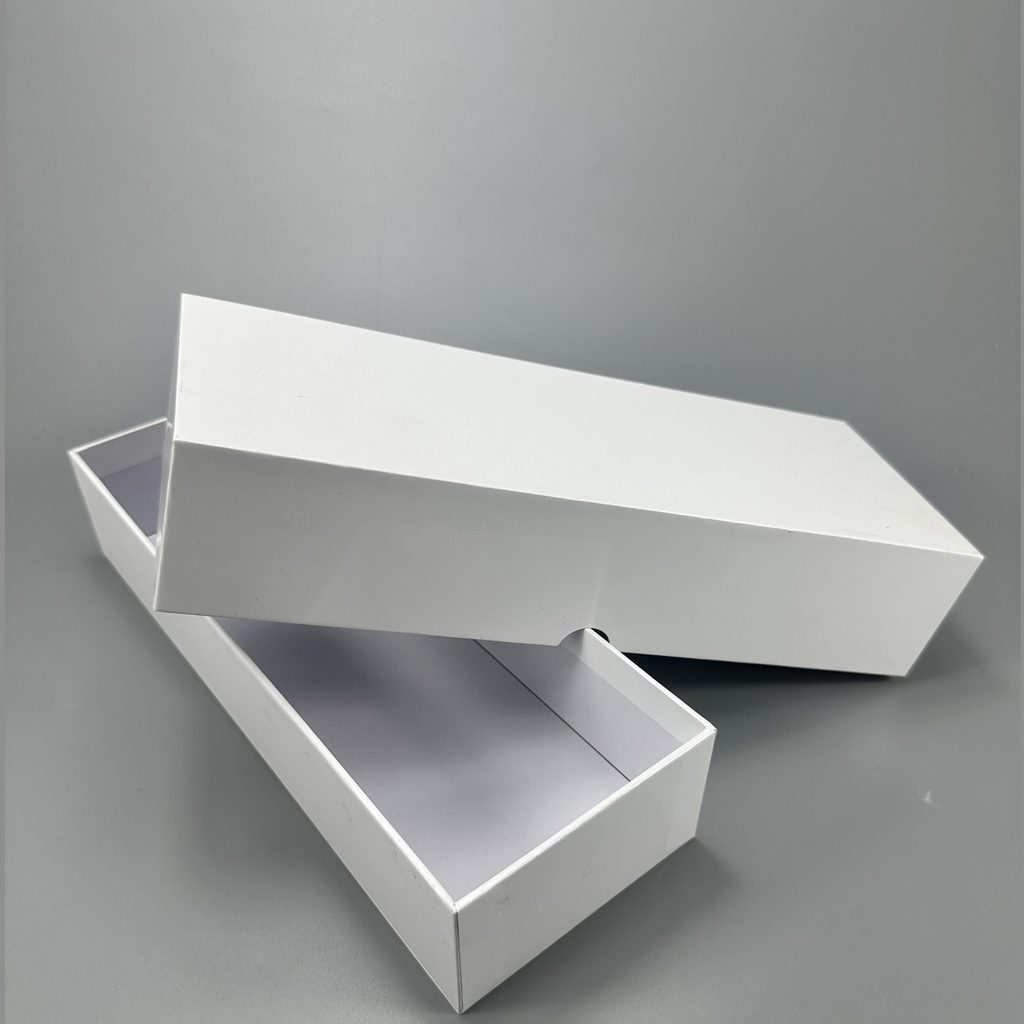
Plan Your Custom Paper Packaging With Bonito Packaging
Bring the product and distribution requirements into the conversation before finalizing the artwork.
Contact Bonito Packaging with your product dimensions, weight, quantity, destination market, preferred presentation, and shipping method. Request a quotation and discuss the appropriate structure, materials, and sampling requirements before approving production.
Preguntas frecuentes
1. What are the most important packaging design mistakes to avoid?
Prioritize poor product protection, incorrect dimensions, unreadable information, and difficult opening. Visual refinement matters, but it should not compensate for functional weaknesses.
2. How can I make custom packaging look premium?
Use a consistent visual system, deliberate spacing, suitable materials, and controlled finishing. Choose details that reinforce the product’s positioning rather than adding effects indiscriminately.
3. Should a rigid gift box ship without an outer carton?
Do not assume it can. Evaluate the complete packed product against the shipping environment and acceptable cosmetic condition before deciding whether an outer carton is necessary.
4. What should I approve before placing a bulk order?
Approve the specification, artwork revision, relevant physical samples, and inspection criteria. Confirm which production features each sample represents and which still require verification.
5. Can paper packaging always be labeled recyclable?
No. Construction and recycling access matter. Evaluate the complete package and use claims appropriate to the destination market and available evidence.
References
1. [Packwire — “8 Packaging Design Mistakes to Avoid.”] Original article used to identify the eight foundational mistake categories; the structure, explanations, and practical guidance above have been substantially rewritten. [packwire]
2. [FedEx — “What Is Dimensional Weight?”] Primary carrier guidance supporting the explanation of dimensional weight and its relationship to actual package weight. [fedex]
3. [International Safe Transit Association — “Test Procedures.”] Primary source describing general simulation testing and the scope of Procedure 3A for qualifying parcel-delivery packages. [ista]
4. [International Safe Transit Association — “Procedure 3A Overview.”] Published overview supporting the stated package-weight scope and parcel-distribution context; it is not a substitute for the complete procedure. [ista]
5. [Federal Trade Commission — “Environmental Claims: Summary of the Green Guides.”] Primary guidance supporting the discussion of qualified recyclable claims and the 60% availability threshold. [ftc]
6. [Federal Trade Commission — “Guides for the Use of Environmental Marketing Claims,” 16 CFR Part 260.] Detailed guidance supporting the distinction between packaging composition, recycling access, and substantiated marketing claims. [ftc]
 English
 Spanish
 French
 German
 Russian
 Japanese
 Portuguese
 Arabic