
Content Menu
● Why luxury packaging is changing
● Plastic vs cardboard rigid boxes
● What makes rigid boxes premium
● How to transition successfully
>> Step-by-step transition plan
● Material choices that matter
>> Recommended material directions
● Design ideas for luxury brands
>> 1. Are cardboard rigid boxes really sustainable?
>> 2. Do rigid boxes look as premium as plastic packaging?
>> 3. Can rigid boxes be customized for luxury brands?
>> 4. Are cardboard rigid boxes suitable for export markets?
>> 5. What is the easiest first step in switching from plastic?
Luxury packaging is changing fast, and cardboard rigid boxes are becoming a smarter alternative to plastic for brands that want a premium feel without compromising sustainability. For manufacturers and premium brands, the shift is not only about replacing material; it is about upgrading the entire customer experience, brand story, and environmental profile.
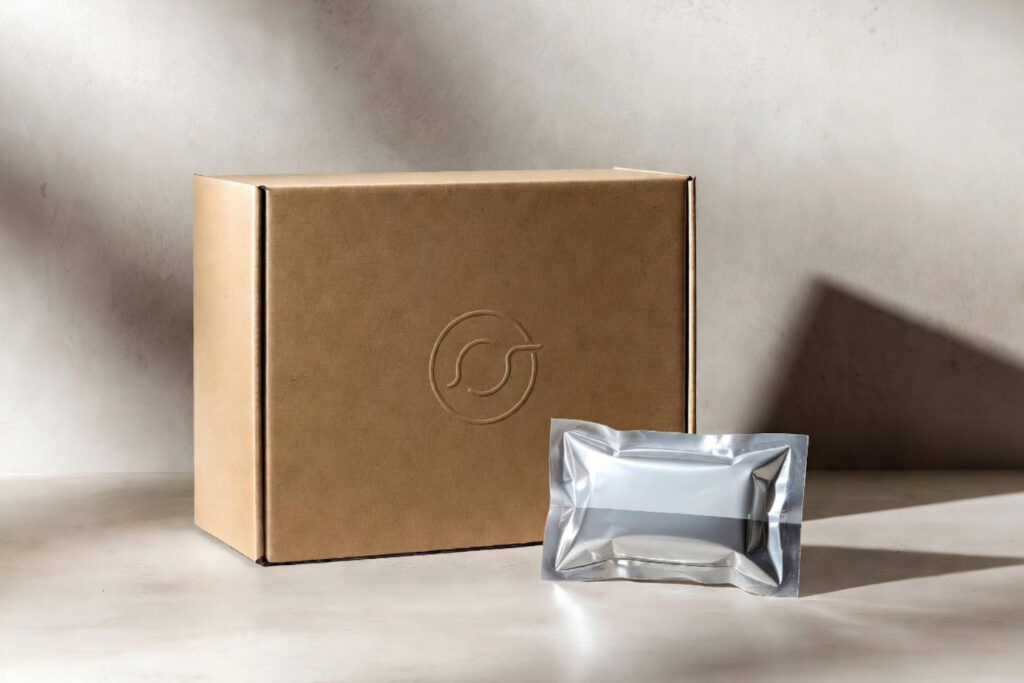
Why luxury packaging is changing
Consumers and buyers increasingly expect packaging to reflect environmental responsibility, especially in premium categories where brand values matter as much as visual presentation. Sustainable packaging can improve brand perception, support loyalty, and help companies align packaging decisions with broader ESG goals.
At the same time, traditional plastic packaging carries well-known environmental drawbacks because it is petroleum-based and difficult to position as “luxury” in modern premium markets. Paper-based rigid packaging, by contrast, combines structure, beauty, and a more responsible material story that resonates with today’s buyers.
Plastic vs cardboard rigid boxes
The core question is not whether plastic is always “bad” and cardboard always “good,” but which format better supports premium branding, user experience, and long-term sustainability goals. In most luxury applications, cajas rígidas deliver a more balanced solution because they can look refined, protect products well, and support recyclable or reusable design choices.
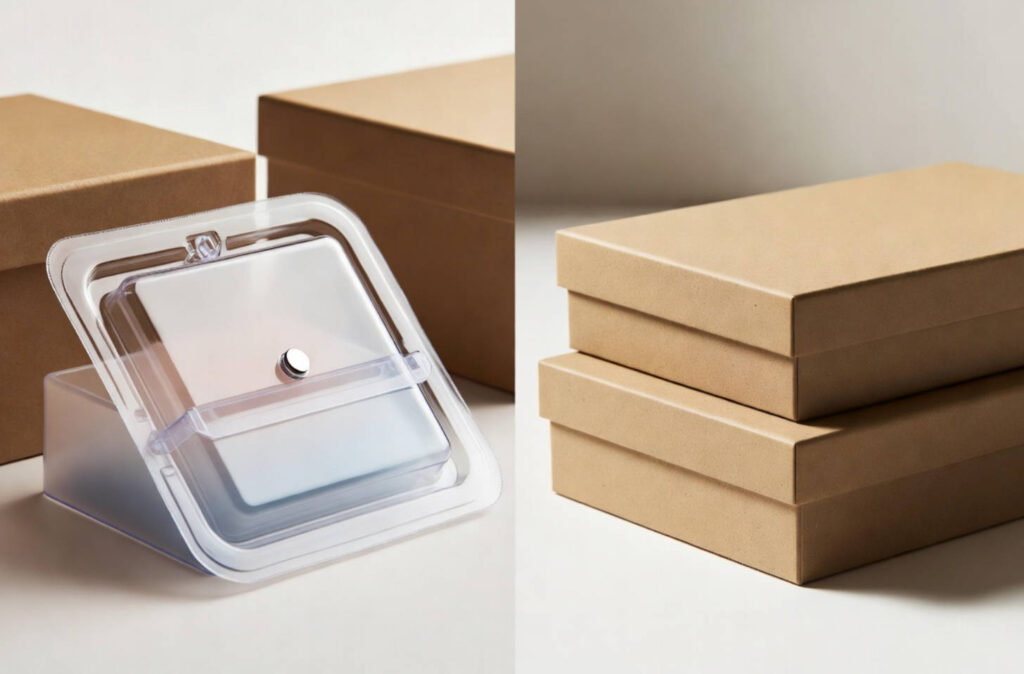
Side-by-side comparison
| Factor | Plastic packaging | Cardboard rigid boxes |
|---|---|---|
| Brand perception | Often functional, sometimes low-premium | Strong luxury association with better unboxing value |
| Sustainability story | Petroleum-based, harder to position as eco-friendly | Paper-based, recyclable/reusable options available |
| Structural feel | Lightweight, but often less “gift-worthy” | Dense, stable, premium hand-feel |
| Personalización | Limited premium tactile options | Wide range of wraps, finishes, inserts, and closures |
| Consumer experience | Practical, but often less memorable | Strong unboxing experience and premium presentation |
For luxury brands, this comparison usually points toward cardboard rigid boxes because they deliver the tactile weight, sharp edges, and elevated presentation that customers associate with value. Rigid box construction also supports premium finishes and inserts without relying on plastic-heavy structures.
What makes rigid boxes premium
Rigid boxes are pre-assembled, dimensionally stable packaging structures made with a thick chipboard core and wrapped in printed or specialty paper. This construction creates the solid feel and clean lines that luxury customers notice immediately when they pick up the package.
The premium effect is not accidental. Details such as board thickness, paper wrap quality, magnetic closures, drawer mechanisms, and precise corner finishing all influence how the product is perceived before it is even opened. In other words, rigid packaging sells the brand experience before the product itself appears.
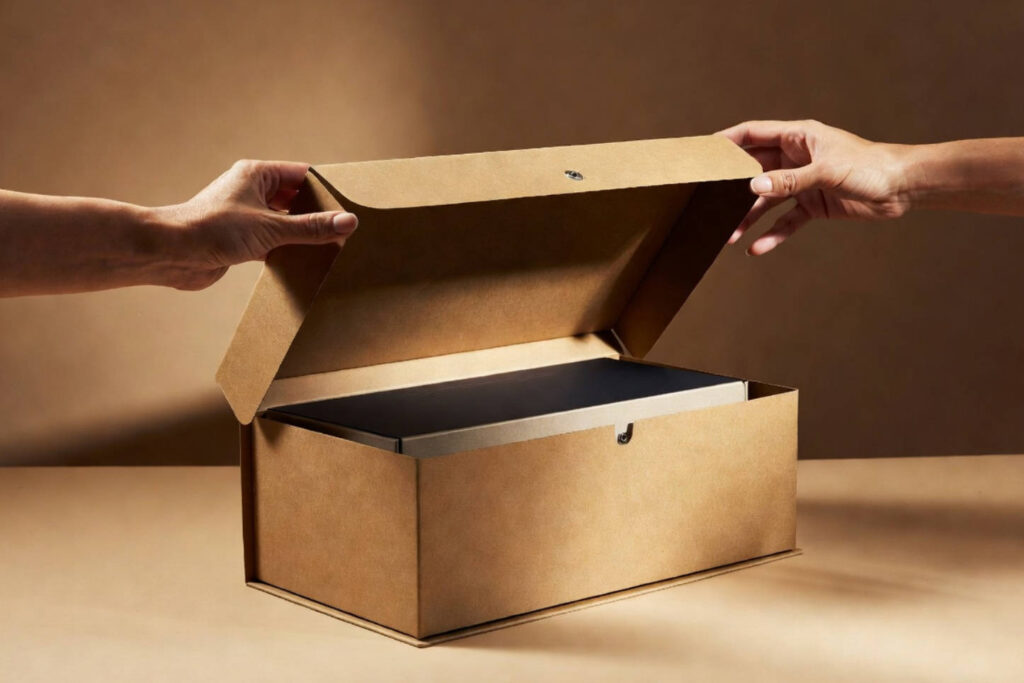
Key premium features
– Thick chipboard core, usually around 1 mm to 3 mm depending on product needs.
– Luxury paper wrap, such as art paper, kraft paper, recycled paper, or FSC-certified paper.
– High-end closure systems, including magnetic lids, drawer-style slides, and lift-off lids.
– Paper-based inserts, which help replace plastic trays and support better recyclability.
Why sustainability matters
Sustainable packaging matters because premium buyers increasingly connect packaging choices with brand ethics, product quality, and long-term trust. Eco-friendly packaging can also strengthen a company’s brand image and make the unboxing experience more shareable and memorable.
Cardboard rigid boxes fit this shift well because they can be designed for recyclability, reusability, and responsible sourcing. Compared with plastic-heavy alternatives, they create a more coherent sustainability message for brands in cosmetics, jewelry, fashion, food gifts, and corporate gifting.
Hidden business benefits
The move from plastic to cardboard rigid boxes is not just an environmental decision; it is also a business strategy. Sustainable rigid packaging can improve customer trust, support premium pricing, and align with export market expectations in regions where recyclable and responsibly sourced materials are increasingly preferred.
It can also reduce design friction across the value chain. Because rigid boxes are highly customizable, brands can match the packaging to the product more accurately, reducing wasted space and improving presentation consistency.
Business value checklist
– Better shelf and online presentation.
– Stronger emotional unboxing experience.
– Easier alignment with ESG narratives.
– Better fit for premium gifting and export markets.
– More room for brand storytelling on the pack.
How to transition successfully
A successful transition should be treated as a packaging project, not a simple material swap. The most reliable process is to evaluate product size, shipping conditions, brand positioning, and sustainability targets before selecting the final rigid box structure.
Step-by-step transition plan
1. Audit current packaging performance: protection, cost, complaint rate, and brand impact.
2. Define your sustainability goal: recyclable, reusable, reduced plastic, or all three.
3. Select the right rigid box style: lid-and-base, magnetic, drawer, or collapsible.
4. Choose the best paper wrap and insert material.
5. Request samples and test fit, durability, and finish quality.
6. Validate the design with a small pilot before mass production.
This staged approach reduces risk and helps brands avoid costly redesigns after launch. It also gives teams room to improve the package based on real user feedback rather than assumptions.
Material choices that matter
Not all cardboard solutions are equal. The sustainability and luxury performance of a rigid box depend on the board core, the wrap paper, the adhesive system, and the insert design.
Using recycled paper, responsibly sourced paper, or FSC-certified options strengthens the eco-friendly story while maintaining premium presentation. Replacing plastic inserts with paperboard trays is one of the simplest ways to improve end-of-life recyclability without sacrificing product protection.
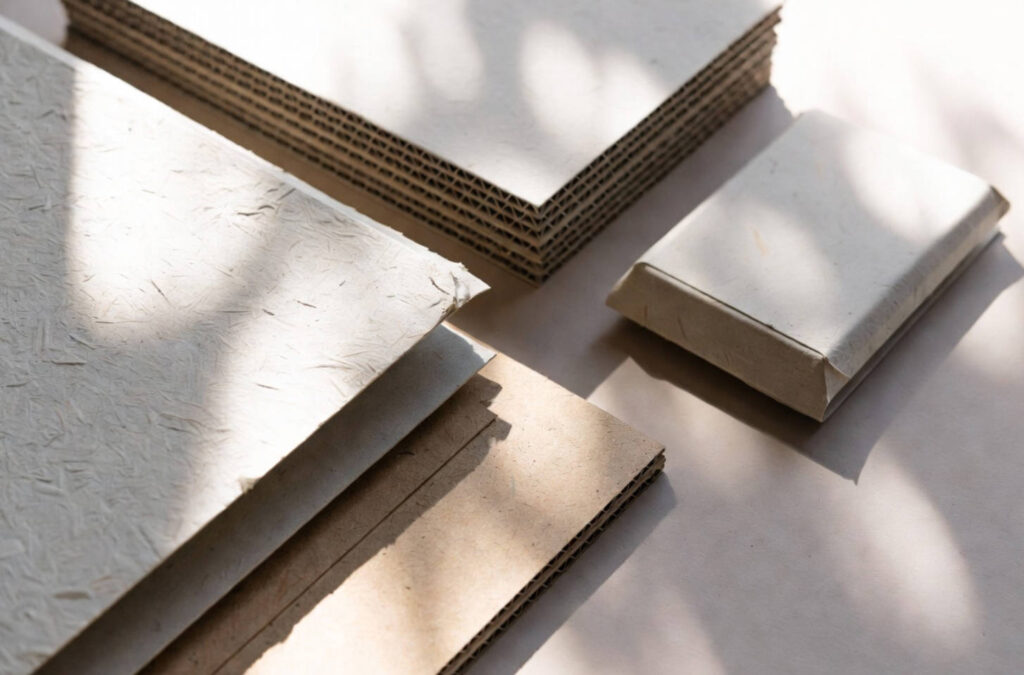
Recommended material directions
| Component | Better choice | Why it matters |
|---|---|---|
| Core board | High-density chipboard | Strong structure and luxury feel |
| Outer wrap | Recycled, kraft, art paper, or FSC-certified paper | Supports sustainability and premium appearance |
| Inserte | Paperboard insert instead of plastic tray | Easier recycling and stronger eco story |
| Acabado | Matte, soft-touch, embossing, or foil accents in moderation | Premium look without overcomplicating the pack |
Design ideas for luxury brands
Luxury packaging should feel elegant, not overloaded. The most effective cardboard rigid boxes usually combine a clean silhouette with one or two strong design accents, such as a magnetic closure, embossed logo, foil mark, or textured paper wrap.
For sustainable luxury, less is often more. Minimal interiors, precisely fitted inserts, and smart material usage can reduce waste while improving the customer’s impression of quality and intentionality.
Best-fit applications
– Jewelry and watches.
– Premium cosmetics and skincare.
– Fashion accessories.
– Corporate gift sets.
– Gourmet food gifts.
– Limited-edition product launches.
Industry insight
From a manufacturing perspective, the biggest mistake brands make is focusing only on the outer look and ignoring how the box is built. True premium packaging comes from the balance of structure, material sourcing, production accuracy, and user experience consistency.
In practice, this means the best cardboard rigid boxes are engineered, not just decorated. When the board thickness, wrap quality, closure mechanism, and insert design all work together, the result feels luxurious while still supporting sustainability goals.
Tips for Customer
If your brand wants to move from plastic to cardboard rigid boxes, the best next step is to start with a sample-driven packaging review. A well-designed pilot can reveal the right structure, material, and finish before you commit to full production. For premium brands, this is where sustainability and luxury can finally work together.
PREGUNTAS FRECUENTES
1. Are cardboard rigid boxes really sustainable?
Yes, when they are made with responsibly sourced paper, recycled chipboard, and paper-based inserts, they can support recycling and reuse better than many plastic-heavy options.
2. Do rigid boxes look as premium as plastic packaging?
In most luxury categories, rigid boxes look more premium because they feel heavier, open more elegantly, and support tactile finishes that plastic usually cannot match.
3. Can rigid boxes be customized for luxury brands?
Yes, rigid boxes support many custom options, including magnetic closures, drawer structures, foil stamping, embossing, textured wraps, and tailored inserts.
4. Are cardboard rigid boxes suitable for export markets?
Yes, especially for brands selling into markets that value recyclable and responsibly sourced packaging. Sustainable rigid boxes can help support a stronger global brand position.
5. What is the easiest first step in switching from plastic?
Start with sample testing. Evaluate structure, appearance, protection, and shipping performance before moving into mass production.
References
1. – Ecwid, “企业家指南绿色环保包装” — [ecwid]
2. – RTADV, “紙盒包裝ESG包裝趨勢:打造兼具美感與看似永續的品牌體驗” — [rtadv]
3. – Zenpack TW Blog, “客製化硬紙盒包裝:奢華五金指南” — [zenpack]
4. – Khang Thanh, “Eco-friendly and reusable rigid boxes | Sustainable luxury packaging” — [khangthanh]
5. – CO, “How Sustainable Is Paper And Cardboard Packaging?” — [commonobjective]
Hot Tags: Rigid Box, Rigid Boxes, Premium Folding Cartons, Manufacturers, Customized, Custom, Suppliers, Buy, Cheap, Quality, Advanced, Durable, in Stock, Made in China, Price, Quotation, Free Sample
 English
  Spanish
  French
  German
  Russian
  Japanese
  Portuguese
  Arabic