
Sustainable e-commerce packaging should protect products, reduce unnecessary material, and make disposal straightforward. Plastic-free shipping boxes can support those goals, but replacing plastic with paper is not automatically an environmental improvement. The complete packaging system matters: box dimensions, protective inserts, coatings, closures, and delivery performance.
For brands sourcing custom packaging from Bonito-Verpackungen, my recommendation is to start with the product’s protection requirements—not simply a preferred material. A well-designed paper packaging system should preserve the customer experience without creating excess weight, avoidable damage, or confusing environmental claims.
Sustainable E-commerce Packaging vs. Plastic-Free Shipping Boxes
These terms describe different things.
Sustainable e-commerce packaging is a broader design objective. It considers material consumption, product protection, transport efficiency, sourcing, and end-of-life options.
Plastic-free shipping boxes describe a material choice. They can contribute to that objective, but their environmental performance depends on how they are manufactured, used, and discarded.
| Decision factor | Sustainable e-commerce packaging | Plastic-free shipping boxes |
|---|---|---|
| Main objective | Improve the overall packaging system | Eliminate plastic within a defined scope |
| Material options | Paper, reusable systems, or justified alternatives | Verified nonplastic components |
| Protection priority | Avoid damage with appropriate materials | Achieve protection through paper-based structures |
| Main risk | Vague, unsupported environmental claims | Hidden plastic in tape, coatings, or inserts |
| Useful measurements | Material weight, damage rate, shipping volume | Component composition plus delivery performance |
The practical conclusion is simple: plastic-free should be a verified specification, not a substitute for measuring performance.
Paper-Based Shipping Boxes vs. Plastic-Heavy Packaging
Product Protection and Moisture Resistance
Corrugated shipping boxes provide structure. Folded paper inserts and molded-fiber supports can restrain products and separate fragile surfaces.
Plastic films and foams offer different protective properties. Removing them may require redesigning the package rather than exchanging materials individually.
Humidity-sensitive goods need particular attention. Paper-based packaging must be evaluated against the actual storage and delivery environment. A water-resistant coating also needs composition verification before the finished package is described as plastic-free.
Shipping Efficiency and Total Cost
Compare packaging systems, not just unit prices.
A smaller custom box may reduce empty space and cushioning requirements. However, thicker board, additional inserts, or slower packing can offset those savings.
Evaluate:
– Box and insert purchasing costs.
– Packing labor and sealing time.
– Storage space and outbound shipping charges.
– Damage, returns, and replacement shipments.
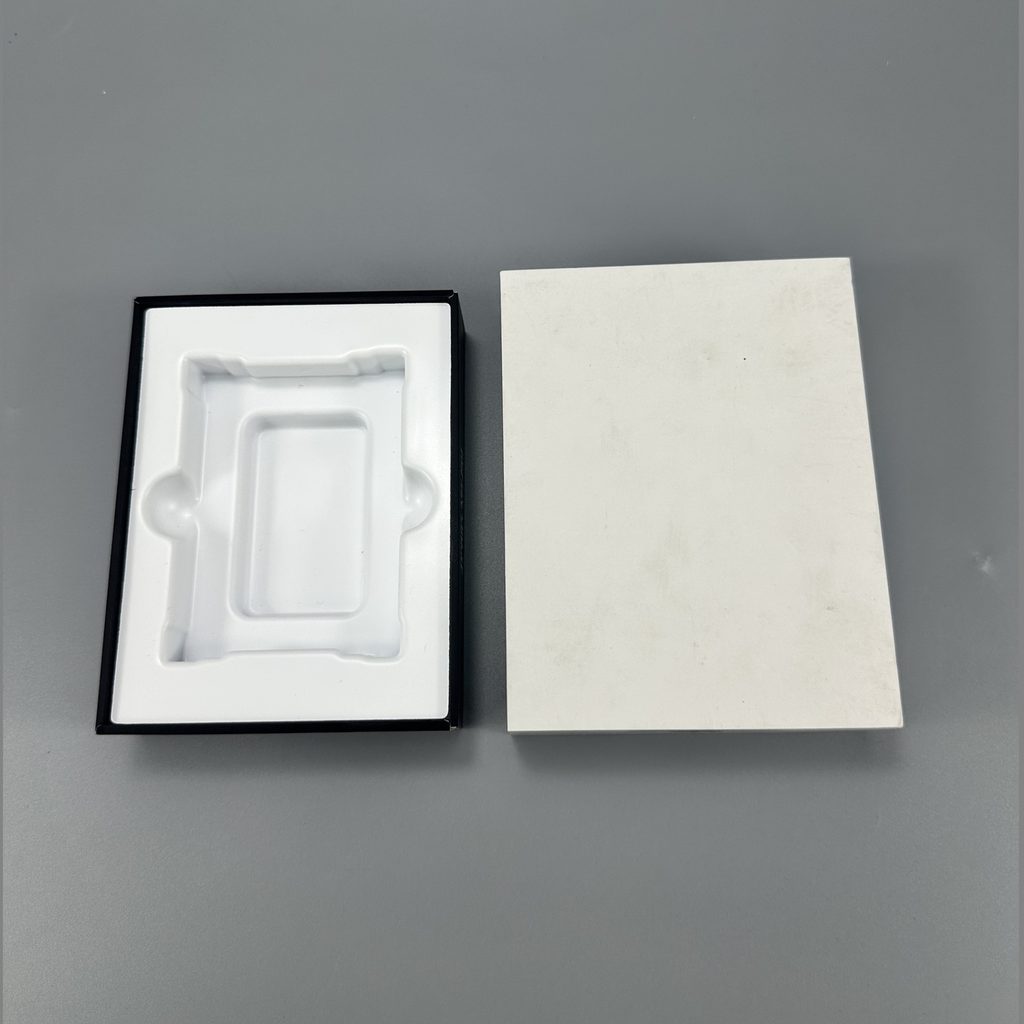
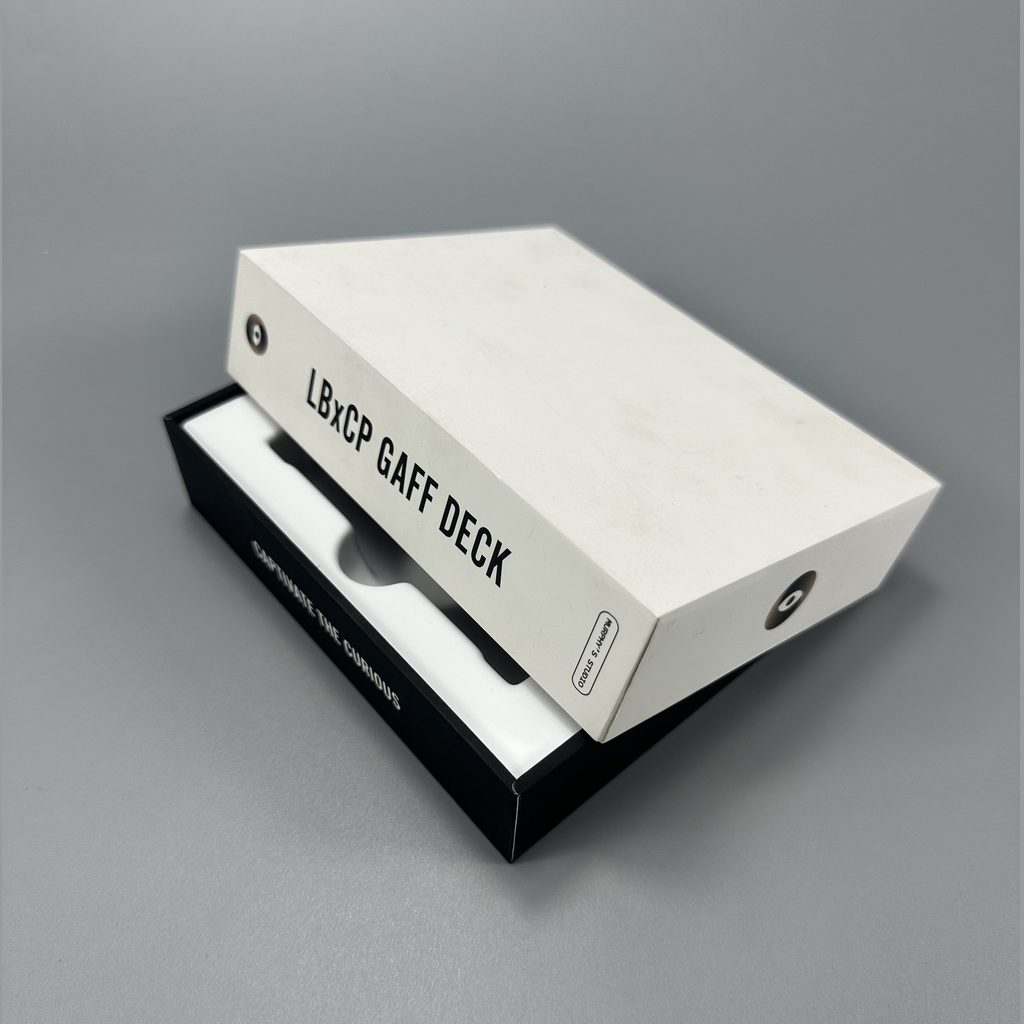
For premium products, a decorative rigid box may serve as presentation packaging inside a corrugated shipper. Do not assume the presentation box can withstand parcel handling independently.
Recycling and Customer Experience
Paper-based construction can simplify disposal, but appearance does not establish recyclability.
Coatings, laminations, adhesives, and mixed-material accessories can affect the finished package’s recycling compatibility. Clear disposal instructions should match the actual components and destination markets.
An attractive unboxing experience should also be easy to understand: open the box, remove the product, flatten the packaging, and follow locally appropriate recycling guidance.
What the Evidence Actually Shows
Recycling Data: Keep the Categories Separate
U.S. environmental data report an 80.9% recycling rate for paper and paperboard containers and packaging in 2018. The figure for all paper and paperboard was 68.2%.
Those percentages describe different categories. Neither establishes the recycling rate of a particular custom box, and neither should be presented as current-year data.
The useful lesson is that material-level statistics provide context—not proof that every paper package is recyclable.
Industry Case: Amazon’s Paper Packaging Transition
Amazon reports that it removed plastic air pillows from delivery packaging at its global fulfillment centers by October 2024, replacing them with paper alternatives.
This illustrates that a major packaging component can change at scale. It does not prove that every shipment became plastic-free or that paper offers the same environmental advantage in every application.
For smaller brands, the transferable lesson is operational: redesign the protective system and packing process together.
How to Move to Plastic-Free Custom Shipping Boxes
1. Audit Every Packaging Component
List the shipping box, inserts, tape, labels, cushioning, protective bags, coatings, and promotional accessories.
Request composition information for components that look like paper. Paper tape may contain reinforcement fibers, and paper surfaces may carry polymer coatings.
Define whether the claim covers only the outer box or the entire shipping package.
2. Right-Size Around the Product
Measure the product and required protective clearance.
Develop box sizes around common order combinations rather than forcing every order into one oversized format.
Ask for prototypes using representative products. Fit should be assessed alongside packing speed, movement control, and ease of opening.
3. Engineer Paper-Based Protection
Choose cushioning according to the product:
– Folded corrugated inserts for positioning and separation.
– Molded-fiber supports for shaped products.
– Paper cushioning for suitable gaps and contact points.
Avoid assuming that loosely added paper provides the same protection as a purpose-designed insert.
4. Test the Complete Packed Product
Evaluate the finished package, including its closure and internal protection.
ISTA Procedure 3A addresses individual packaged products shipped through parcel delivery systems at weights up to 150 pounds, or 70 kilograms. Select testing appropriate to the actual distribution route.
Laboratory testing and a monitored shipping pilot provide different evidence. Use both where the product risk justifies them.
5. Pilot Before Full Conversion
Track packaging weight, packing time, damage rate, customer complaints, and total delivered cost.
Compare the new design with the existing package under similar conditions. Approve the conversion when evidence supports protection and operational performance.
A Better Supplier Brief for Custom Paper Packaging
Bonito Packaging can be positioned as a specialist manufacturer of high-end custom paper packaging. Buyers should still request product-specific evidence rather than assume certifications, test results, or environmental attributes.
A useful quotation brief includes:
1. Product dimensions, weight, fragility, and order combinations.
2. Shipping destinations and handling conditions.
3. The precise scope of the plastic-free requirement.
4. Required board, insert, printing, and finishing specifications.
5. Prototype requirements and acceptance criteria.
My preferred decision rule is to approve the lowest-material design that reliably protects the product—not the design that merely looks most environmentally friendly.
Make Environmental Claims Specific
“Paper-based,” “recyclable,” and “plastic-free” are not interchangeable.
U.S. environmental marketing guidance generally requires qualification of recyclable claims when appropriate recycling facilities are unavailable to at least 60% of consumers or communities where the item is sold.
Use wording supported by component documentation and market conditions. Avoid broad claims such as “completely sustainable” or “zero environmental impact.”
Build Your Next Shipping Box Around Evidence
Send Bonito Packaging your product dimensions, shipment profile, current packaging components, and presentation requirements.
Request a custom paper packaging proposal with a defined plastic-free scope, prototype plan, and protection criteria. Compare the proposed system against your current package before committing to production.
Häufig gestellte Fragen
1. Are plastic-free shipping boxes always more sustainable?
No. Material weight, manufacturing, transport, damage, and disposal all influence the outcome. Removing plastic is one design decision within a broader assessment.
2. Can paper packaging protect fragile products?
It can, when the box and inserts are engineered for the product. Validate the complete packed unit through appropriate testing and shipping trials.
3. Does paper tape guarantee plastic-free packaging?
No. Verify its backing, adhesive, and reinforcement. Also inspect labels, coatings, and every other included component.
4. Are rigid gift boxes suitable for direct shipping?
Not automatically. Premium rigid boxes may need an outer corrugated shipper. Suitability depends on construction and validated delivery performance.
5. Will switching to paper reduce costs?
Possibly, but not necessarily. Right-sizing may create savings, while additional board, inserts, or labor may increase costs. Compare total delivered cost.
References
The article is original editorial copy. The recommendations are an editorial synthesis, not claims of personal factory experience or measured Bonito Packaging results. Company positioning follows the background supplied in your request.
1. U.S. Environmental Protection Agency — “Containers and Packaging: Product-Specific Data.” Supports the 2018 paper and paperboard packaging recycling figure and its category definition. [epa]
2. U.S. Environmental Protection Agency — “Paper and Paperboard: Material-Specific Data.” Supports the distinction between all paper and paperboard and packaging-specific recycling figures. [epa]
3. Amazon — “How Amazon Is Improving Packaging and Boosting Sustainability.” Company-reported source for the removal of plastic air pillows by October 2024; not an independent life-cycle comparison. [aboutamazon]
4. International Safe Transit Association — “Test Procedures.” Defines the scope of Procedure 3A for parcel-delivery packaged products weighing 150 pounds, or 70 kilograms, or less. [ista]
5. Federal Trade Commission — “Guides for the Use of Environmental Marketing Claims,” 16 CFR Part 260. Supports the guidance on substantiation, recyclable claims, and the 60% availability threshold. [ftc]
 English
 Spanish
 French
 German
 Russian
 Japanese
 Portuguese
 Arabic