
Content Menu
● From Basic Protection to Brand Experience
>> The changing purpose of chocolate packaging
● Simple Chocolate Packaging: Efficient but Limited
>> Common simple chocolate box formats
>> Benefits of simple chocolate boxes
>> Limitations of simple chocolate packaging
>> Core features of rigid chocolate packaging
>> Why rigid boxes elevate chocolate brands
● Simple vs. Rigid Chocolate Packaging Boxes
● How Rigid Chocolate Boxes Support Premium Pricing
>> The value ladder for chocolate packaging
>> Expert insight: design for the opening moment
>> Popular rigid box styles for chocolate
>>> Shoulder-and-neck rigid box
>>> Rigid box with custom insert
● Food Safety and Material Planning
>> A practical packaging specification checklist
● Sustainability Without Sacrificing Luxury
>> Design principles for more responsible rigid boxes
● A Packaging Decision Framework for Chocolate Brands
● Why Work With a Custom Rigid Box Manufacturer?
● Create a Chocolate Box Worth Keeping
>> What is a rigid chocolate box?
>> Are rigid boxes better than folding cartons for chocolate?
>> Can rigid chocolate boxes include food-safe inserts?
>> What is the best box style for chocolate gift sets?
>> Can luxury chocolate packaging be sustainable?
>> What information should I provide before ordering custom chocolate boxes?
>> Are rigid chocolate boxes suitable for e-commerce?
Chocolate packaging has evolved from a basic protective wrap into a strategic brand asset. Today, the chocolate packaging box must protect delicate products, communicate quality, support food-safety requirements, and create a memorable unboxing experience—especially in the premium gifting market.
For chocolate brands, the shift from simple cartons and folding boxes to a rigid chocolate box is not merely a design trend. It reflects changing consumer expectations around gifting, perceived value, sustainability, and product presentation. As a manufacturer of premium custom paper packaging, Bonito Packaging sees this transition firsthand: brands increasingly need packaging that performs both on retail shelves and in customers’ hands.
From Basic Protection to Brand Experience
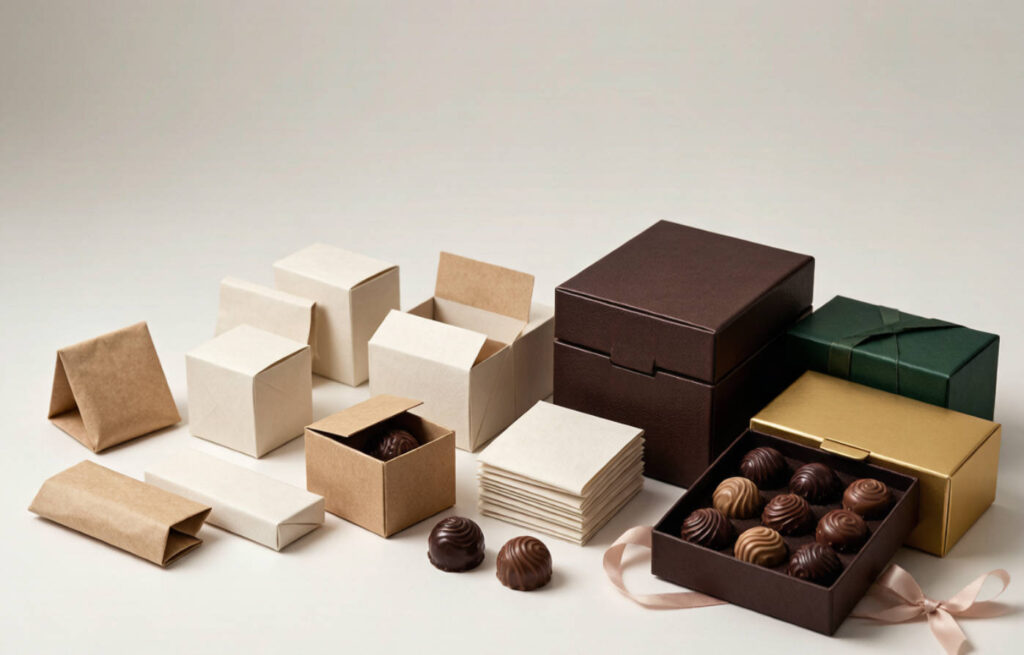
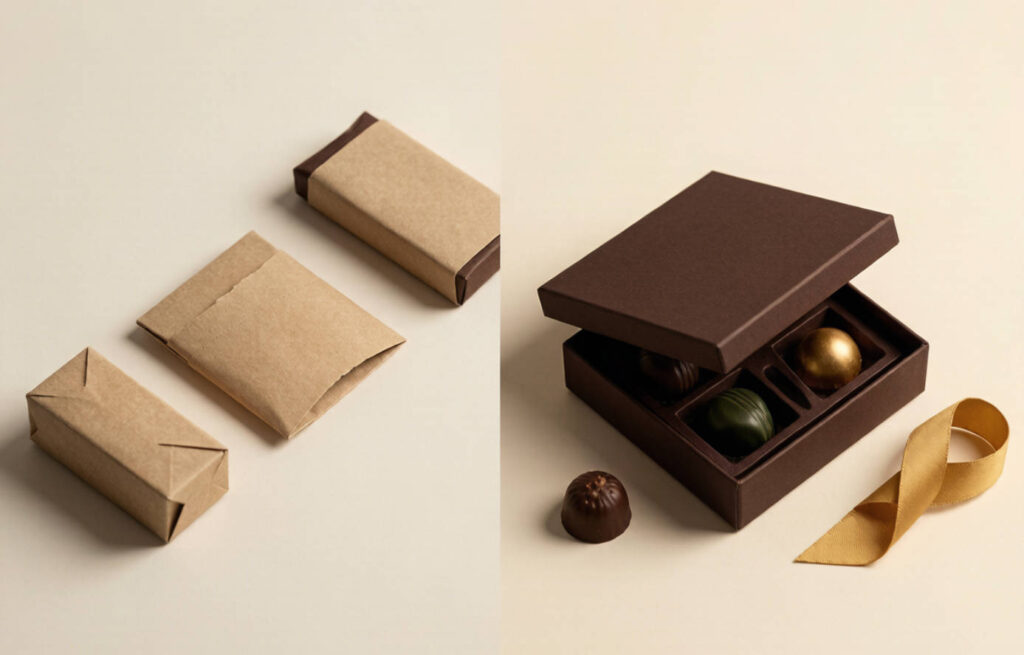
In its earliest form, chocolate packaging had a practical purpose: keep the product clean, dry, and protected during storage and transport. Paper wraps, foil, sleeves, and simple folding cartons were efficient solutions for mass-market chocolate.
However, the role of packaging has expanded significantly. A chocolate box is now often the first physical interaction a consumer has with a brand. Before tasting the chocolate, customers see the color, touch the surface, open the lid, and evaluate the quality of the entire presentation.
This is particularly important for:
– Seasonal chocolate gifts
– Premium truffles and pralines
– Artisanal chocolate collections
– Corporate gifts
– Wedding favors and event favors
– Subscription chocolate boxes
– Limited-edition launches
– Luxury retail products
A well-designed custom chocolate packaging box can help a brand create stronger emotional value before the product is even consumed.
The changing purpose of chocolate packaging
Simple packaging traditionally focused on:
– Basic product containment
– Low material consumption
– Fast assembly
– Affordable unit cost
– Standardized retail distribution
Premium rigid packaging focuses on a broader set of business goals:
– Product protection
– Brand differentiation
– Luxury perception
– Gift-ready presentation
– Better unboxing experience
– Higher perceived product value
– Repeat purchase potential
– Stronger social-media appeal
The global chocolate packaging sector is also expanding alongside premiumization and sustainability trends. One market report estimated the global chocolate packaging market at USD 12.8 billion in 2025 and projected it could reach USD 18.9 billion by 2034. Paper and paperboard formats remain important in visible, gift-oriented, and premium chocolate packaging applications.
Simple Chocolate Packaging: Efficient but Limited
A simple chocolate packaging box usually refers to lightweight formats such as folding cartons, paper sleeves, tuck-end boxes, paperboard trays, or standard printed cartons. These formats are widely used because they are practical, scalable, and cost-effective.
For everyday chocolate bars, individually wrapped pieces, and high-volume retail products, simple packaging can be the right choice.
Common simple chocolate box formats
– Straight tuck-end folding cartons
– Reverse tuck-end cartons
– Paper sleeves
– Window cartons
– Small paperboard trays
– Pillow boxes
– Standard die-cut gift boxes
– One-piece folding boxes
These options can be printed attractively and customized with colors, illustrations, or basic finishing. But structurally, they generally have thinner paperboard and lower resistance to crushing than rigid box packaging.
Benefits of simple chocolate boxes
Lower cost. Folding cartons usually require less board material and can often be shipped flat, reducing freight and storage costs.
Fast production. Standard structures are efficient for high-volume orders and repeat packaging programs.
Compact storage. Flat-packed cartons occupy less warehouse space before assembly.
Suitable for everyday products. For low- to mid-priced chocolate products, a folding carton can offer enough protection and branding without adding unnecessary cost.
Limitations of simple chocolate packaging
The main challenge is that a simple carton may struggle to communicate exclusivity. Even with premium printing, lightweight board can feel less substantial in the customer’s hand.
Common limitations include:
– Lower crush resistance during shipping
– Less premium tactile impact
– Reduced reuse potential
– Fewer structural design possibilities
– Less impressive gifting experience
– Potentially weaker shelf distinction in luxury categories
For example, a standard tuck-end carton may work well for a 50 g chocolate bar. But it is less suitable for a 24-piece praline collection positioned as a holiday gift or corporate presentation item.
A rigid chocolate box is made from thick paperboard, often called greyboard or chipboard, which is then wrapped with printed paper, specialty paper, textured paper, fabric-like paper, or other decorative materials.
Unlike folding cartons, rigid boxes retain their shape and are typically delivered pre-assembled. Their durable structure creates a noticeably higher-end presentation.
Core features of rigid chocolate packaging
A premium rigid box may include:
– Thick rigid board construction
– Wrapped paper exterior
– Custom-fit inserts or trays
– Magnetic closures
– Lift-off lids
– Shoulder-and-neck structures
– Drawer-style pull-out boxes
– Ribbon pull tabs
– EVA, paper, pulp, or cardboard inserts
– Foil stamping
– Embossing or debossing
– Spot UV finishing
– Soft-touch lamination
– Textured specialty paper
The goal is not simply to make a thicker box. The goal is to build a packaging experience that makes the chocolate feel more valuable, more giftable, and more memorable.
Why rigid boxes elevate chocolate brands
When consumers hold a rigid box, they immediately notice the weight, stiffness, finish, and opening mechanism. These signals influence perceived quality.
A luxury chocolate brand can use this effect to support a higher price point. The box becomes part of the product rather than a disposable outer layer.
For premium chocolate, the packaging often communicates messages such as:
– “This is a gift worth giving.”
– “This product is handcrafted.”
– “This collection is limited.”
– “This brand pays attention to detail.”
– “This is suitable for an important occasion.”
Simple vs. Rigid Chocolate Packaging Boxes
| Característica | Simple Chocolate Packaging Box | Rigid Chocolate Box |
|---|---|---|
| Main structure | Lightweight folding paperboard | Thick rigid board with wrapped paper |
| Shipping format | Usually flat-packed | Usually pre-assembled |
| Unit cost | Baja | Más alto |
| Storage requirement | Lower before assembly | Higher due to fixed shape |
| Product protection | Suitable for standard retail use | Stronger resistance to compression and impact |
| Perceived value | Functional to mid-range | Premium, luxury, and gift-oriented |
| Design flexibility | Good for printed graphics | Excellent for structural details and luxury finishes |
| Best use cases | Bars, snacks, entry-level assortments | Truffles, pralines, gift sets, corporate gifts |
| Reutilización | Often limited | Higher potential for reuse and keepsake value |
| Unboxing experience | Básico | High-impact and memorable |
The best option depends on product positioning, order volume, retail channel, logistics, and target price.
A premium box does not automatically make a product successful. But when the product, positioning, and customer expectations align, a custom rigid chocolate box can be a powerful commercial tool.
How Rigid Chocolate Boxes Support Premium Pricing
Luxury packaging should support a real value proposition. It should not be used only as decoration.
From a packaging development perspective, rigid boxes are most effective when they reinforce the product story. For example, a single-origin chocolate collection, handcrafted truffle set, or limited seasonal assortment already has qualities that justify elevated presentation.
The value ladder for chocolate packaging
A practical way to evaluate packaging investment is to match the box structure to the product’s commercial position.
| Chocolate Product Positioning | Recommended Packaging Direction |
|---|---|
| Everyday impulse-purchase chocolate | Simple wrapper, sleeve, or folding carton |
| Mid-range retail assortment | Printed folding carton with insert or window |
| Premium gift chocolate | Rigid lid-and-base box or shoulder box |
| Luxury artisan pralines | Rigid box with custom insert and premium finishes |
| Corporate or holiday gifting | Magnetic rigid box, drawer box, or multi-layer gift set |
| Limited-edition collector product | Bespoke rigid box with special paper and storytelling elements |
Expert insight: design for the opening moment
In luxury packaging, customers remember the opening process. A magnetic flap that closes smoothly, a ribbon pull that reveals the chocolate tray, or a clean lift-off lid can create a stronger emotional response than graphics alone.
For this reason, packaging development should consider three moments:
1. The shelf moment: Will the product stand out visually?
2. The touch moment: Does the material feel consistent with the brand promise?
3. The opening moment: Does the unboxing experience feel intentional and satisfying?
Not every rigid box structure fits every chocolate product. The box should protect the product, suit the number of pieces, work with the desired insert, and remain practical for fulfillment.
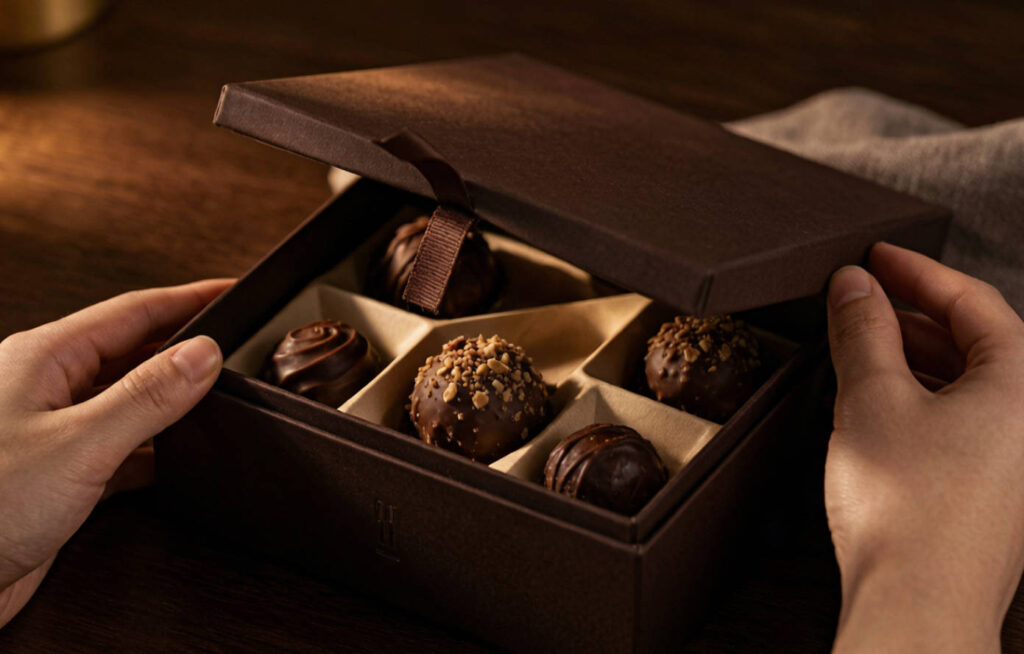
Popular rigid box styles for chocolate
Rigid lid-and-base box
This classic two-piece structure includes a separate lid and bottom base. It is ideal for chocolate gift collections, seasonal assortments, and premium retail packaging.
Best for: Truffles, pralines, gourmet chocolate sets, holiday gifts.
Magnetic closure box
This style uses embedded magnets to create a smooth, secure opening and closing action. It can be designed as a book-style box or foldable rigid gift box.
Best for: Corporate gifts, luxury presentation sets, e-commerce gifting.
Drawer-style rigid box
Also known as a slide box or matchbox-style box, this format has an outer sleeve and pull-out inner tray.
Best for: Small chocolate collections, confectionery sets, branded gift boxes.
Shoulder-and-neck rigid box
A shoulder-and-neck structure includes a raised inner section between the lid and base. It creates a refined reveal when the lid is lifted.
Best for: High-end chocolate assortments, anniversary editions, boutique collections.
Rigid box with custom insert
An insert helps keep each chocolate piece stable, separated, and visually organized. Depending on the project, inserts may use paperboard, molded pulp, food-safe trays, or other compatible materials.
Best for: Delicate pralines, multiple flavors, gift-ready assortments.
Food Safety and Material Planning
Chocolate packaging must be visually appealing, but it must also be developed responsibly. Food packaging materials may come into direct or indirect contact with food, depending on the product configuration.
In the European market, food-contact materials are regulated under a framework designed to protect consumer health. These materials should not transfer substances into food at levels that could create safety concerns, alter food composition, or negatively affect taste and odor. Packaging materials must also be manufactured according to Good Manufacturing Practices.
For chocolate brands, this means packaging planning should include more than external design. It should also consider:
– Whether chocolate directly contacts the packaging
– The use of inner wraps, cups, trays, or liners
– The coating and ink system
– Storage temperature and humidity
– Fat migration considerations
– Odor transfer risks
– Product shelf-life requirements
– Traceability documentation
– Destination-market requirements
A practical packaging specification checklist
Before requesting a quote for a custom chocolate box, prepare the following information:
1. Product dimensions, weight, and number of pieces.
2. Whether each chocolate is individually wrapped.
3. Required box style and opening method.
4. Desired insert type and cavity layout.
5. Target market and food-contact requirements.
6. Preferred paper materials and finishes.
7. Expected order quantity.
8. Shipping method and fulfillment requirements.
9. Brand colors, logo files, and artwork direction.
10. Target retail price and desired market position.
A clear brief helps a packaging manufacturer recommend the most appropriate structure and avoid expensive revisions later.
Sustainability Without Sacrificing Luxury
Sustainability is increasingly important in chocolate packaging, but premium design and responsible material choices do not have to conflict.
Paper-based rigid boxes can offer a strong foundation for luxury packaging because they can be designed with recyclable fiber-based components. However, recyclability depends on the complete construction—not simply the use of paperboard.
A rigid chocolate box may become harder to recycle if it includes unnecessary combinations of materials, such as plastic laminations, foam, metal parts, or difficult-to-separate decorative elements.
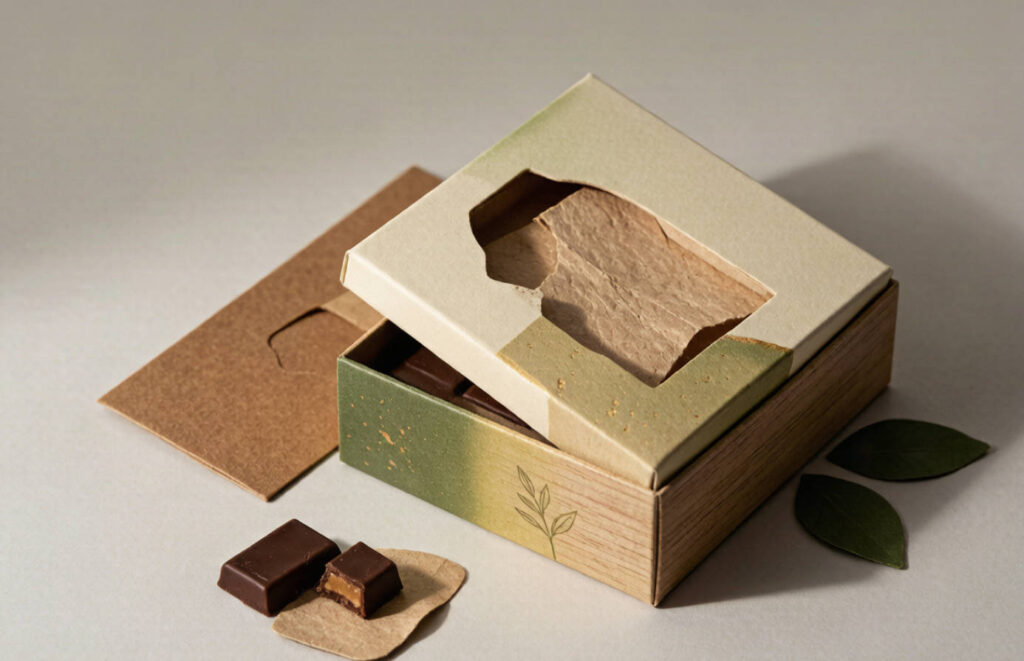
Design principles for more responsible rigid boxes
– Prioritize paper-based board and paper inserts where practical.
– Use only the packaging layers the customer truly needs.
– Reduce oversized empty space.
– Avoid unnecessary plastic windows.
– Design inserts to be removable when possible.
– Consider water-based or low-impact finishing options where appropriate.
– Use clear disposal instructions when required by the destination market.
– Balance protective performance with material efficiency.
European packaging rules are also moving toward stronger circular-economy requirements. The EU Packaging and Packaging Waste Regulation began applying in phases from August 2026, with restrictions on PFAS in food-contact packaging among the measures already in application. Additional requirements related to recyclability, labeling, recycled content, and waste reduction will be phased in over the coming years.
For chocolate brands selling internationally, the best approach is to discuss sustainability goals early in the structural design stage—not after the box design has already been finalized.
A Packaging Decision Framework for Chocolate Brands
Choosing between simple and rigid chocolate packaging should be a commercial decision, not just an aesthetic one.
Use this framework before selecting a format:
| Question | If the Answer Is Yes | Recommended Direction |
|---|---|---|
| Is the product designed as a gift? | Presentation is part of the purchase decision | Consider a rigid chocolate gift box |
| Is the retail price premium? | Packaging must reinforce perceived value | Use premium board, insert, and finishing |
| Are the chocolates fragile or precisely arranged? | Stronger protection and stability are needed | Use a rigid box with custom insert |
| Is the product sold online? | Shipping protection and unboxing matter | Consider durable rigid structures |
| Is speed and low cost the priority? | Efficiency outweighs luxury presentation | Choose a folding carton or simple box |
| Is the product a seasonal or limited edition? | Emotional impact can drive conversion | Use a distinctive rigid structure |
The strongest packaging projects align the physical box with the brand’s business model. A mass-market product may need simplicity and speed. A premium gift brand may need a box that customers want to photograph, display, and keep.
Why Work With a Custom Rigid Box Manufacturer?
Custom rigid box production requires close coordination between structural design, printing, material selection, finishing, insert engineering, sampling, and quality control.
At Bonito Packaging, we approach a custom chocolate rigid box as a complete packaging system. The outer box, inner insert, printing process, protective needs, and brand story should work together.
A well-executed rigid box can help chocolate brands:
– Create premium shelf presence
– Improve gifting appeal
– Protect delicate products
– Strengthen brand recognition
– Support premium pricing
– Make seasonal campaigns feel more exclusive
– Deliver a consistent luxury customer experience
The transition from simple packaging to rigid packaging is not necessary for every chocolate product. But for brands competing in premium retail, gifting, and artisan categories, it can be a meaningful investment in perceived value and customer experience.
Create a Chocolate Box Worth Keeping
Your chocolate deserves packaging that reflects its craftsmanship. Whether you need a refined rigid gift box, a magnetic chocolate presentation box, a drawer-style praline box, or a custom insert solution, Bonito Packaging can help turn your concept into a production-ready packaging solution.
Contact Bonito Packaging today to discuss your custom rigid chocolate packaging project, request a tailored quote, or begin with a structural sample.
PREGUNTAS FRECUENTES
What is a rigid chocolate box?
A rigid chocolate box is a premium packaging box made from thick paperboard that maintains its shape. It is commonly used for luxury chocolate gifts, truffles, pralines, and high-value confectionery collections.
Are rigid boxes better than folding cartons for chocolate?
Rigid boxes are better for premium presentation, protection, gifting, and unboxing experiences. Folding cartons are often better for lower-cost, high-volume, and everyday retail chocolate products.
Can rigid chocolate boxes include food-safe inserts?
Yes. Rigid chocolate boxes can be designed with compatible inner trays, cups, liners, or inserts to organize and protect chocolate pieces. The correct material choice depends on whether there is direct food contact and the product’s specific requirements.
What is the best box style for chocolate gift sets?
A rigid lid-and-base box, magnetic closure box, drawer box, or shoulder-and-neck box can work well. The best choice depends on the product quantity, insert layout, target price, and brand positioning.
Can luxury chocolate packaging be sustainable?
Yes. Brands can use paper-based rigid board, paper inserts, material-efficient structures, and reduced mixed-material components. Sustainability should be evaluated at the full-packaging level, including finishes, inserts, closures, and disposal options.
What information should I provide before ordering custom chocolate boxes?
Provide product size, piece count, packaging style, insert requirements, target market, artwork files, preferred materials, finishing requirements, order quantity, and delivery requirements.
Are rigid chocolate boxes suitable for e-commerce?
Yes, especially for premium chocolate gifts. However, brands should also test the complete shipping system, including outer mailer, protective cushioning, temperature considerations, and transit conditions.
References
1. European Commission. Food Contact Materials – Food Safety. Explains the EU’s core food-contact-material requirements, including Regulation (EC) No 1935/2004 and Good Manufacturing Practices. [Link]
2. European Commission. Packaging – Food Safety. Outlines food-packaging safety requirements, traceability expectations, authorized substances, and migration limits. [Link]
3. European Food Safety Authority (EFSA). Food Contact Materials. Provides an overview of food-contact-material definitions and requirements under EU regulations. [Link]
4. EUR-Lex. Regulation (EC) No 1935/2004 on Materials and Articles Intended to Come into Contact with Food. [Link]
5. European Commission. New EU Rules on Packaging Enter into Application. Covers the phased application of the Packaging and Packaging Waste Regulation from August 2026, including restrictions for PFAS in food-contact packaging. [Link]
6. European Parliament Think Tank. Food Contact Materials in the EU: State of Play. Discusses the legal landscape for food-contact materials, including paper, inks, coatings, plastics, and other packaging components. [Link]
7. USD Analytics. Global Chocolate Packaging Market 2025–2034. Market estimate and trend analysis covering paperboard, rigid boxes, premium chocolate packaging, and sustainable formats. [Link]
Hot Tags: Rigid Box, Manufacturers, Customized, Custom, Suppliers, Buy, Cheap, Quality, Advanced, Durable, in Stock, Made in China, Price, Quotation, Free Sample
 English
  Spanish
  French
  German
  Russian
  Japanese
  Portuguese
  Arabic