
Content Menu
● Corrugated vs. Cardboard: The Essential Difference
● Is Corrugated Packaging More Expensive Than Cardboard?
● Why Corrugated Boxes Usually Cost More
>> Multi-layer board construction
>> Higher protection requirements
>> Larger dimensions and low packing efficiency
>> Custom printing and finishing
>> Order quantity and production setup
● Cardboard Boxes: When the Lower-Cost Option Makes Sense
● Corrugated Strength: Why Flute Type and ECT Matter
● A Practical Packaging Cost Model
>> Example: Fragile cosmetic bottle
● Sustainability: Make Claims Carefully
● Expert Buying Advice for Custom Packaging
● Choose the Right Packaging System
● よくあるご質問
>> 1. Is corrugated cardboard the same as cardboard?
>> 2. Are corrugated boxes more expensive than folding cartons?
>> 3. What corrugated flute is best for e-commerce packaging?
>> 4. What does ECT mean on a corrugated box?
>> 5. Can a folding carton be used as a shipping box?
>> 6. How can I reduce corrugated box costs without reducing protection?
>> 7. Are corrugated boxes recyclable?
Choosing between corrugated boxes そして 段ボール箱 is not simply a material-cost decision. For brands shipping products through warehouses, couriers, retailers, or international supply chains, the real question is: Which packaging option delivers the lowest total cost while protecting the product and supporting the customer experience?
At Bonito Packaging, we see this distinction every day. A less expensive folding carton may look ideal on a unit-price quotation, but it can become costly when it requires an extra shipping carton, more void fill, higher damage risk, or difficult packing operations. Conversely, a well-specified custom corrugated box may cost more per piece but reduce breakage, dimensional inefficiency, and repacking labor.
This guide explains the practical corrugated vs. cardboard cost comparison, including material structure, cost drivers, box-strength specifications, use cases, and a sourcing framework for brands buying custom paper packaging.
Corrugated vs. Cardboard: The Essential Difference
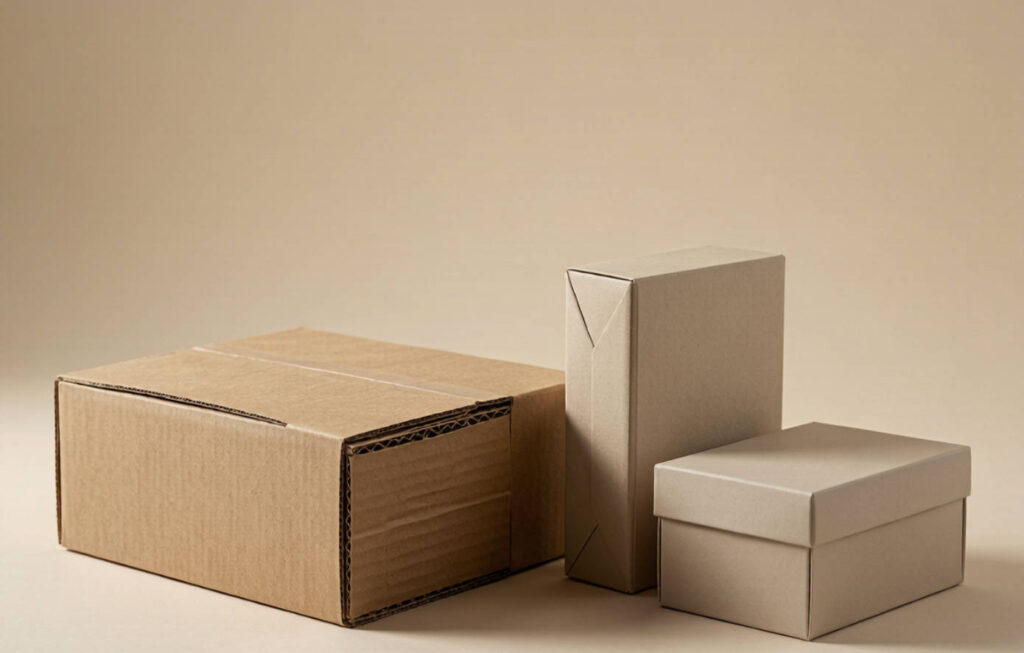
In everyday business conversations, “cardboard” is often used as a broad term for paper-based boxes. In technical packaging procurement, however, it is useful to separate paperboard folding cartons from corrugated packaging.
A standard cardboard or paperboard box usually uses a single sheet of rigid paper-based board. It is commonly converted into folding cartons, sleeves, display boxes, and product boxes. Corrugated board consists of flat linerboards with one or more wavy paper layers—called flutes—between them.
That fluted structure changes the packaging’s performance. It creates air space, improves cushioning, increases stacking resistance, and helps the box absorb shocks during distribution.
| Packaging type | Basic structure | Typical strengths | Common applications | Relative unit cost |
|---|---|---|---|---|
| Folding carton / paperboard box | Single-layer paperboard | Print quality, retail appearance, lightweight construction | Cosmetics, supplements, food, electronics accessories | Usually lower |
| Single-wall corrugated box | Two liners plus one flute layer | Shipping protection, moderate stacking strength | E-commerce parcels, mailer boxes, general shipping cartons | 中程度 |
| Double-wall corrugated box | Three liners plus two flute layers | Higher compression and puncture resistance | Heavy, fragile, or export products | より高い |
| Rigid box | Thick chipboard wrapped with decorative paper | Premium presentation, repeat use, structural luxury | Jewelry, beauty, gifts, premium electronics | Highest |
Key takeaway: Corrugated is not automatically the right answer for every product. It is usually the better option when the package must survive transit. Folding cartons and rigid boxes are often better for brand presentation, shelf appeal, and an elevated unboxing experience.
Is Corrugated Packaging More Expensive Than Cardboard?
In most direct comparisons, corrugated packaging costs more than a basic paperboard folding carton because it uses more fiber, more complex converting processes, and often requires heavier board grades.
However, direct box price is only one part of packaging cost. A purchasing manager should evaluate landed packaging cost, not just the ex-factory price per box.
The total cost can include:
– Material and board grade
– Printing and finishing
– Tooling or die-cut costs
– Packing labor
– Inserts, dividers, and void fill
– Outer shipping-carton requirements
– Storage space
– Freight and dimensional weight
– Product damage, returns, and replacement cost
– Retail presentation and perceived brand value
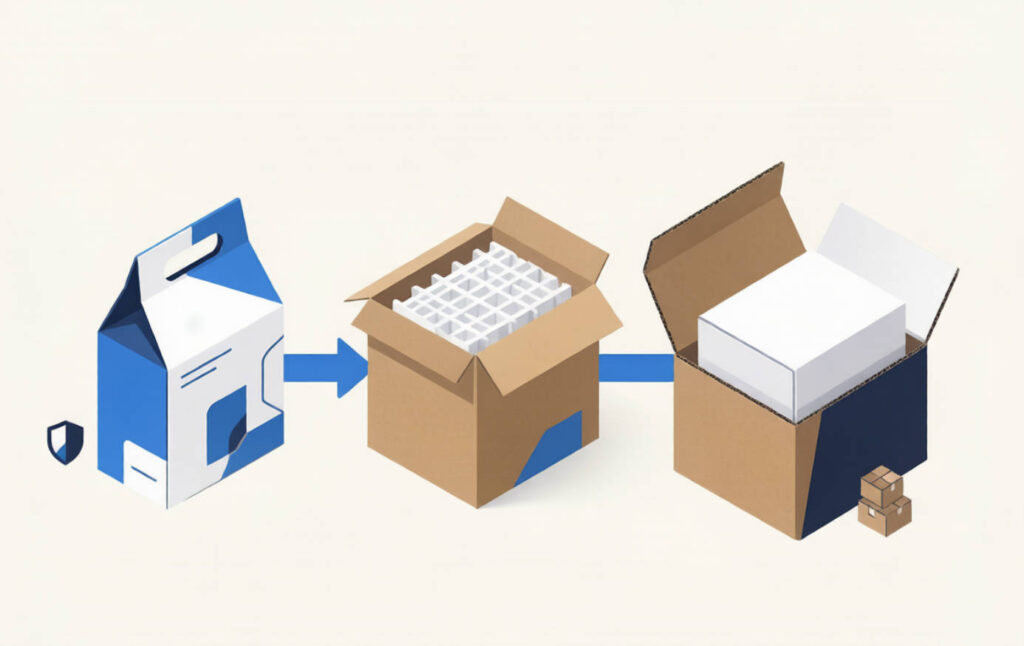
For example, a premium skincare brand may use a printed folding carton for the consumer-facing product box and a corrugated mailer for shipment. This two-layer solution costs more than shipping the product in a basic carton alone, but it can provide stronger protection and a better unboxing experience.
Why Corrugated Boxes Usually Cost More
Multi-layer board construction
Corrugated board uses linerboard and fluted medium. A single-wall board contains two liners and one flute layer, while double-wall and triple-wall formats add further layers.
More material generally means a higher paper cost. The flute also requires corrugating equipment and controlled bonding during production.
Higher protection requirements
A shipping box must withstand more than its own weight. It may experience conveyor impacts, warehouse stacking, moisture variation, repeated handling, and compression during transport.
When a brand specifies stronger board, higher ECT, double-wall construction, or protective inserts, the packaging cost rises. But these upgrades are often justified for fragile, heavy, or high-value products.
Larger dimensions and low packing efficiency
A larger box consumes more board and often increases freight expense. Oversized packaging can also create a poor customer experience, especially when a small product arrives inside a large carton with excessive filler.
Right-sizing the box can reduce material usage and help lower transportation cost.
Custom printing and finishing
Custom corrugated packaging can include:
– Flexographic printing for shipping cartons
– Litho-laminated printed sheets
– Spot colors and brand graphics
– Matte or gloss coatings
– Die-cut openings, handles, and tear strips
– Custom inserts and dividers
– Embossing, foil stamping, or specialty finishes for premium packaging
These elements improve brand visibility, but every additional process should support a commercial purpose—such as shelf differentiation, easier opening, or stronger perceived value.
Order quantity and production setup
Short runs often have higher per-unit costs because setup, tooling, artwork preparation, and machine time are spread across fewer boxes. Higher-volume orders generally improve unit economics, provided that inventory turnover and storage capacity remain manageable.
Cardboard Boxes: When the Lower-Cost Option Makes Sense
A folding carton or standard paperboard box can be a highly efficient choice when the product does not require substantial transit protection on its own.
It is particularly suitable for:
– Lightweight products
– Retail shelf packaging
– Cosmetics and personal-care products
– Tea, dry food, and consumer goods
– Accessories and small electronics
– Promotional sleeves and product kits
– Products that will later be packed into a master shipping carton
Paperboard cartons also offer excellent print quality. They are often a better choice than corrugated for brands that need detailed graphics, small typography, color matching, or premium decorative effects.
The limitation is clear: a folding carton is generally not a substitute for a shipping carton. If a delicate product is sent through parcel networks, it may still need a corrugated outer box, protective insert, or padded mailer.
Corrugated Strength: Why Flute Type and ECT Matter
A box should not be selected by appearance or thickness alone. Two corrugated boxes can look similar yet perform very differently in stacking and shipping conditions.
The most important specifications include flute type, board grade, wall construction, box dimensions, and エッジクラッシュテスト(ECT) rating.
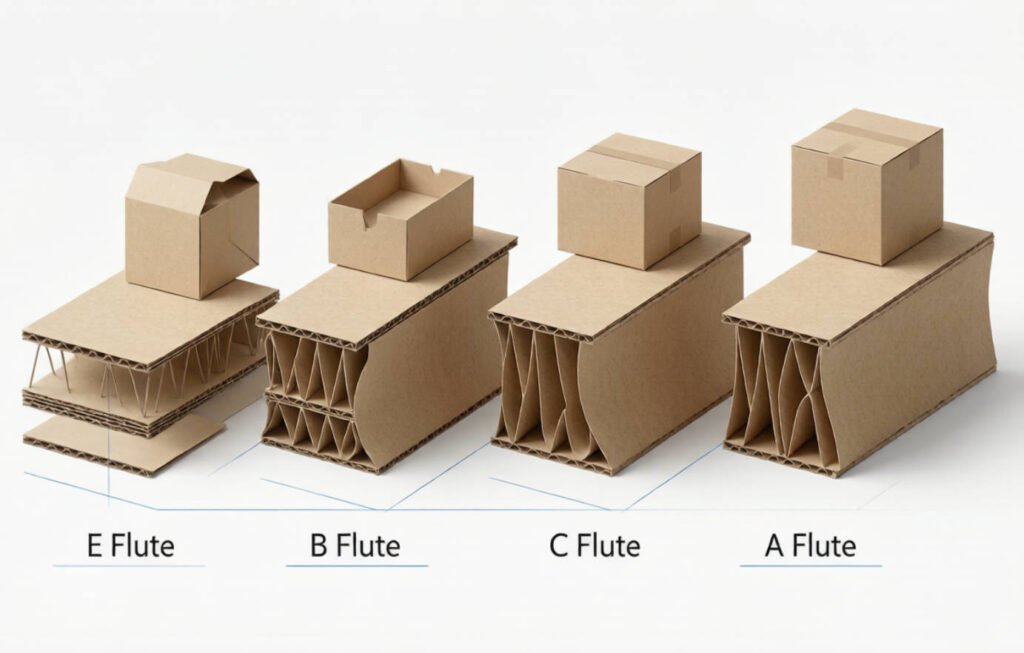
ECT measures the resistance of corrugated board to compression along its edge. In practical terms, a higher ECT rating generally indicates stronger stacking performance. It should be evaluated together with box dimensions, humidity exposure, product weight, and distribution conditions.
| Flute type | Approximate thickness | Packaging characteristics | Best-fit applications |
|---|---|---|---|
| F flute | About 0.6–1 mm | Fine flute, smooth surface, compact profile | Small retail packs, premium mailers, lightweight products |
| E flute | About 1.5 mm | Good print surface and moderate protection | Subscription boxes, cosmetics, e-commerce mailers |
| B flute | About 3 mm | Strong crush resistance and compact profile | Cans, displays, inner packs, mailers |
| C flute | About 4 mm | Balanced cushioning and stacking strength | Standard shipping cartons |
| A flute | About 5 mm | Greater cushioning and vertical compression resistance | Fragile or heavier products |
For many e-commerce applications, E flute supports a refined branded-mailer appearance, while B or C flute is often more appropriate for general shipping cartons. Heavy, fragile, or export goods may require double-wall construction and internal dividers or inserts.
A Practical Packaging Cost Model
The most reliable way to compare corrugated and cardboard packaging is to assess the complete packaging system.
Use this five-step process before requesting quotations:
1. Define the product risk. Record product weight, dimensions, fragility, surface sensitivity, and replacement value.
2. Map the distribution journey. Identify whether the product ships by courier, pallet, container, retail distribution, or direct-to-consumer fulfillment.
3. Choose the primary packaging role. Decide whether the box is intended for product presentation, shipping protection, or both.
4. Specify performance needs. Include board type, flute, ECT target, wall construction, internal fit, insert requirement, and moisture exposure.
5. Compare total cost scenarios. Request quotes for at least two packaging configurations, then compare unit price, packing time, shipping volume, protection level, and likely damage risk.
Example: Fragile cosmetic bottle
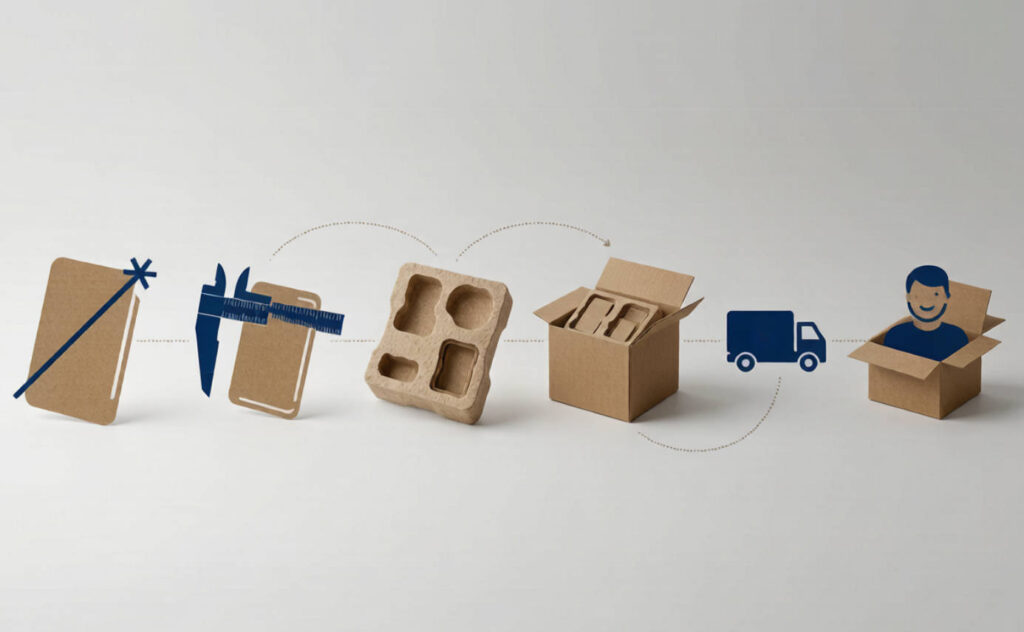
A luxury serum bottle may require a rigid box or printed folding carton to create a premium retail impression. Yet the consumer-facing box alone may not be sufficient for e-commerce delivery.
A more effective system could include:
– A rigid box or folding carton for presentation
– A custom molded pulp or corrugated insert to immobilize the bottle
– An E-flute branded mailer or B-flute shipping carton
– A correctly sized outer box to reduce void fill
This system may have a higher packaging cost than a standard carton. However, it can reduce breakage, improve unboxing, and support repeat purchases—especially for products where a damaged first delivery harms brand trust.
Sustainability: Make Claims Carefully
Paper-based packaging can support sustainability goals, but brands should avoid broad claims that are not supported by the specific package design.
Corrugated packaging is widely recovered for recycling in the United States. The American Forest & Paper Association reported that 69% to 74% of cardboard available for recovery was recycled in 2024. That does not mean every corrugated box is equally recyclable in every market. Coatings, plastic laminations, foil, adhesive choices, food contamination, and local collection infrastructure can all affect real-world recyclability. [afandpa]
For a more credible packaging strategy, focus on practical actions:
– Use right-sized packaging to reduce material use
– Prefer paper-based protective components where performance permits
– Avoid unnecessary mixed-material constructions
– Use recycled-content board options when available
– Design print and coatings with end-of-life requirements in mind
– Confirm local recycling expectations in target markets
– State only claims that can be documented for the actual product
The Fibre Box Association states that the average corrugated box contains 52% recycled content, although recycled-content levels vary by supplier, grade, and region. [fibrebox]
Expert Buying Advice for Custom Packaging
The best packaging buyers do not begin with “What is the cheapest box?” They start with “What job must this box do?”
For export-oriented manufacturers and global e-commerce brands, this distinction is particularly important. Long transport distances, humidity changes, multiple handling points, and cross-border fulfillment increase the cost of under-specification.
Before approving a custom corrugated box, ask your supplier:
– What board construction is recommended and why?
– What flute type and ECT rating are proposed?
– Has the design considered product weight and stacking conditions?
– Can the box dimensions be reduced without risking damage?
– Is an insert needed to prevent movement?
– Which print method offers the best cost-to-quality ratio?
– Can the package be sampled and tested before mass production?
– What recycled-content or recyclability documentation is available?
A reliable packaging manufacturer should explain trade-offs clearly. For example, reducing flute thickness may improve storage efficiency and print appearance, but it may also reduce cushioning. Adding a divider can increase material cost, but it may protect multiple items more efficiently than individual wrapping.
Choose the Right Packaging System
Choose a paperboard folding carton when brand presentation, low weight, detailed printing, and retail display are the priorities.
Choose a corrugated box when shipping protection, stacking strength, product security, and parcel distribution are the priorities.
Choose a リジッドボックス when the product needs a luxury presentation, high perceived value, and a durable keepsake-style structure.
In many cases, the optimal answer is not corrugated or cardboard. It is a structured packaging system: a premium inner box, a protective insert, and a right-sized corrugated shipper.
Bonito Packaging can help you develop custom corrugated boxes, rigid boxes, folding cartons, inserts, and complete paper packaging systems based on your product, sales channel, and fulfillment requirements. Request a custom packaging consultation and sample plan to balance protection, presentation, and total cost.
よくあるご質問
1. Is corrugated cardboard the same as cardboard?
Not exactly. In casual use, people often call corrugated board “cardboard.” Technically, corrugated board has fluted paper between flat linerboards, while many folding cartons are made from single-layer paperboard.
2. Are corrugated boxes more expensive than folding cartons?
Usually, yes. Corrugated boxes typically use more material and provide more shipping protection. However, the lowest unit price is not always the lowest total cost because product damage, void fill, packing labor, and freight also matter.
3. What corrugated flute is best for e-commerce packaging?
E flute is often a strong option for branded e-commerce mailers because it combines a relatively smooth print surface with practical protection. B or C flute may be more appropriate for heavier goods or standard shipping cartons.
4. What does ECT mean on a corrugated box?
ECT stands for Edge Crush Test. It measures how much edgewise compression a corrugated board can withstand in laboratory testing. Higher ECT values generally indicate better stacking strength.
5. Can a folding carton be used as a shipping box?
A folding carton can be shipped within a protected outer carton, but it is usually not sufficient as the only shipping container for fragile or high-value goods. It is best used as retail or product packaging.
6. How can I reduce corrugated box costs without reducing protection?
Start by right-sizing the box, optimizing product orientation, reducing unnecessary void space, selecting the appropriate flute and board grade, and using inserts only where needed. Testing samples before production can prevent expensive over-engineering or under-specification.
7. Are corrugated boxes recyclable?
Corrugated boxes are widely recyclable where paper and cardboard collection systems are available. Recyclability can be affected by heavy plastic laminations, contamination, coatings, adhesives, and local recycling requirements.
References
1. OXO Packaging. “Corrugated vs Cardboard Cost Comparison.” Discusses basic differences in structure, typical use cases, thickness ranges, and packaging cost factors. [https://oxopackaging.com/blog/corrugated-vs-cardboard-cost-comparison.html] [oxopackaging]
2. American Forest & Paper Association. “Paper Industry Announces 2024 U.S. Paper Recycling Rates.” Reports that 69%–74% of cardboard available for recovery was recycled in the United States in 2024. [https://www.afandpa.org/news/2025/paper-industry-announces-2024-us-paper-recycling-rates] [afandpa]
3. Fibre Box Association. “The Corrugated Industry.” Provides industry information on corrugated recovery and average recycled content in corrugated boxes. [https://www.fibrebox.org/the-corrugated-industry/] [fibrebox]
4. EcoEnclose. “Understanding Shipping Box Strength.” Explains ECT ratings, corrugated flutes, and common shipping-box strength terminology. [https://www.ecoenclose.com/blog/understanding-shipping-box-strength/] [ecoenclose]
5. International Paper. “Corrugated Packaging Solutions.” Provides manufacturer context on corrugated packaging’s protective role and use of recyclable, renewable materials. [https://www.internationalpaper.com/packaging/corrugated-packaging] [internationalpaper]
Hot Tags: Right Box, Manufacturers, Customized, Custom, Suppliers, Buy, Cheap, Quality, Advanced, Durable, in Stock, Made in China, Price, Quotation, Free Sample
 English
  Spanish
  French
  German
  Russian
  Japanese
  Portuguese
  Arabic