
Content Menu
● Why Custom Packaging Matters for Brands
● Start With a Packaging Brief
● Measure Box Dimensions Correctly
● Choose the Right Custom Paper Packaging
>> Folding Cartons for Retail Presentation
>> Corrugated Packaging for E-Commerce Protection
>> Rigid Boxes for Premium Product Experiences
● Design Packaging for Protection and Unboxing
>> The Packaging Stress-Test Checklist
● Select Printing, Coatings, and Finishes
>> オフセット印刷
>> デジタル印刷
>> フレキソ印刷
● Prepare Artwork and Dielines Properly
● Build Sustainability Into the Structure
● Prototype Before Full Production
● Work With a Custom Packaging Manufacturer
● よくある質問
>> 1. What is the best material for custom product packaging?
>> 2. How do I measure a custom box?
>> 3. What is the difference between a folding carton and a rigid box?
>> 4. Should I choose digital or offset printing for packaging?
>> 5. Are paper boxes recyclable?
>> 6. Do I need a packaging prototype before production?
>> 7. What information should I send to a packaging manufacturer?
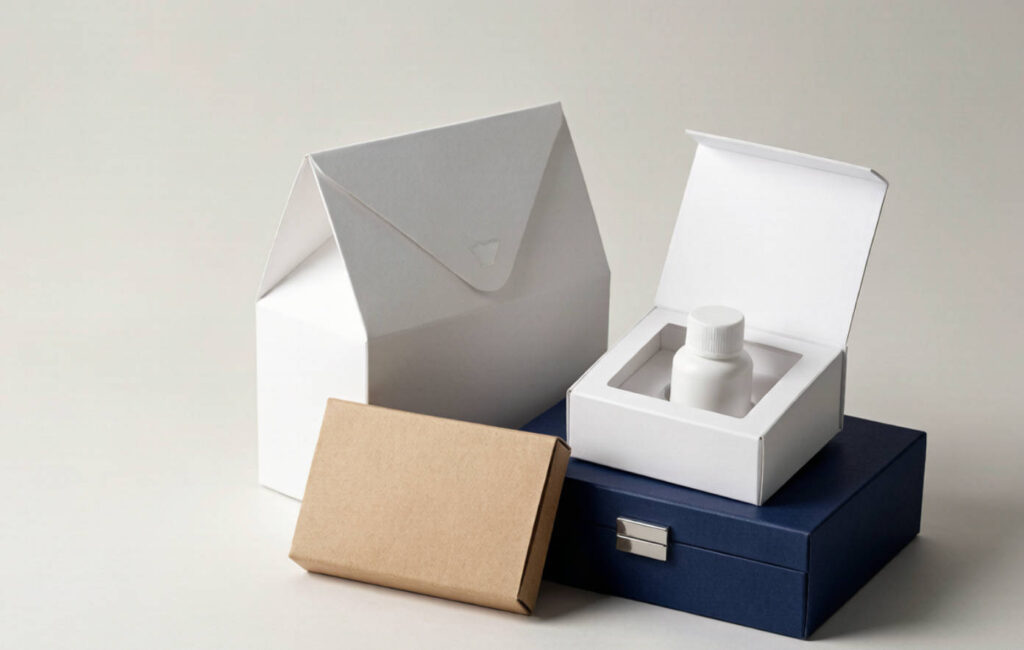
Custom product packaging is not simply a box around a product. For modern brands, it is a protection system, a retail display, an e-commerce shipping asset, and a physical expression of brand value.
で ボニート・パッケージング, we work from a manufacturer’s perspective: successful カスタムパッケージング begins with the product, supply chain, customer experience, and production reality—not only with a visual concept. The best custom paper packaging balances structural strength, material efficiency, print quality, and a memorable unboxing experience.
This guide explains how to develop premium custom packaging step by step, from selecting materials and measuring box dimensions to approving artwork, prototypes, and production.
Why Custom Packaging Matters for Brands
Packaging has to perform before it can impress. It must protect the product during warehousing and transportation, communicate essential information, and create confidence at the point of purchase or delivery.
For e-commerce brands, packaging also becomes the first physical interaction a customer has with the brand. A crushed box, excessive void fill, or poorly fitted insert can reduce perceived product quality—even when the product itself is excellent.
Premium custom packaging can help brands:
– Protect products from shock, compression, scratching, and moisture exposure
– Improve shelf visibility in retail environments
– Create a more consistent brand identity across product lines
– Reduce unnecessary shipping volume and material use
– Make unboxing easier, more organized, and more shareable
– Support credible recycling and sustainability communication
Paper and paperboard packaging remain especially relevant because corrugated boxes have an established recycling stream. In the United States, approximately 32.1 million tons of corrugated boxes were recycled in 2018, representing one of the most widely recovered paper-based packaging formats.
Start With a Packaging Brief
Before choosing a box style or printing finish, create a clear packaging brief. This prevents a common problem: investing in attractive packaging that does not fit the product, fails in transit, or exceeds the available budget.
A practical custom packaging brief should answer these questions:
1. What is the product’s size, weight, fragility, and shape?
2. Will the product be sold in retail stores, online, through distributors, or across multiple channels?
3. Does the package need to carry legally required labels, instructions, barcodes, or warnings?
4. What level of protection does the product need during shipping?
5. What is the estimated order quantity and reorder frequency?
6. What is the target launch date?
7. What customer impression should the packaging create: natural, premium, playful, technical, minimalist, or luxury?
8. Does the brand need recyclable, recycled-content, plastic-free, or other sustainability features?
Manufacturer insight: Do not treat packaging as a final-stage purchasing task. Bring your packaging manufacturer into the process while product dimensions and logistics requirements are still flexible. Small structural adjustments made early can prevent expensive redesigns later.
Measure Box Dimensions Correctly
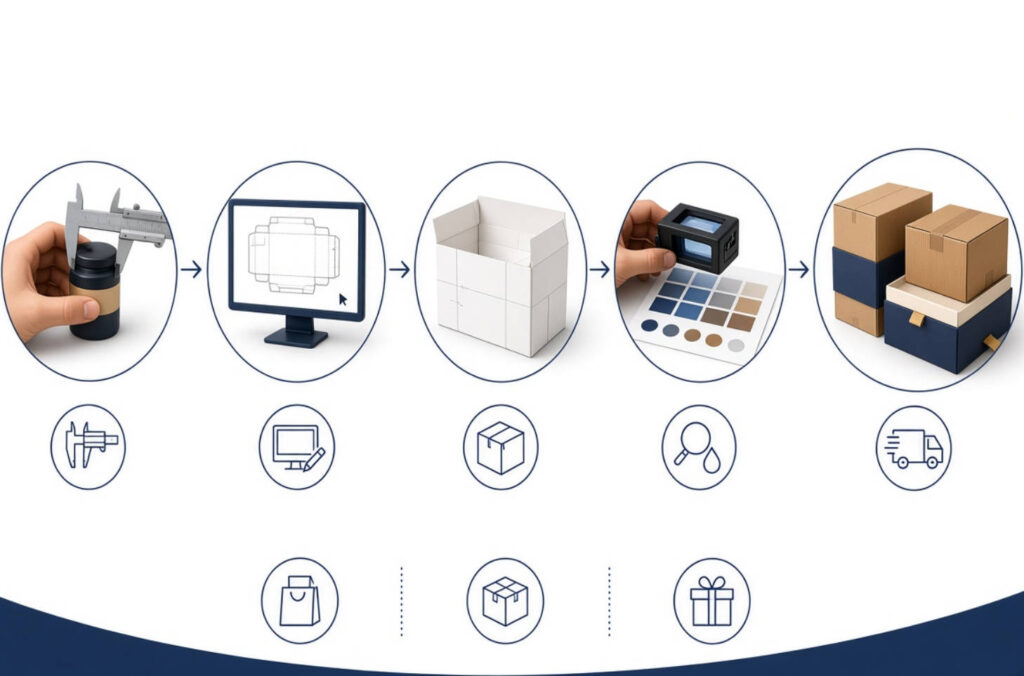
Accurate dimensions are the foundation of custom box production. In most cases, box dimensions are expressed as:
縦×横×高さ
For folding cartons, corrugated boxes, and rigid boxes, these measurements normally refer to the internal dimensions unless otherwise specified.
| Dimension | What It Means | なぜ重要なのか |
|---|---|---|
| Length | The longest opening-side dimension | Determines product orientation and dieline layout |
| Width | The shorter opening-side dimension | Affects fit, insert design, and shipping efficiency |
| Height | The vertical internal dimension | Prevents crushing, empty space, or difficult opening |
A box should fit the product securely, but it should not be oversized. Too much internal space allows products to move in transit. Too little space can create difficult assembly, scuffing, or pressure damage.
When measuring, include all components that will be packed together:
– The product itself
– Accessories, cables, manuals, or refill items
– Protective inserts
– Tissue paper or sleeves
– Required clearance for easy packing and removal
例 A skincare jar may measure 80 × 80 × 60 mm, but the final folding carton may need to be 95 × 95 × 85 mm internally after accounting for a molded pulp or paperboard insert, a leaflet, and sufficient packing clearance.
Choose the Right Custom Paper Packaging
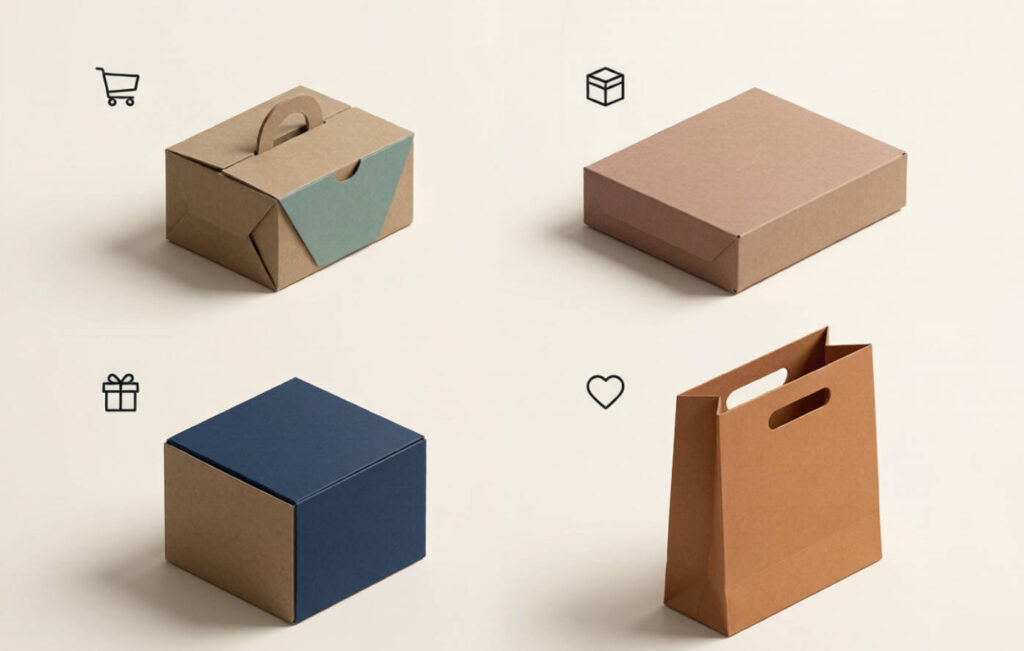
The most suitable custom packaging material depends on product weight, order volume, printing needs, desired presentation, and shipping conditions.
| 包装タイプ | 最適 | Main Advantages | Key Considerations |
|---|---|---|---|
| 折りたたみカートン | Cosmetics, food, supplements, apparel accessories, consumer goods | Lightweight, printable, cost-efficient, flexible structures | Requires the right board grade for adequate protection |
| 段ボール箱 | E-commerce, electronics, subscription boxes, heavier products | Strong, protective, shipping-ready, suitable for branding | Print detail can vary by board and printing method |
| 硬質ボックス | Jewelry, premium cosmetics, gifts, electronics, luxury products | High perceived value, durable, excellent for unboxing | Higher material use, shipping volume, and unit cost |
| Paper bags | Retail takeout, apparel, gifts, promotional packaging | Convenient, reusable, visible branding area | Not suitable for products needing strong protection |
| Paper inserts | Product organization, glassware, kits, fragile items | Recyclable alternative to some plastic or foam formats | Must be engineered to hold the product securely |
Folding Cartons for Retail Presentation
Custom folding cartons are made from paperboard and shipped flat before assembly. They are a practical option when branding, print quality, and efficient storage are priorities.
They work well for products such as:
– Cosmetics and personal-care products
– Tea, coffee, confectionery, and food products
– Supplements and wellness products
– Small electronics and accessories
– Apparel accessories and gift sets
Popular paperboard choices include SBS, CCNB, white kraft, black kraft, and uncoated kraft. The right board should be selected based on print requirements, strength, intended market position, and sustainability objectives.
Corrugated Packaging for E-Commerce Protection
Custom corrugated packaging combines linerboard with a fluted medium. This layered structure provides cushioning and compression resistance, making it well suited for shipping.
For e-commerce packaging, consider:
– Product weight and fragility
– Shipping distance and carrier handling
– Stacking pressure in warehouses
– Need for tamper-evident closures
– Whether the shipping box also serves as the branded unboxing box
A branded corrugated mailer box can eliminate the need for a separate outer carton in some applications. However, this should be verified through testing rather than assumed.
Rigid Boxes for Premium Product Experiences
Rigid boxes are typically constructed with thick chipboard and wrapped with printed paper. They do not collapse flat like folding cartons, which gives them a substantial, luxury feel.
They are especially effective for brands selling higher-value products where the packaging is intended to be retained, reused, or displayed.
Common rigid box structures include:
– Lid-and-base boxes
– Magnetic closure boxes
– Drawer-style boxes
– Shoulder-and-neck boxes
– Book-style presentation boxes
A rigid box should add value, not simply add cost. The structure, insert, paper wrap, and finishing should all support a clear brand objective.
Design Packaging for Protection and Unboxing
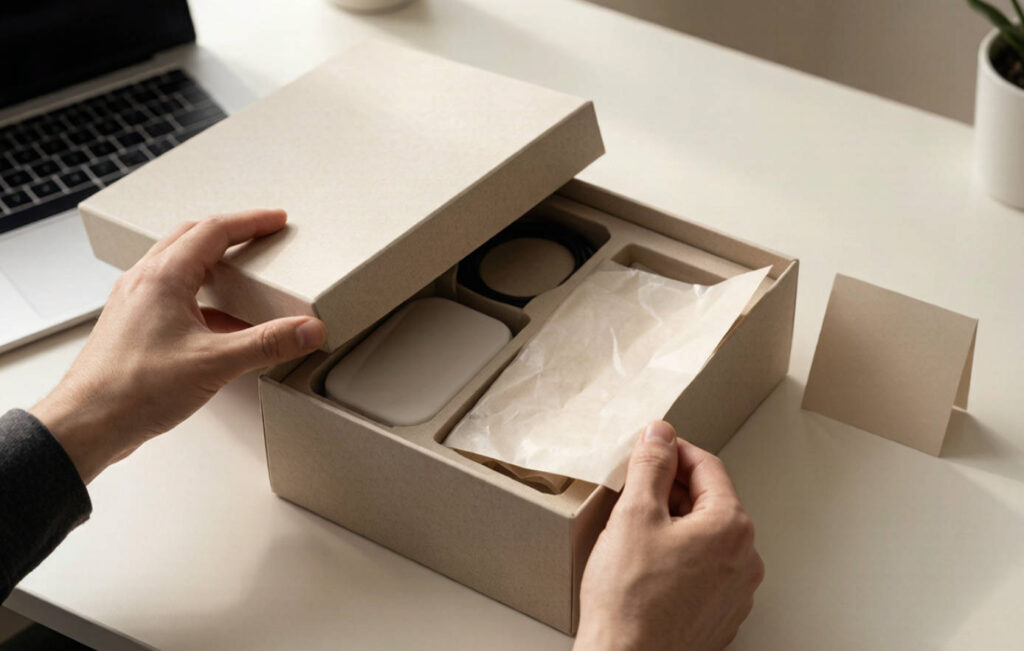
A premium unboxing experience begins with functional packaging engineering. Customers notice the opening sequence, product presentation, and whether every component feels intentional.
Use inserts when products need controlled positioning, separation, or impact protection. Common options include:
– Paperboard inserts for cost-effective dividers, sleeves, and partitions
– Molded pulp inserts for paper-based cushioning and shaped product nests
– EVA foam inserts for high-value, delicate, or precision products
– PET or RPET trays for products requiring transparent, detailed cavities
– Corrugated inserts for heavy products and shipping applications
For brands pursuing paper-based packaging, paperboard, corrugated, and molded pulp inserts can reduce reliance on plastic components. But the final design still needs to be assessed for protection, assembly speed, and actual local recycling options.
The Packaging Stress-Test Checklist
Before approving production, test the packaging in conditions similar to the real distribution journey:
1. Pack the product exactly as the customer will receive it.
2. Check whether the product shifts when the package is shaken.
3. Test opening and closing for ease of use.
4. Review corners, closures, and inserts after compression.
5. Evaluate whether the barcode, product name, and instructions remain visible.
6. Test an actual shipment through the intended carrier route.
7. Review the package after delivery for scuffing, denting, and print damage.
Expert tip: A beautiful custom box that fails after one delivery is not premium packaging. Protection and presentation must be developed together.
Select Printing, Coatings, and Finishes
Printing choices influence cost, lead time, color quality, and the minimum practical order quantity.
オフセット印刷
Offset printing is usually preferred for high-volume packaging projects requiring detailed imagery, precise color reproduction, and premium visual consistency. It is commonly used for folding cartons and rigid-box wraps.
It can support specialty processes such as foil stamping, embossing, spot UV, and Pantone spot colors.
デジタル印刷
Digital printing is useful for shorter runs, fast revisions, product launches, and customized campaigns. It avoids traditional printing plate setup, which can make lower-volume projects more accessible.
Choose digital printing when speed, flexible quantity, or versioned artwork matters more than the lowest possible unit cost at scale.
フレキソ印刷
Flexographic printing is widely used for corrugated packaging and high-volume shipping cartons. It is efficient for straightforward graphics, text, and one- or two-color designs.
It is typically better suited to bold branding than highly detailed photographic artwork.
| Finish or Process | ベストユース | Design Effect |
|---|---|---|
| Matte lamination | Luxury and minimalist packaging | Soft, refined, low-glare surface |
| Gloss lamination | Bright retail packaging | High shine and stronger color impact |
| 水性コーティング | Fast-moving consumer goods | Water-based protection with a subtle finish |
| スポットUV | Logos, patterns, product names | Gloss contrast on selected areas |
| 箔押し | Premium brand accents | Metallic, holographic, or special-color detail |
| エンボス加工 | Logos and tactile elements | Raised texture and dimensionality |
| デボス加工 | Elegant brand marks | Pressed-in tactile impression |
| Soft-touch coating | Beauty, electronics, gifting | Velvet-like tactile feel |
For brand color consistency, prepare artwork in CMYK and use Pantone spot colors where a specific brand color must reproduce consistently across repeat orders.
Prepare Artwork and Dielines Properly
A dieline is the technical blueprint for your packaging. It shows cut lines, fold lines, glue areas, bleed, safe zones, and structural panels.
To reduce delays and prevent avoidable errors, artwork files should follow these standards:
– Use the manufacturer-approved dieline rather than creating a final template independently
– Keep important text and logos inside the safe area
– Extend background graphics into the bleed area
– Convert fonts to outlines or package the required font files
– Use high-resolution raster images, generally 300 DPI at final print size
– Build logos and illustrations as vector artwork whenever possible
– Confirm barcode size, quiet zones, and scan direction
– Review panel orientation before submitting the final file
Practical warning: Avoid placing critical text across folds, seams, die-cut windows, or glue flaps. These areas can distort, become partially hidden, or create legibility issues after assembly.
Build Sustainability Into the Structure
Sustainable custom packaging is not defined by a single material label. It depends on whether the package uses the appropriate amount of material, protects the product effectively, can enter relevant recovery systems, and makes accurate environmental claims.
The most reliable sustainability improvements often start with structural efficiency:
– Right-size boxes to reduce empty space and shipping volume
– Remove unnecessary layers, trays, and decorative components
– Use paper-based inserts where they meet protection requirements
– Specify recycled content when it is available and appropriate
– Avoid permanently bonded mixed materials when recyclability is a priority
– Use clear disposal instructions based on the customer’s market
– Verify all environmental claims with supplier documentation and applicable testing
The U.S. EPA reports that containers and packaging represented 82.2 million tons of municipal solid waste generation in 2018, illustrating why material reduction and recovery design matter at scale.
Avoid vague language such as “100% eco-friendly” or “fully recyclable” unless the complete packaging system and local collection infrastructure support that claim. Sustainability claims should be specific, documented, and easy for customers to understand.
Prototype Before Full Production
A prototype is one of the most valuable steps in a custom packaging project. It lets brands check fit, assembly, color appearance, opening experience, and structural performance before committing to a full production run.
Request a physical sample when:
– You are launching a new product
– The product has a fragile or unusual shape
– The packaging includes custom inserts
– The project uses premium finishes or special colors
– The order value is significant
– Multiple internal teams need final approval
A digital 3D mockup can be useful for early design review, but it cannot replace a physical sample for evaluating material texture, fit, closure strength, or true color appearance.
Work With a Custom Packaging Manufacturer
The right packaging manufacturer should do more than quote a box. They should help evaluate whether the structure, board grade, insert, printing process, and finish are appropriate for the product and order requirements.
When requesting a quotation, provide:
– Product dimensions, weight, and photos
– Desired box style and reference images
– Quantity and target delivery date
– Artwork status and brand guidelines
– Required material or sustainability preferences
– Destination country and shipping preferences
– Any testing, compliance, or retail requirements
At Bonito Packaging, our team supports brands with custom paper packaging development, including folding cartons, corrugated boxes, rigid boxes, paper bags, and protective inserts. We help turn packaging concepts into manufacturable solutions that work for real products, real logistics, and real customers.
Ready to create packaging that protects your product and elevates your brand? Contact Bonito Packaging with your product details, target quantity, and design ideas to receive professional guidance for your next custom packaging project.
よくある質問
1. What is the best material for custom product packaging?
The best material depends on the product and distribution method. Folding cartons are suitable for lightweight retail products, corrugated boxes are ideal for shipping protection, and rigid boxes work well for premium products that need a luxury presentation.
2. How do I measure a custom box?
Measure the internal length, width, and height in that order: length × width × height. Include the product, insert, accessories, and reasonable packing clearance when determining the final internal dimensions.
3. What is the difference between a folding carton and a rigid box?
A folding carton is made from paperboard and ships flat before assembly. A rigid box uses thick chipboard, holds its shape, and provides a more premium presentation, but it generally costs more to produce and ship.
4. Should I choose digital or offset printing for packaging?
Digital printing is often suitable for shorter runs, faster turnaround, and variable designs. Offset printing is generally better for larger volumes, detailed artwork, premium color accuracy, and special finishing processes.
5. Are paper boxes recyclable?
Many paper and corrugated boxes can be recycled, but recyclability depends on the complete material combination, coatings, films, adhesives, contamination, and local recycling infrastructure. Use clear, market-specific disposal guidance rather than broad claims.
6. Do I need a packaging prototype before production?
Yes, especially for new structures, fragile products, large orders, custom inserts, and premium finishes. A physical sample helps identify fit, color, assembly, and protection issues before full production.
7. What information should I send to a packaging manufacturer?
Send product dimensions, weight, photos, expected quantity, box style, target timeline, artwork files or design references, destination, and any material, finish, or sustainability requirements.
References
1. PakFactory. “Understanding Product Packaging: The Essential Guide.” [https://pakfactory.com/blog/essential-guide-to-product-packaging/]
2. United States Environmental Protection Agency. “Containers and Packaging: Product-Specific Data.” [https://www.epa.gov/facts-and-figures-about-materials-waste-and-recycling/containers-and-packaging-product-specific]
3. United States Environmental Protection Agency. “Facts and Figures about Materials, Waste and Recycling.” [https://www.epa.gov/facts-and-figures-about-materials-waste-and-recycling]
4. McKinsey & Company. “Winning in Sustainable Packaging in 2025: Bringing It All Together.” [https://www.mckinsey.com/industries/packaging-and-paper/our-insights/winning-in-sustainable-packaging-in-2025-bringing-it-all-together]
5. McKinsey & Company. “Sustainable Packaging 2025: Top Barriers for Packaging Purchasers.” [https://www.mckinsey.com/industries/packaging-and-paper/our-insights/sustainable-packaging-2025-top-barriers-for-packaging-purchasers]
Hot Tags: Custom Packaging, Manufacturers, Customized, Custom, Suppliers, Buy, Cheap, Quality, Advanced, Durable, in Stock, Made in China, Price, Quotation, Free Sample
 English
  Spanish
  French
  German
  Russian
  Japanese
  Portuguese
  Arabic