
How many cigarettes come in a pack? 20 is the usual answer, but packaging buyers need more than a familiar number. The destination market determines whether that quantity is a legal minimum or an exact requirement. It also affects the box structure, dimensions, warnings, and permitted appearance.
For brands, importers, and distributors, confusing a pack with a carton can create expensive ordering mistakes. At ボニート・パッケージング, we approach custom paper packaging as a specification task: confirm the market, establish the contents, and then develop the box.
This guide explains cigarette pack quantities, carton counts, and the practical checks needed before ordering custom cigarette boxes.
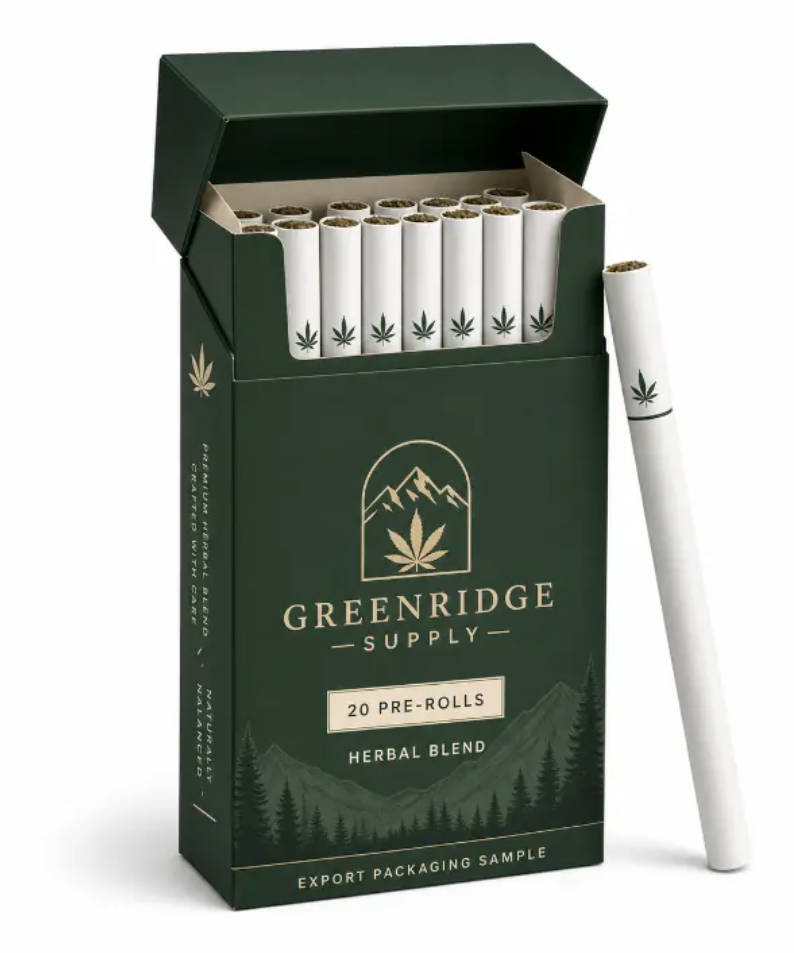
How Many Cigarettes Are in a Pack by Country?
Twenty cigarettes is a useful starting point, not a worldwide specification. The distinction between “at least 20” and “exactly 20” matters when planning packaging.
| Market | Cigarettes per pack | What packaging buyers should know |
|---|---|---|
| 米国 | Commonly 20; packages containing fewer than 20 are prohibited | Do not interpret the minimum as a universal exact-count rule |
| United Kingdom | Minimum 20 | Standardised appearance and structural requirements also apply |
| Australia | Exactly 20 under current requirements | Cartons must contain 10 packs; pack construction and dimensions are prescribed |
Australia: Why Older Pack-Size Guides Can Be Misleading
Older articles may describe Australian packs containing various quantities. Those descriptions should not guide a current packaging order.
Following the retail sell-through period ending June 30, 2025, Australian tobacco products must comply with the new requirements. Cigarette packs must contain 20 cigarettes, and cigarette cartons must contain 10 packs.
For buyers, this changes the starting brief. A previously used pack count or dieline—the flat template showing cuts and folds—may no longer be suitable.
How Many Packs Are in a Carton of Cigarettes?
A common cigarette carton contains 10 individual packs. With 20 cigarettes in each pack, that equals 200 cigarettes.
Use this calculation:
Cigarettes per carton = cigarettes per pack × packs per carton.
| Packaging level | Example quantity | Total cigarettes |
|---|---|---|
| Individual pack | 20 cigarettes | 20 |
| Retail carton | 10 packs | 200 |
| Shipping case | 50 cartons | 10,000 |
The shipping-case quantity above is an illustrative planning example, not an industry-wide standard.
Keep Packs, Cartons, and Shipping Cases Separate
For a clear purchasing specification, use three separate terms:
– Pack: the individual retail package holding cigarettes.
– Carton: the outer package grouping retail packs.
– Shipping case: the transport box holding multiple cartons.
Avoid ordering “10,000 cigarette boxes” without defining the packaging level. A supplier needs to know whether that means individual packs, empty cartons, or corrugated shipping cases.
Cigarette Box Dimensions: Why Count Alone Is Not Enough
Knowing how many cigarettes come in a pack does not establish the finished box dimensions.
A packaging brief should also identify cigarette length, diameter, arrangement, internal components, and the destination market’s rules. These details determine whether the proposed structure can hold the contents correctly.
Start With the Applicable Legal Dimensions
Australia provides a clear example of market-specific requirements. Its cigarette packs must fall within these external dimensions when closed:
– Height: 85–90 mm.
– Width: 55–60 mm.
– Depth: 20–24 mm.
They must also use rigid cardboard, straight edges, rectangular outer surfaces, and a flip-top lid hinged at the back.
These measurements are not universal cigarette box dimensions. They are requirements for a particular market.
Validate the Structure With a Physical Sample
Our recommended development sequence is straightforward:
1. Confirm the destination market and applicable requirements.
2. Document the cigarette dimensions and intended arrangement.
3. Identify required lining, inserts, and other internal elements.
4. Develop an unprinted structural sample.
5. Check fit, closure, handling, and packing compatibility.
6. Approve the structure before finalising print artwork.
The practical principle is simple: a flat drawing should not be the only basis for approving a production order.
Which Cigarette Packaging Styles Are Appropriate?
Soft packs and hinged-lid paperboard packs are familiar formats. However, familiarity does not establish that a structure is permitted in every destination.
UK regulations allow cigarette unit packets made from carton or soft material, subject to the relevant shape and opening requirements. Australia’s current requirements specify rigid cardboard packs with a rear-hinged flip-top lid.
For procurement purposes, separate two questions:
– Can the manufacturer produce this structure?
– Is this structure permitted for the intended market?
A supplier’s manufacturing capability does not replace a market-specific compliance review.
Likewise, avoid treating embossing, foil decoration, unusual openings, or premium textures as automatic upgrades. Their suitability must be checked before they enter the design brief.
A Practical Checklist for Ordering Custom Cigarette Boxes
For custom box projects, the most useful starting document is a complete specification—not simply a photograph of an existing package.
Confirm These Details Before Requesting a Quote
| 仕様 | Information to provide |
|---|---|
| Destination | Country and intended sales market |
| Packaging level | Individual pack, retail carton, or shipping case |
| Contents | Cigarettes per pack and packs per carton |
| Dimensions | Product measurements and required finished box size |
| Construction | Board specification, opening style, and internal components |
| Artwork | Approved warnings, mandatory text, and permitted brand elements |
| 製造 | Order quantity, packing method, and delivery requirements |
Keeping these details consistent also makes competing supplier quotations easier to compare.
Reserve Warning Areas Before Designing Artwork
Mandatory warnings are not decorative elements to place wherever space remains.
UK guidance requires combined health warnings covering 65% of the front and back of cigarette packs. Australian requirements specify warnings covering at least 75% of the front and 90% of the back, alongside additional requirements.
The design sequence should therefore begin with the required warning layout. Add permitted brand information afterward, rather than designing a branded box and attempting to fit warnings around it.
Separate Structural Approval From Artwork Approval
Treat these as different checkpoints:
– Structural approval confirms dimensions, materials, opening, and fit.
– Artwork approval confirms required content, positioning, and permitted presentation.
– Production approval confirms that the manufactured sample matches the agreed specification.
This approach gives each reviewer a defined task and creates a clearer approval record.
Discuss Your Packaging Specifications With Bonito Packaging
Bonito Packaging manufactures custom paper boxes and high-end paper packaging. For a cigarette packaging enquiry, send your destination market, required quantities, product measurements, and approved packaging requirements.
Request a structural sample before committing to production. Confirm the applicable legal requirements with qualified local advisers, then use the approved specification to guide manufacturing.
FAQs About Cigarette Packs and Custom Boxes
1. How many cigarettes come in a standard pack?
A standard pack commonly contains 20 cigarettes. However, buyers should verify the destination market: the United States and United Kingdom apply minimum-count rules, while Australia currently requires exactly 20.
2. How many cigarettes are in a carton?
A carton containing 10 packs of 20 cigarettes holds 200 cigarettes. Confirm both quantities rather than relying on the word “carton” alone.
3. Can cigarette packs contain fewer than 20 cigarettes?
Not in the US or UK markets discussed here. Australia also requires packs containing exactly 20 cigarettes.
4. Are all 20-cigarette boxes the same size?
No universal dimensions follow from the count alone. Product measurements, construction, internal components, and market-specific requirements must be considered.
5. Can custom cigarette boxes use luxury finishes?
Do not assume they can. Standardised-packaging requirements can restrict appearance, texture, materials, and structure. Review the intended market before approving decorative finishes.
6. What should I send a cigarette packaging manufacturer?
Provide the destination market, packaging level, quantities, product dimensions, structural requirements, approved artwork, and order volume. These details support a more useful quotation and sampling process.
References
1. We Custom Boxes. “How Many Cigarettes Come in a Pack—A Detailed Guide.” Original article supplied for restructuring and factual review; published February 22, 2025. [wecustomboxes]
2. US Food and Drug Administration. “Selling Tobacco Products in Retail Stores.” Official guidance prohibiting cigarette packages containing fewer than 20 cigarettes. [fda]
3. UK Government. “Tobacco Packaging Guidance: Great Britain,” April 2021. Official guidance covering minimum pack quantities, pack construction, standardised appearance, and health-warning coverage. [assets.publishing.service.gov]
4. UK legislation. “The Standardised Packaging of Tobacco Products Regulations 2015.” Legislative requirements covering cigarette pack materials, shape, and minimum quantities. [legislation.gov]
5. Australian Government Department of Health, Disability and Ageing. “Guide to Tobacco Packaging Requirements,” June 2025. Official specifications for pack and carton quantities, construction, dimensions, and other packaging requirements. [health.gov]
6. Australian Government Department of Health, Disability and Ageing. “New Legislation for Tobacco and Other Products.” Explanation of the legislative transition and retail sell-through deadline. [health.gov]
7. Australian Government Department of Health, Disability and Ageing. “Health Warnings, Health Promotion Inserts, and On-Product Health Messages.” Official requirements for warning coverage and related mandatory information. [health.gov]
 English
  Spanish
  French
  German
  Russian
  Japanese
  Portuguese
  Arabic