
Content Menu
● Why Sustainable Packaging Matters Now
● What Sustainable Packaging Means
● Common Challenges Small Brands Face
● Material Options That Make Sense
>> Step 1: Audit your current packaging
>> Step 2: Define your packaging goals
>> Step 3: Right-size the package
>> Step 4: Choose the material system
>> Step 5: Test before scaling
● Expert Recommendations For Brands
● How Bonito Packaging Can Help
>> 1. What is the easiest way to start switching to sustainable packaging?
>> 2. Is sustainable packaging always more expensive?
>> 3. Can I call my packaging recyclable if it is made from paper?
>> 4. Are compostable mailers a good choice for small businesses?
>> 5. What packaging materials are best for premium custom packaging?
>> 6. How do I make sure my packaging claims are safe?
Sustainable packaging is no longer a “nice to have.” For small businesses and startups, it is now a practical way to reduce waste, improve brand trust, lower shipping inefficiencies, and stay ahead of tightening packaging regulations. In 2026, the smartest packaging strategy is not just about using greener materials — it is about choosing packaging that performs well in real-world supply chains, supports compliance, and protects the customer experience.

Why Sustainable Packaging Matters Now
Today’s buyers are more aware of packaging impact, and regulators are more aggressive about recyclability, compostability, and green claims. That means packaging decisions can affect not only cost and operations, but also legal risk and customer perception. According to current industry guidance, brands must be able to substantiate claims like “recyclable” or “compostable” with clear evidence and real-world end-of-life pathways.
For small businesses, this creates both pressure and opportunity. A well-designed sustainable packaging program can reduce freight costs through right-sizing, cut material waste, and build credibility with buyers who care about responsible sourcing. In short, packaging is now part of your brand strategy, not just your shipping process.
What Sustainable Packaging Means
Sustainable packaging is packaging designed to minimize environmental impact across its full life cycle, from material sourcing and manufacturing to shipping, use, and disposal. It usually emphasizes recyclability, recycled content, right-sizing, lower material use, and clear disposal guidance.
It is important to distinguish sustainable packaging from vague “eco-friendly” claims. A package may use recycled paper or a compostable film, but if customers cannot dispose of it properly, the environmental benefit may be limited. That is why leading packaging frameworks now focus on system performance, not just material choice.
Common Challenges Small Brands Face
Many small businesses want better packaging, but they often run into the same obstacles. Costs can appear higher upfront, supplier options may be limited, and teams may not know which claims are safe to print on-pack. On top of that, poorly chosen packaging can slow fulfillment or increase damage rates, which hurts both margin and customer experience.
The main barriers usually include:
– Limited budget for redesign or tooling.
– Confusion around which materials are truly recyclable or compostable.
– Inconsistent supply of certified materials.
– Fear that sustainable packaging will weaken product protection.
– Unclear regulations and labeling rules across states or markets.
Core Principles To Follow
The best sustainable packaging programs start with a few simple principles. First, reduce excess material before replacing materials. Second, choose packaging that works with existing recycling systems whenever possible. Third, design for protection, because damaged products create more waste than packaging ever saves.
A practical framework for packaging decisions looks like this:
1. Reduce size, weight, and unnecessary components.
2. Select recyclable or high-recycled-content materials where infrastructure supports them.
3. Test durability before scaling.
4. Print clear disposal instructions.
5. Track cost, damage, and customer feedback after launch.
Material Options That Make Sense
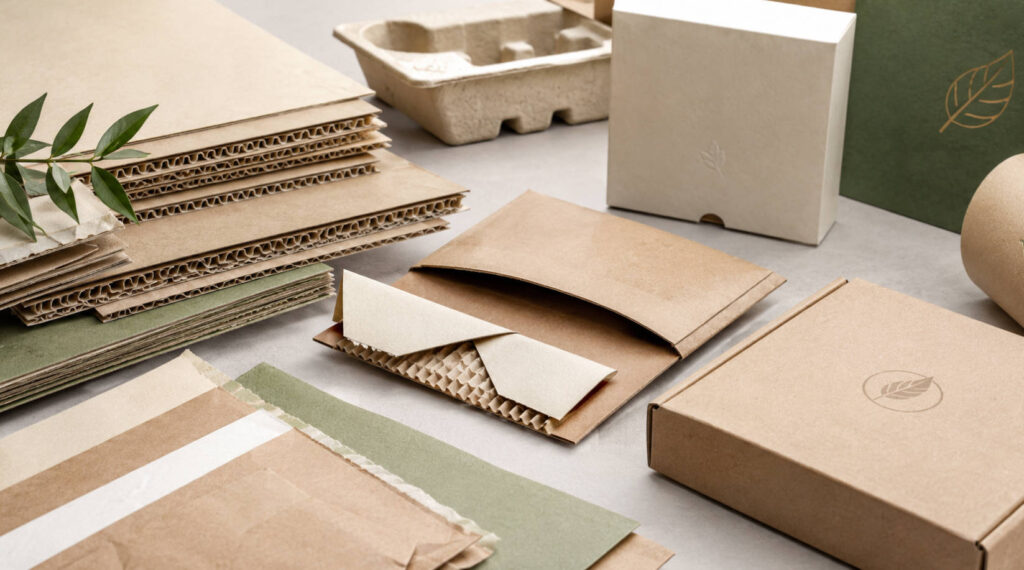
Not every “green” material is the right answer for every brand. The most reliable choices for many packaging applications are paper-based and fiber-based solutions, especially when they are right-sized and responsibly sourced. Recycled corrugated boxes, paper mailers, molded fiber inserts, and paper tape are common options for businesses that want practical sustainability with strong performance.
Here is a simple guide:
| Packaging option | Best for | Sustainability strength | Key caution |
|---|---|---|---|
| Recycled corrugated boxes | Shipping, eCommerce, custom boxes | Alta | Avoid over-sizing and heavy ink coverage |
| Paper mailers | Lightweight products | Alta | Confirm tear resistance and protection |
| Molded fiber inserts | Fragile items | Alta | Must fit product geometry well |
| Correspondências compostáveis | Narrow verified use cases | Conditional | Only use when composting access is real |
| Reusable packaging | Repeated shipping loops | High potential | Needs reverse logistics support |
Paper and corrugated formats are especially attractive for custom packaging brands because they can be engineered for both brand presentation and environmental performance.
A Better Switching Process
A strong transition to sustainable packaging should be phased, not rushed. Start by auditing what you currently use, then remove waste before changing materials. This approach protects your operations while still creating meaningful sustainability gains.
Step 1: Audit your current packaging
Review box sizes, filler use, material weights, damage rates, and shipping costs. This will show you where packaging is oversized or unnecessarily complex.
Step 2: Define your packaging goals
Decide whether your priority is cost reduction, better recyclability, lower carbon impact, or premium branding. Clear goals prevent unnecessary redesign work and help you choose the right material system.
Step 3: Right-size the package
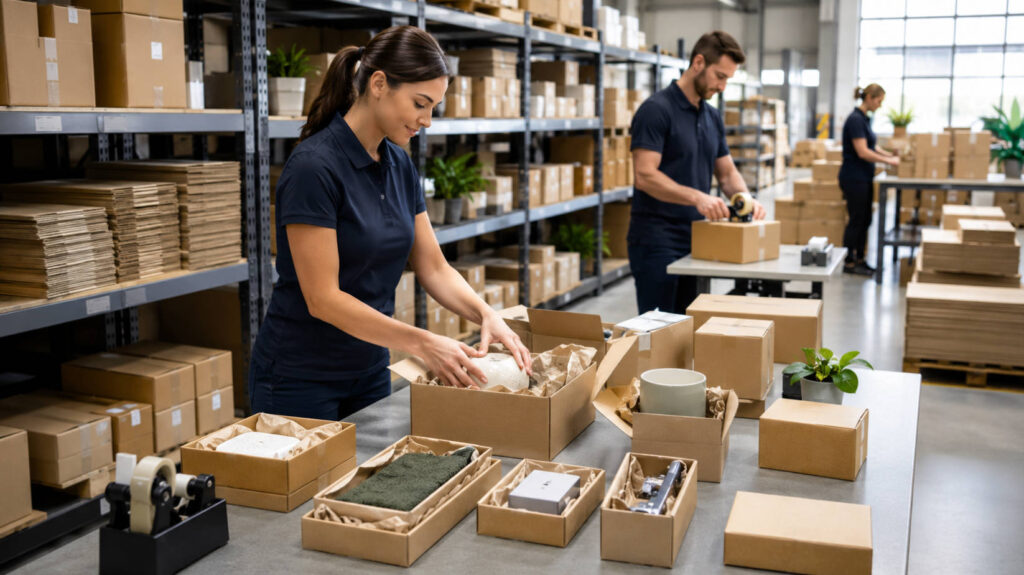
Right-sizing often delivers one of the fastest returns. Smaller, lighter packaging reduces raw material use, lowers freight costs, and improves warehouse efficiency.
Step 4: Choose the material system
Match the material to the product, channel, and disposal reality. For example, a recyclable paper-based box may be more practical than a compostable option that customers cannot actually compost.
Step 5: Test before scaling
Pilot the new packaging on a limited SKU set. Measure damage, packing time, customer feedback, and shipping cost before rolling out the change broadly.
2026 Compliance Reality
Packaging claims are under more scrutiny than ever. The FTC Green Guides say recyclability and compostability claims must be supported by competent and reliable evidence, and recyclable claims should not be made unless recycling access is broadly available.
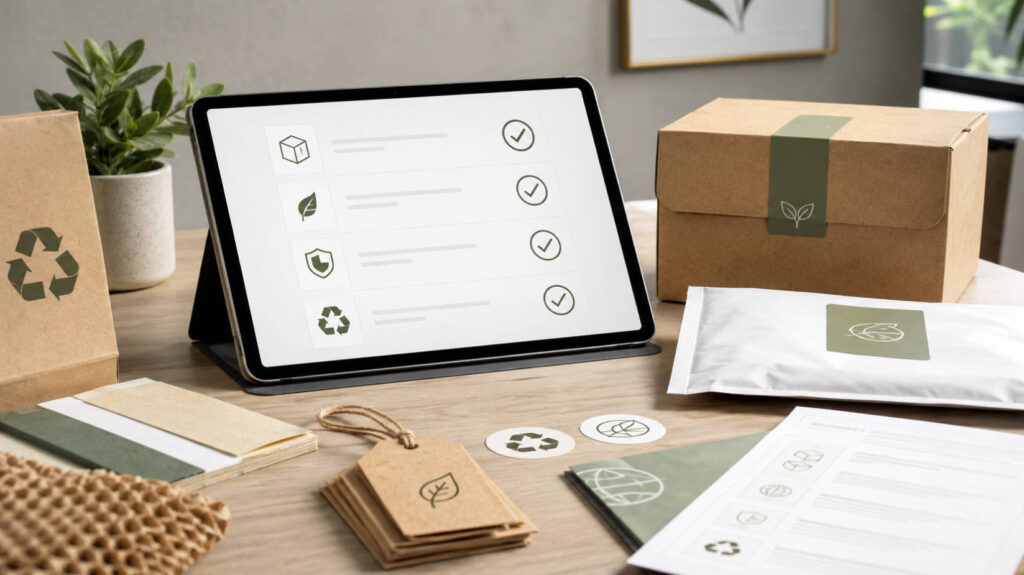
California’s SB 343 has also pushed packaging teams to be more careful with recyclability language, while How2Recycle has been updating labels to reflect clearer guidance and stronger proof requirements. For brands selling across multiple U.S. states, this means packaging copy, icons, and QR-code instructions need to be reviewed as part of compliance, not just design.
Practical rule: do not use broad claims like “eco-friendly” or “fully recyclable” unless you can document the basis for them. Specific, verifiable statements are safer and more credible.
New Value for 2026 Buyers
The biggest shift in sustainable packaging strategy is that brands are now judged on outcomes, not intentions. A package that looks green but is hard to recycle, hard to explain, or expensive to ship does not create real value. The best packaging solutions are the ones that protect the product, simplify disposal, and fit the logistics system cleanly.
For export-focused and manufacturing brands, this creates a strong business case for custom paper-based packaging. Well-designed custom packaging can reduce void space, improve product presentation, and support a cleaner sustainability narrative without compromising performance. That is especially relevant for premium B2B and DTC products where unboxing, protection, and brand trust all matter.
Expert Recommendations For Brands
If you are building a sustainable packaging program, focus on these priorities:
– Use right-sized packaging first.
– Prefer recyclable fiber-based solutions where feasible.
– Keep packaging structures simple and easy to separate.
– Avoid unnecessary coatings, laminations, or mixed materials.
– Use clear disposal instructions and truthful claims.
– Work with suppliers who can provide material data and compliance support.
For many brands, the most effective packaging transformation is not a dramatic redesign. It is a disciplined series of small improvements that lower waste, improve durability, and create a more trusted customer experience.
How Bonito Packaging Can Help
For businesses that need custom packaging, the best partner is one that understands both manufacturing and market positioning. Bonito Packaging can support brands with high-end custom paper packaging that balances structure, presentation, and sustainability. That matters because packaging should do more than look good — it should also ship efficiently, align with your brand, and support long-term scalability.
A packaging partner should help you:
– Select the right paper-based structure.
– Reduce oversized packaging formats.
– Improve product protection.
– Strengthen brand presentation.
– Build packaging that is easier to explain and easier to dispose of.
Conclusão
Switching to sustainable packaging is not about chasing trends. It is about building a packaging system that is efficient, credible, and ready for changing customer expectations and compliance rules. Brands that start with audits, right-sizing, and better material choices can achieve meaningful progress without overwhelming their operations.
For small businesses and startups, the best path is usually incremental: reduce waste, test smart alternatives, and scale only what performs well. That approach creates both environmental and commercial value.
PERGUNTAS FREQUENTES
1. What is the easiest way to start switching to sustainable packaging?
Start with a packaging audit. Identify oversized boxes, excess filler, and materials that can be replaced with lighter or more recyclable alternatives.
2. Is sustainable packaging always more expensive?
Not necessarily. Right-sized designs and lighter materials can reduce freight, storage, and waste costs over time. The key is to evaluate total cost, not only unit price.
3. Can I call my packaging recyclable if it is made from paper?
Not automatically. The FTC says recyclability claims must be supported by established recycling access, and California’s rules are even stricter for certain claims.
4. Are compostable mailers a good choice for small businesses?
Only in specific cases. Compostable packaging should be used when customers truly have access to the right composting system and when the claim can be substantiated.
5. What packaging materials are best for premium custom packaging?
Recycled corrugated board, paper mailers, molded fiber inserts, and responsibly sourced paper structures are often the best starting points for premium custom packaging.
6. How do I make sure my packaging claims are safe?
Use precise wording, keep documentation, and verify material certifications or recovery pathways before printing claims on-pack.
References
1. Packlane original article: [Making the switch to sustainable packaging: Tips for small businesses and startups] [packlane]
2. EcoEnclose: [Sustainable Packaging Trends for 2026] [ecoenclose]
3. EcoEnclose: [A Guide to Choosing Eco-Friendly Packaging for Your Business] [ecoenclose]
4. Creative Retail Packaging: [The Complete Guide for 2026] [creativeretailpackaging]
5. FTC Green Guides: [Guides for the Use of Environmental Marketing Claims] [ftc]
6. California SB 343 overview: [Guide to California SB 343] [ecopackables]
7. How2Recycle update: [Members’ Guide to the How2Recycle Pro Label Rollout] [how2recycle]
8. How2Recycle rollout update: [Major Changes Coming to How2Recycle Labels] [awtlabelpack]
Hot Tags: Sustainable Packaging, Manufacturers, Customized, Custom, Suppliers, Buy, Cheap, Quality, Advanced, Durable, in Stock, Made in China, Price, Quotation, Free Sample
 English
  Spanish
  French
  German
  Russian
  Japanese
  Portuguese
  Arabic