
Content Menu
● Understanding Collapsible Rigid Boxes vs Traditional Rigid Boxes
● Supply Chain Efficiency Gains with Collapsible Design
>> Warehouse Space Optimization
>> Labor and Assembly Considerations
● Cost Analysis: Total Cost of Ownership Comparison
>> Logistics and Storage Costs
● Environmental and Sustainability Impact
● Implementation Strategy for Your Business
>> Assessing Fit for Your Product Line
>> Working with Manufacturing Partners
>> Pilot Program Recommendations
● Real-World Success Stories and Industry Adoption
>> E-Commerce and Direct-to-Consumer Brands
● Future Trends and Innovations
>> Smart Packaging Integration
>> Automation and Industry 4.0
>> Regulatory and Market Pressures
● Taking Action: Making the Switch
>> 1. Do collapsible rigid boxes look as premium as traditional rigid boxes when assembled?
>> 2. How much warehouse space can I realistically save by switching to collapsible rigid boxes?
>> 3. What are the minimum order quantities for collapsible rigid boxes?
>> 4. How long does it take workers to assemble collapsible rigid boxes?
>> 5. At what order volume do collapsible rigid boxes become more cost-effective than traditional ones?
As a packaging industry professional who has worked with hundreds of premium brands over the past decade, I’ve witnessed firsthand how collapsible rigid boxes are revolutionizing supply chain operations. The global collapsible rigid containers market reached USD 2.1 billion in 2026 and is projected to grow to USD 3.4 billion by 2036, driven primarily by businesses seeking logistics optimization and cost reduction. This significant market growth reflects a fundamental shift in how companies approach packaging decisions—moving beyond aesthetics to consider total supply chain impact. [futuremarketinsights]
Traditional rigid boxes have long dominated the luxury packaging segment, but their fixed structure creates substantial logistical challenges that collapsible alternatives elegantly solve. Brands switching to collapsible rigid boxes report logistics savings between 30% and 70%, with one beauty brand cutting freight costs by 45% simply by making this transition. These aren’t marginal improvements—they’re transformative changes that directly impact profitability while maintaining the premium unboxing experience customers expect. [clawscustomboxes]
Understanding Collapsible Rigid Boxes vs Traditional Rigid Boxes
Collapsible rigid boxes represent an innovative evolution in premium packaging design. Unlike traditional rigid boxes that remain permanently assembled, collapsible versions ship and store flat, then assemble into the same luxurious presentation when needed. This fundamental design difference creates cascading benefits throughout the entire supply chain without compromising the structural integrity or visual appeal that defines rigid box packaging. [print247]
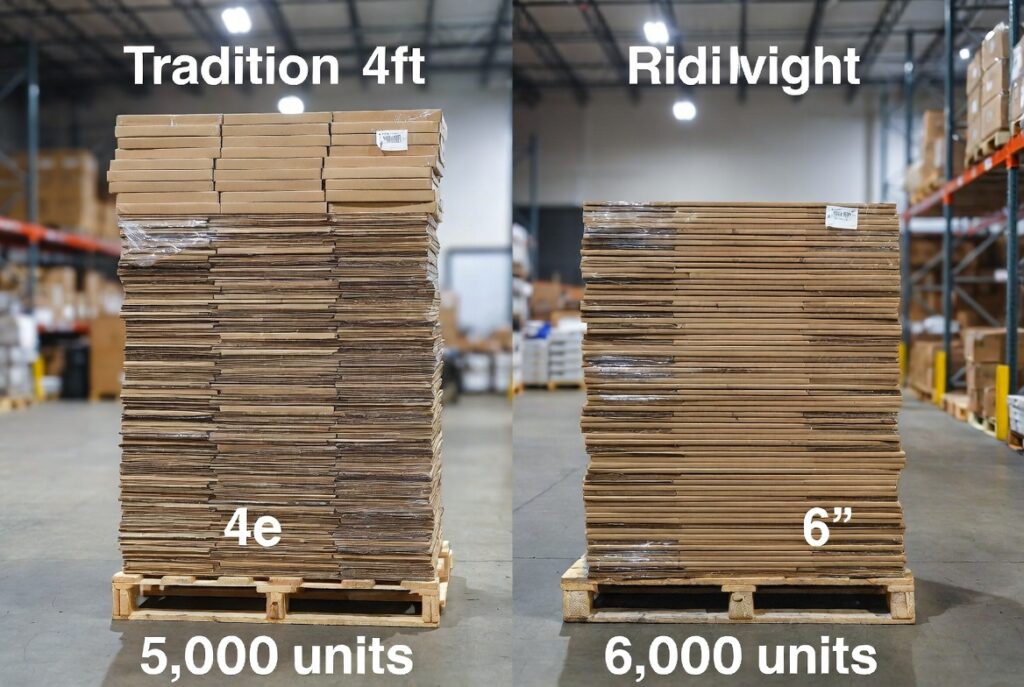
Traditional rigid boxes maintain their assembled form from factory to end customer. They consist of a chipboard base wrapped in printed paper, offering exceptional durability and a premium feel that justifies their position in high-end product categories. While they excel at protection and presentation, their non-compressible nature creates significant challenges in transportation, warehousing, and inventory management. [customboxesonly.co]
The construction methods differ substantially between these two packaging formats. Traditional rigid boxes require extensive hand assembly, with paper wrapping glued permanently around the chipboard structure during manufacturing. Collapsible rigid boxes incorporate precision engineering that allows the structure to fold flat while maintaining corner integrity and structural strength when assembled. This engineering complexity can increase initial unit costs by 10-20%, but the total cost of ownership typically favors collapsible options when logistics are factored in. [pakfactory]
Supply Chain Efficiency Gains with Collapsible Design
Freight Cost Reduction
Shipping costs plummet when boxes ship flat instead of fully assembled. A standard shipping container that holds 5,000 assembled traditional rigid boxes can accommodate 25,000-40,000 collapsible boxes in flat-pack form. This 5-8x space efficiency directly translates to proportional freight savings, particularly critical for international shipping where ocean freight and air cargo costs are calculated by volumetric weight. [doccheck]
One real-world example demonstrates this impact clearly: an e-commerce beauty brand importing 10,000 luxury boxes from Asia to North America reduced their freight expense from $12,000 to $6,600 by switching to collapsible rigid boxes—a 45% savings that repeated with every shipment. Over a year with quarterly orders, this single change saved $21,600 in transportation costs alone. [clawscustomboxes]
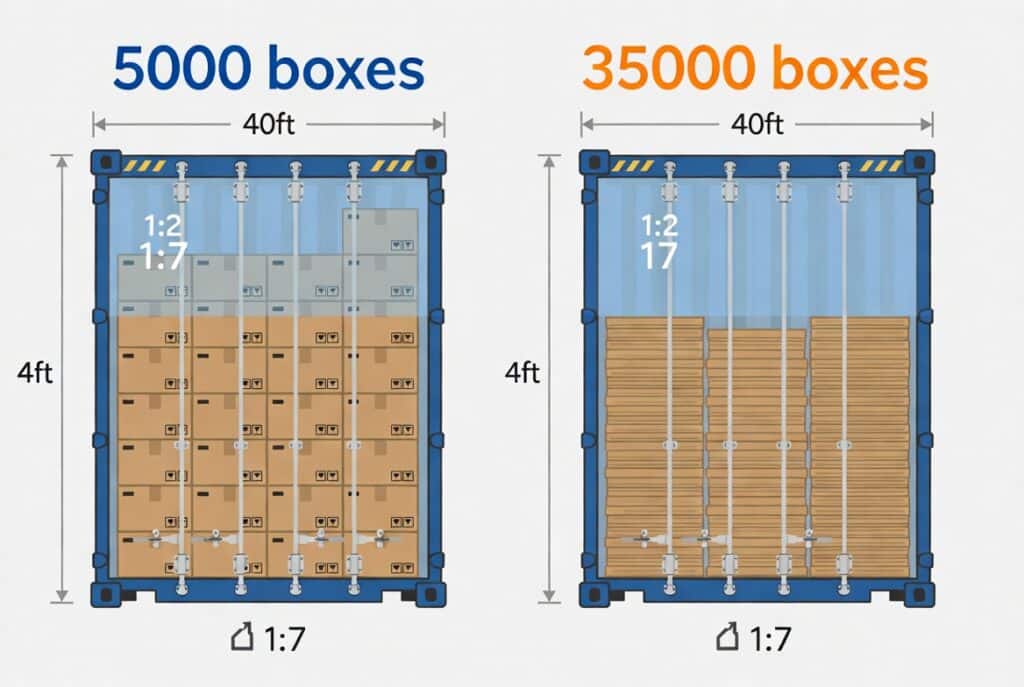
Air freight becomes viable for premium packaging when collapsible formats reduce volumetric dimensions. Traditional rigid boxes often make air shipping prohibitively expensive, forcing brands to plan inventory months in advance with slow ocean transport. Collapsible alternatives can reduce air freight costs by 60-75% compared to assembled boxes, enabling just-in-time inventory strategies and faster response to market trends. [boxprinted.wordpress]
Warehouse Space Optimization
Storage density increases dramatically with flat-pack formats. Where 100 traditional assembled rigid boxes might require 40 cubic feet of warehouse space, the same quantity of collapsible boxes needs just 5-8 cubic feet. This 80-87% reduction in storage footprint frees valuable warehouse real estate for revenue-generating inventory rather than empty air inside packaging. [doccheck]
For brands operating their own fulfillment centers, this space efficiency compounds across multiple SKUs. A premium cosmetics company with 12 product lines, each requiring unique packaging, reduced their dedicated packaging storage area from 2,400 square feet to 350 square feet by transitioning to collapsible rigid boxes. At warehouse rental rates averaging $8-15 per square foot annually, this represents $16,400-30,750 in annual savings from packaging storage alone. [blog.fetchingpack]
Inventory flexibility improves when less space is required per unit. Businesses can maintain larger packaging inventories without proportionally expanding warehouse capacity, providing greater buffer against supply chain disruptions and seasonal demand spikes. This flexibility proved particularly valuable during recent global shipping delays when companies with adequate packaging inventory avoided costly production shutdowns. [blog.fetchingpack]
Labor and Assembly Considerations
On-demand assembly shifts the timeline of box construction to the moment of use. Rather than handling fully-formed boxes through multiple warehouse transfers and storage moves, workers handle compact flat stacks until the order is ready for packing. This reduces damage from handling, eliminates dust accumulation inside pre-assembled boxes, and simplifies inventory counting. [clawscustomboxes]
The assembly process itself typically adds 8-15 seconds per unit compared to grabbing a pre-formed box. For operations packing fewer than 500 units daily, this time addition is negligible and often offset by reduced receiving and storage labor. High-volume operations packing thousands of units daily may need to evaluate whether assembly labor costs exceed freight and storage savings—though most find the economics still favor collapsible formats. [doccheck]
Training requirements are minimal for modern collapsible rigid box designs. Most fold together intuitively with magnetic closures or simple tuck mechanisms that workers master within 2-3 repetitions. This ease of assembly contrasts sharply with complex origami-style folding cartons that require extensive training and create quality consistency challenges. [customrigidboxes]
Cost Analysis: Total Cost of Ownership Comparison
Initial Unit Costs
Traditional rigid boxes typically cost $4.00-9.00 per unit for standard designs, with luxury versions featuring magnetic closures or specialty finishes ranging from $12.00-25.00+ per unit. These per-unit costs reflect straightforward manufacturing processes with established production workflows and minimal engineering complexity. [customrigidboxes]
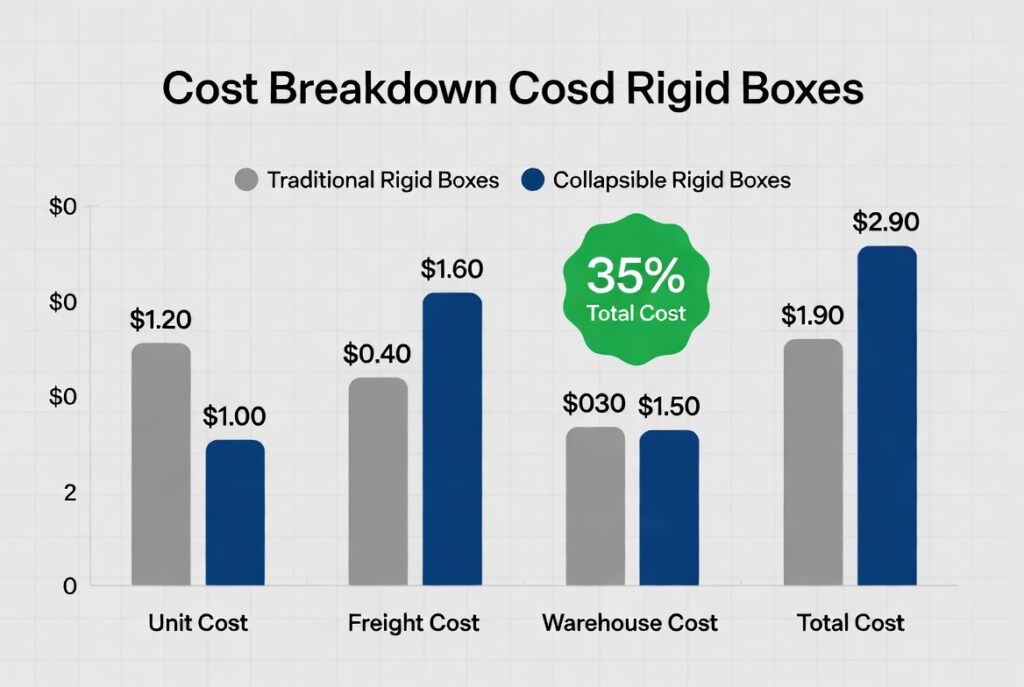
Collapsible rigid boxes carry higher initial unit costs, typically 15-25% above equivalent traditional rigid boxes due to precision die-cutting, engineering for reliable folding mechanisms, and specialized assembly features. A standard collapsible rigid box that compares to a $6.00 traditional box might cost $7.20-7.50 per unit. This upfront premium often causes sticker shock for buyers focused solely on packaging line items rather than holistic supply chain economics. [thecustomizeboxes]
However, unit cost comparisons alone mislead decision-makers. The relevant metric is total delivered cost—unit price plus freight, warehousing, handling, and damage rates. When analyzed through this comprehensive lens, collapsible rigid boxes frequently achieve 20-40% lower total cost despite higher unit prices. [pakfactory]
Logistics and Storage Costs
Freight expenses represent the most dramatic cost differential. Consider a brand ordering 20,000 boxes quarterly from an Asian manufacturer to a US distribution center. Traditional rigid boxes shipping assembled require approximately 8 standard 40-foot containers at $4,500 each ($36,000 total freight). The same quantity in collapsible format fits in 1.5 containers ($6,750 total freight)—an $29,250 saving per shipment or $117,000 annually. [boxprinted.wordpress]
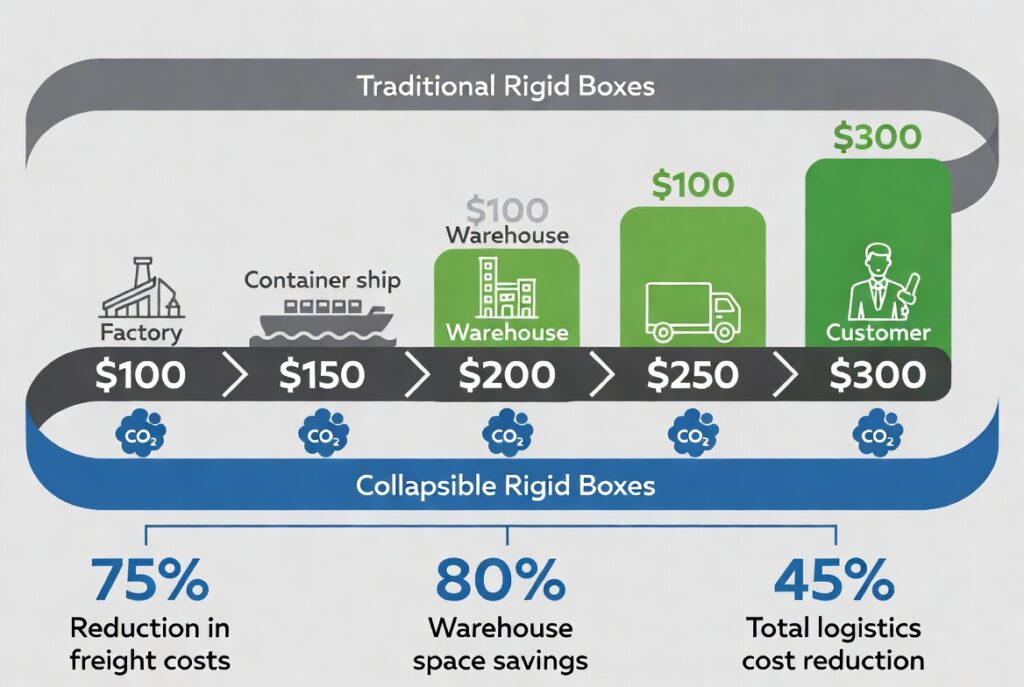
Warehouse costs compound over time based on storage duration and spatial requirements. If traditional rigid boxes occupy 4x the warehouse space of collapsible alternatives, and average inventory sits for 45 days before use, the cost differential accumulates. For a mid-size brand maintaining rolling inventory of 50,000 boxes, the annual warehouse cost difference can exceed $15,000-25,000 depending on facility rates and location. [blog.fetchingpack]
Damage rates during transportation and storage also factor into total cost analysis. Traditional rigid boxes, while structurally strong, can suffer corner damage, crushing, or denting during the multiple handling points from factory to final assembly. Collapsible boxes shipping flat experience less damage exposure, with industry data showing 30-50% lower damage rates during transportation. [boxprinted.wordpress]
Break-Even Analysis
Volume thresholds determine when collapsible rigid boxes become cost-advantageous. For brands ordering fewer than 2,000 units annually with local production, traditional rigid boxes often remain the economical choice since freight and storage costs are minimal. Once annual volumes exceed 5,000 units or international shipping is required, collapsible formats typically achieve total cost parity. Beyond 10,000 annual units with international sourcing, collapsible rigid boxes deliver clear cost advantages that increase with volume. [pakfactory]
A typical break-even calculation for a brand ordering 15,000 boxes quarterly from China to the US shows:
– Traditional rigid boxes: ($6.50 unit cost × 15,000) + $36,000 freight + $3,600 quarterly warehouse = $137,100 total quarterly cost
– Collapsible rigid boxes: ($7.80 unit cost × 15,000) + $7,200 freight + $900 quarterly warehouse = $125,100 total quarterly cost
This $12,000 quarterly savings ($48,000 annually) demonstrates the economic advantage despite 20% higher unit costs.
Environmental and Sustainability Impact
Carbon Footprint Reduction
Transportation emissions decrease proportionally with shipping volume reduction. When collapsible rigid boxes reduce container requirements by 75%, carbon emissions from ocean freight drop by an equivalent amount. For a brand shipping 100,000 boxes annually, this translates to approximately 15-22 metric tons of CO2 equivalent emissions avoided—roughly equal to removing 3-4 passenger vehicles from roads for a year. [blog.fetchingpack]
Warehouse energy consumption also improves with reduced storage footprints. Climate-controlled warehouse space requires heating, cooling, and lighting. Reducing packaging storage area by 80% proportionally decreases the energy footprint associated with maintaining that inventory. While individually modest, these savings aggregate across the entire supply chain to create measurable environmental improvements. [sps70]
Сайт circular economy benefits extend beyond carbon accounting. Collapsible rigid boxes maintain the same recyclability as traditional rigid boxes—both utilize paperboard substrates that recycle effectively through standard municipal streams. However, the efficiency gains in logistics create opportunities to source from more sustainable suppliers, as freight cost reductions offset premium pricing for FSC-certified materials or higher recycled content. [cascades]
Material Efficiency
Raw material consumption remains essentially identical between collapsible and traditional rigid boxes of equivalent dimensions and construction. Both use comparable paperboard weights, printed wrap papers, and adhesives. The sustainability advantage emerges from logistics efficiency rather than material reduction. [customboxesonly.co]
Some manufacturers have developed hybrid approaches that combine collapsible convenience with material minimization. These designs reduce paperboard thickness by 10-15% while maintaining structural integrity through optimized fold patterns and reinforced corners. Such innovations deliver incremental material savings atop the logistics benefits. [pakfactory]
Extended Producer Responsibility (EPR) regulations increasingly factor packaging efficiency into compliance costs. Many European countries and several US states now assess packaging fees based on total material weight and recyclability. Brands optimizing packaging for space efficiency may see reduced EPR costs as regulations evolve to reward sustainable design choices. [lacerta]
Implementation Strategy for Your Business
Assessing Fit for Your Product Line
Product characteristics determine collapsible rigid box suitability. Heavy products exceeding 5 pounds may require traditional rigid box construction for optimal structural support, while items under 3 pounds typically work excellently with collapsible formats. Fragile items benefit from both formats equally, as both provide superior cushioning and protection compared to folding cartons. [customboxesonly.co]
Brand positioning considerations matter significantly. Luxury brands investing heavily in unboxing experiences should request samples of collapsible rigid boxes assembled to verify the customer experience matches expectations. Modern collapsible designs achieve indistinguishable quality from traditional rigid boxes when properly engineered, but verifying this through physical samples prevents costly brand perception issues. [customrigidboxes]
Order volumes and frequency guide the economic analysis. Brands ordering packaging quarterly or more frequently see faster ROI from collapsible formats, while annual orders may not generate sufficient logistics savings to offset higher unit costs. Geographic distance between manufacturer and fulfillment centers amplifies savings—domestic sourcing reduces freight advantages while international shipping maximizes them. [clawscustomboxes]
Working with Manufacturing Partners
Manufacturing capabilities vary significantly among rigid box suppliers. Not all traditional rigid box manufacturers offer collapsible alternatives, as the engineering and die-cutting precision requirements differ. When evaluating suppliers, request details about their collapsible box construction methods, folding mechanisms, and quality control processes. [customrigidboxes]
На сайте Упаковка Bonito, we’ve developed proprietary collapsible rigid box designs that assemble in under 10 seconds while maintaining the structural integrity and premium feel of traditional luxury packaging. Our engineering team works directly with brands to optimize box dimensions, closure mechanisms, and material selections for their specific products and supply chain requirements.
Minimum order quantities (MOQs) for collapsible rigid boxes typically start at 1,000-3,000 units, comparable to traditional rigid boxes. However, the reduced storage requirements mean brands can comfortably order larger quantities to achieve better unit pricing without warehouse capacity concerns. Many of our clients increased order sizes by 50-100% after switching to collapsible formats, leveraging volume discounts that further improved total cost economics. [thecustomizeboxes]
Pilot Program Recommendations
Start with a single SKU rather than converting entire product lines simultaneously. Select a high-volume product with international supply chains to maximize observable savings and minimize risk. Order a 3-6 month supply of collapsible packaging while maintaining existing traditional rigid box inventory as backup during the transition period. [clawscustomboxes]
Measure comprehensive metrics beyond unit costs. Track freight expenses per box delivered, warehouse space utilization, assembly labor hours, damage rates during fulfillment, and customer feedback about unboxing experience. This data-driven approach identifies true cost impacts and builds internal business cases for broader adoption. [sps70]
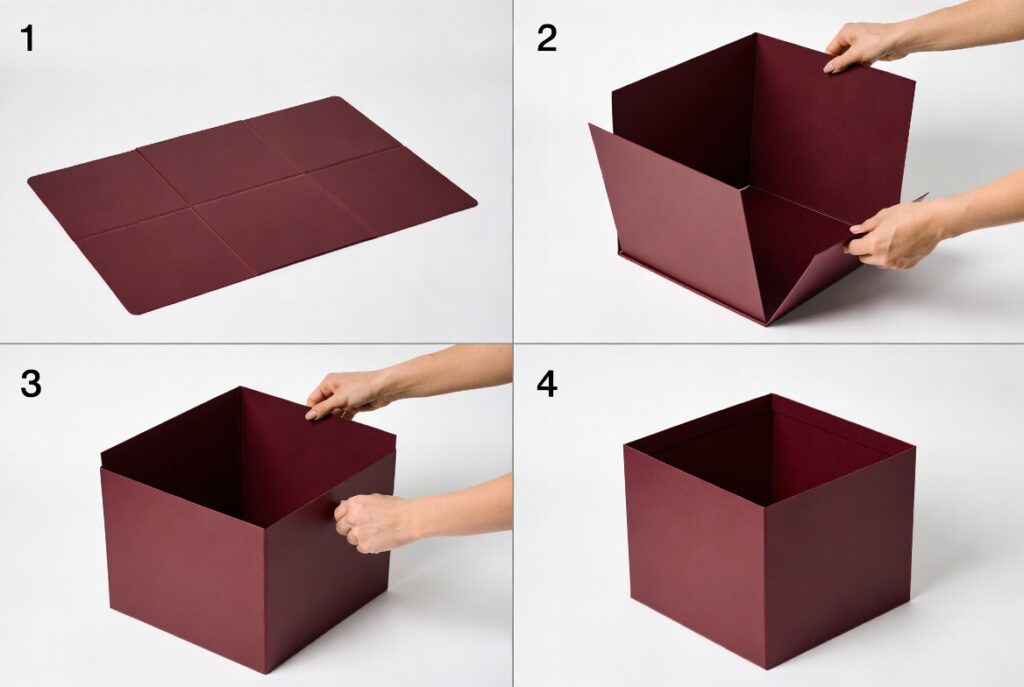
Train fulfillment teams before the first production orders arrive. Most collapsible rigid box designs assemble intuitively, but dedicating 15-20 minutes to hands-on training ensures consistency and efficiency. Consider creating brief video instructions for assembly to support training and maintain quality standards across shifts and seasonal workers. [doccheck]
Real-World Success Stories and Industry Adoption
E-Commerce and Direct-to-Consumer Brands
Beauty and cosmetics companies led early adoption of collapsible rigid boxes, driven by high-value products requiring premium presentation and international fulfillment operations. Brands shipping globally from Asian manufacturing hubs to North American and European markets realized that freight costs often exceeded packaging costs—making logistics optimization a strategic priority. [doccheck]
One boutique skincare brand reduced their packaging-related carbon footprint by 68% while cutting annual packaging and logistics costs from $284,000 to $172,000 through collapsible rigid box adoption. This sustainability story became a marketing differentiator, featured prominently on their website and social media channels, demonstrating how operational efficiency can reinforce brand values. [blog.fetchingpack]
Electronics accessories manufacturers increasingly specify collapsible rigid boxes for premium earbuds, smartwatch bands, and phone accessories. These products ship in high volumes with tight margins, making the 30-50% logistics savings particularly impactful. The compact storage also benefits retail partners receiving inventory, as boxes can be assembled on-demand rather than consuming backroom space. [boxprinted.wordpress]
Luxury and Gift Packaging
High-end confectionery brands use collapsible rigid boxes for seasonal gift sets, where massive volume spikes around holidays create warehouse capacity challenges. Being able to store 5-8x more packaging in the same space enables brands to prepare adequately for peak seasons without renting temporary warehouse space. [doccheck]
Jewelry packaging has seen growing adoption of collapsible rigid boxes for e-commerce shipments while maintaining traditional rigid boxes for in-store presentation. This hybrid approach optimizes for each channel’s specific requirements—online channels prioritize logistics efficiency while retail prioritizes immediate visual impact. [customboxesonly.co]
Corporate gifting companies managing client gift programs across multiple locations favor collapsible rigid boxes for their distribution efficiency. Regional fulfillment centers can maintain diverse packaging inventory in compact space, then assemble boxes as orders are processed, reducing the lead time from order to delivery. [clawscustomboxes]
Future Trends and Innovations
Smart Packaging Integration
NFC chips and QR codes embed increasingly into premium packaging as brands seek to create digital connections with customers. Collapsible rigid boxes accommodate these technologies identically to traditional formats, with placement on exterior surfaces or integration into magnetic closures. The logistics efficiency of collapsible formats makes smart packaging more economically viable by reducing the total cost base that technology adds to. [sps70]
Supply chain visibility technologies track packaging movement from factory to customer, providing data on transit times, storage conditions, and handling quality. As these systems mature, brands will gain precise insights into the total cost and environmental impact of packaging choices, further highlighting the advantages of logistics-optimized formats. [sps70]
Automation and Industry 4.0
Automated assembly systems for collapsible rigid boxes are emerging to address labor considerations in high-volume operations. These machines can erect 600-1,200 boxes per hour, eliminating the assembly time concern for brands packing thousands of units daily. As automation costs decrease, the economic case for collapsible formats strengthens even for labor-intensive applications. [clawscustomboxes]
AI-driven supply chain optimization tools now model total packaging costs including freight, warehousing, labor, and damage rates to recommend optimal packaging formats. These systems analyze historical data and real-time costs to provide decision support that considers dozens of variables beyond simple unit pricing. [sps70]
Regulatory and Market Pressures
Extended Producer Responsibility regulations expanding globally will increasingly reward packaging efficiency. Jurisdictions implementing EPR programs based on environmental impact may assess lower fees for packaging formats with superior logistics efficiency, creating regulatory incentives aligned with business economics. [lacerta]
Corporate sustainability commitments drive packaging decisions as companies pledge carbon neutrality and science-based emissions targets. Packaging supply chains represent 5-15% of total Scope 3 emissions for many consumer brands, making logistics-efficient formats essential tools for achieving climate goals. [creativeretailpackaging]
Taking Action: Making the Switch
The transition from traditional to collapsible rigid boxes requires thoughtful planning but delivers measurable returns across cost, efficiency, and sustainability metrics. By starting with pilot programs on high-volume SKUs, measuring comprehensive performance data, and partnering with experienced manufacturers, brands can validate the benefits before full-scale conversion. [blog.fetchingpack]
As a source manufacturer specializing in premium custom paper packaging, Bonito Packaging offers comprehensive support for brands evaluating collapsible rigid box solutions. Our engineering team provides customized designs optimized for your products, supply chain requirements, and brand standards. We work directly with your logistics partners to model total cost impacts and identify the configuration delivering maximum value.
Contact our team to request samples of our collapsible rigid box designs and discuss how optimized packaging can transform your supply chain performance. In an increasingly competitive marketplace where margins matter and sustainability drives purchasing decisions, packaging choices extending beyond aesthetics to embrace total system efficiency create lasting competitive advantages.
ЧАСТО ЗАДАВАЕМЫЕ ВОПРОСЫ
1. Do collapsible rigid boxes look as premium as traditional rigid boxes when assembled?
Yes, modern collapsible rigid box designs achieve identical visual appearance and structural quality when assembled compared to traditional rigid boxes. The folding mechanisms hide internally, leaving exterior surfaces smooth and seamless. High-end brands across beauty, electronics, and jewelry industries successfully use collapsible formats without compromising the luxury unboxing experience customers expect. The key is working with experienced manufacturers who engineer precise folding tolerances and quality closure mechanisms that maintain tight corners and clean lines. [customboxesonly.co]
2. How much warehouse space can I realistically save by switching to collapsible rigid boxes?
Warehouse space reductions typically range from 75-85% compared to traditional assembled rigid boxes. A practical example: if traditional rigid boxes for one SKU currently occupy 200 square feet of warehouse space, collapsible alternatives would require just 30-40 square feet for the same quantity. This space efficiency scales across multiple SKUs, potentially freeing hundreds or thousands of square feet for revenue-generating inventory. The exact savings depend on box dimensions and design, but 80% reduction represents a reliable planning estimate. [doccheck]
3. What are the minimum order quantities for collapsible rigid boxes?
Minimum order quantities for collapsible rigid boxes typically start at 1,000-3,000 units, similar to traditional rigid boxes. However, many brands actually increase their order sizes when switching to collapsible formats because reduced storage requirements eliminate warehouse capacity constraints. Ordering larger quantities (5,000-10,000+ units) often unlocks better per-unit pricing that combines with logistics savings to improve total economics. At Bonito Packaging, we work with brands to determine optimal order quantities that balance unit costs, freight efficiency, and inventory carrying considerations for their specific supply chain. [thecustomizeboxes]
4. How long does it take workers to assemble collapsible rigid boxes?
Assembly time for well-designed collapsible rigid boxes ranges from 8-15 seconds per unit after minimal training. Modern designs with magnetic closures or intuitive folding mechanisms require no tools and become second nature within 2-3 repetitions. For operations packing fewer than 500 units daily, this assembly time is negligible and often offset by reduced handling throughout the warehouse receiving and storage process. High-volume operations packing thousands of units can implement semi-automated assembly equipment that processes 600-1,200 boxes per hour, eliminating labor concerns entirely. [doccheck]
5. At what order volume do collapsible rigid boxes become more cost-effective than traditional ones?
Collapsible rigid boxes typically achieve total cost advantages once annual volumes exceed 5,000 units with international shipping, or 10,000+ units with domestic sourcing. The break-even point depends on geographic distance between manufacturer and fulfillment centers, warehouse costs in your market, and the specific price differential between traditional and collapsible formats for your design. Brands ordering quarterly shipments from overseas suppliers generally see ROI within 2-3 order cycles. The economics become increasingly favorable as volumes grow, with logistics savings scaling proportionally while the per-unit cost premium diminishes through volume discounts. [pakfactory]
References
1. MageTop – How SEO Can Transform the Packaging Industry: A Guide for Manufacturers – [Link]
2. Custom Rigid Boxes – Collapsible Rigid Boxes vs Standard Rigid Boxes – [Link]
3. Custom Boxes Only UK – Collapsible Rigid Boxes vs. Traditional Rigid Boxes: A Comparative Analysis – [Link]
4. Altitude Marketing – SEO Strategies for Packaging Brands – [Link]
5. Box Printed – Optimizing Supply Chain Efficiency With Rigid Collapsible Box – [Link]
6. Custom Rigid Boxes – How Much Does Packaging Cost in 2026? A Detailed Guide – [Link]
7. LinkedIn – Flat Pack vs. Assembled Rigid Boxes: Which Shipping Method is Right for You? – [Link]
Hot Tags: Rigid Boxes, Manufacturers, Customized, Custom, Suppliers, Buy, Cheap, Quality, Advanced, Durable, in Stock, Made in China, Price, Quotation, Free Sample
 English
  Spanish
  French
  German
  Russian
  Japanese
  Portuguese
  Arabic