
Content Menu
● Why Edible Packaging Is Gaining Attention in 2026
● What Materials Are Used in Edible Packaging?
>> Seaweed and algae-based films
>> Fruit fiber and composite materials
● Common Edible Packaging Formats
>> Coatings
>> Sachets and dissolvable packs
● Benefits of Edible Packaging for Food Brands
● Challenges and Limitations You Need to Know
>> Shelf-life and moisture sensitivity
>> Food safety and allergen control
>> Regulatory and labeling complexity
● Where Edible Packaging Works Best
● How Brands Should Evaluate Edible Packaging
● Edible Packaging vs Other Sustainable Packaging Options
● A Manufacturing View: What Matters Most
● The Future of Sustainable Food Packaging
● FAQ
>> 1. What is edible packaging?
>> 2. Is edible packaging really sustainable?
>> 3. What foods are best suited for edible packaging?
>> 4. What are the biggest challenges with edible packaging?
>> 5. Will edible packaging replace paper packaging?
>> 6. How should a brand test edible packaging before launch?
Edible packaging is moving from a niche sustainability concept to a serious innovation category for food brands that want to reduce waste and strengthen their environmental story. For premium brands and manufacturers, the real question is not whether edible packaging is interesting, but whether it is practical, scalable, and aligned with the product, supply chain, and customer experience.
What Is Edible Packaging?
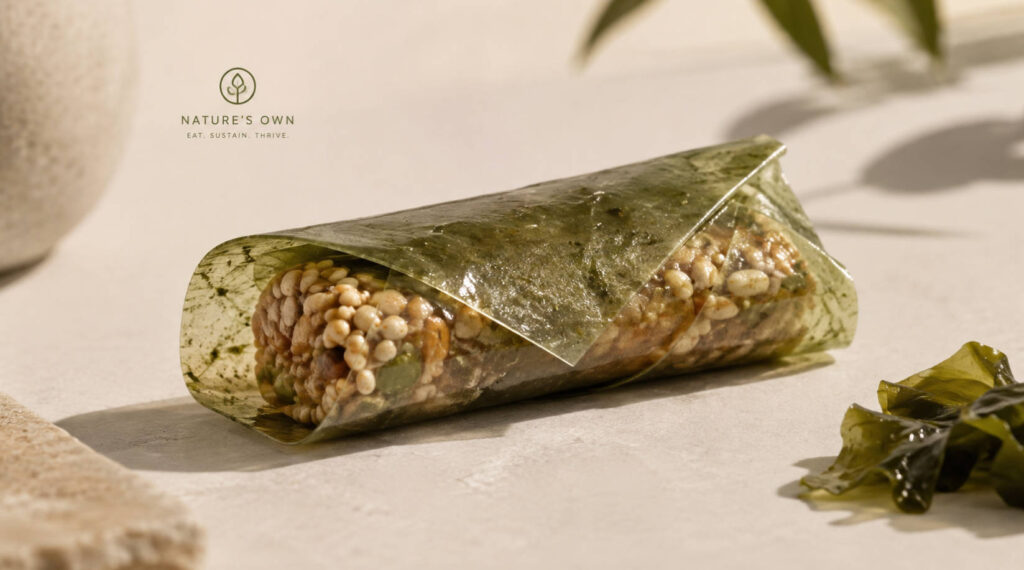
Edible packaging refers to packaging materials designed to be safely consumed along with the food or beverage they contain. Instead of being discarded after use, the packaging becomes part of the product experience.
In simple terms, edible packaging is designed to do two jobs at once: protect the food and reduce packaging waste. That dual function is what makes it attractive to sustainability-focused brands.
From an industry perspective, edible packaging is part of a broader shift toward smarter, lower-waste, and more resource-efficient packaging systems. It is not replacing every packaging format, but it is creating new possibilities for selected food categories.
Why Edible Packaging Is Gaining Attention in 2026
Edible packaging is gaining momentum for three main reasons.
– Consumer demand for sustainable solutions is still growing.
– Brands are under pressure to reduce plastic waste and improve ESG performance.
– Material innovation is making plant-based and bio-based packaging more viable for selected applications.
Industry forecasts also suggest continued growth in the edible packaging market over the coming years, reflecting stronger interest from food brands, packaging innovators, and investors. This growth does not mean edible packaging is universal, but it does confirm that the category is becoming commercially relevant.
For manufacturers and brand owners, the message is clear: edible packaging is no longer just a futuristic idea. It is now part of the practical sustainability conversation.
What Materials Are Used in Edible Packaging?
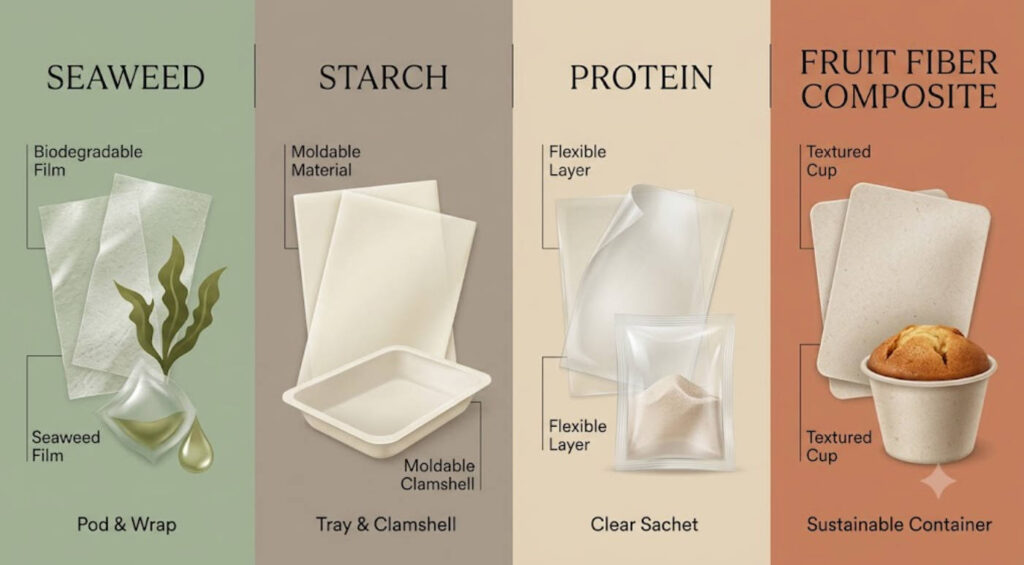
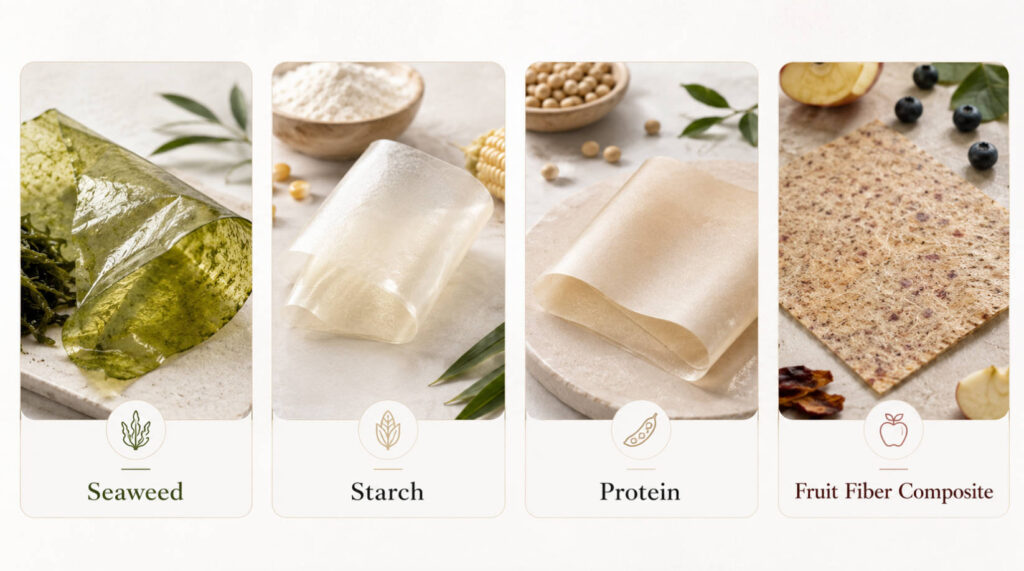
Edible packaging can be made from a range of natural ingredients and composite materials. The exact formula depends on the food application, shelf-life requirements, and desired barrier performance.
Seaweed and algae-based films
Seaweed and algae are among the most discussed materials in edible packaging. They are attractive because they are renewable, naturally derived, and suitable for thin films and dissolvable applications.
Starch-based films
Starch-based materials are often used because they are relatively low-cost and can be processed into flexible structures. They are commonly explored for wraps and coatings.
Protein-based films
Proteins such as casein or plant-based protein systems can be used to form edible films with certain barrier properties. These materials are especially relevant where texture and food compatibility matter.
Lipid-based coatings
Lipid-based systems can improve moisture resistance. They are often used as part of a layered or hybrid structure rather than as a standalone solution.
Fruit fiber and composite materials
Some edible packaging systems combine fibers, polysaccharides, proteins, and natural additives to balance strength, flexibility, and mouthfeel. These composite approaches are important because no single ingredient solves every packaging challenge.
Common Edible Packaging Formats
Edible packaging is not limited to one product type. It appears in several formats depending on how the food is packaged and consumed.
Films and wraps
Thin edible films can be used around snacks, candies, or small portions of food. These formats are appealing because they are lightweight and visually simple.
Coatings
Edible coatings can be applied directly to fruit, cheese, or bakery products to slow moisture loss and improve appearance.
Cups, straws, and cutlery
Some companies are experimenting with edible straws, cups, and utensils. These products are especially visible in foodservice and event settings.
Sachets and dissolvable packs
Edible or dissolvable sachets are useful for single-serve ingredients, sauces, or beverage additives. They can reduce secondary packaging in controlled use cases.
Food-contact edible layers
In certain product designs, the edible layer functions as both a barrier and a consumable part of the item. This is especially relevant in premium snack and confectionery applications.
Benefits of Edible Packaging for Food Brands
For the right product category, edible packaging can offer more than sustainability optics. It can create commercial and brand value.
– It reduces packaging waste by eliminating or minimizing disposable material.
– It supports sustainability positioning in a way consumers can understand immediately.
– It improves brand storytelling because the packaging itself becomes part of the product narrative.
– It can differentiate premium products in crowded categories where branding matters.
– It may support regulatory and ESG goals when used appropriately and transparently.
For premium food brands, this matters because packaging is no longer just a protective layer. It is part of the customer experience, the sustainability message, and the perceived product value.
Challenges and Limitations You Need to Know
Edible packaging has clear promise, but it also has important limitations. Brands should evaluate it carefully before moving from concept to launch.
Shelf-life and moisture sensitivity
Many edible materials are sensitive to humidity, temperature, and handling. If the pack loses structure too easily, product integrity can suffer.
Food safety and allergen control
Because the packaging is intended to be consumed, food safety becomes even more critical. Ingredient selection, traceability, and allergen management must be tightly controlled.
Consumer acceptance
Some consumers love the idea of edible packaging. Others may be hesitant about taste, texture, or the idea of eating the wrapper. That means education and testing are essential.
Regulatory and labeling complexity
Food-contact, edible, and dissolvable materials can trigger different regulatory questions depending on the market. Clear labeling and compliance checks are necessary before commercialization.
Cost and scalability
Many edible packaging formats remain more expensive than conventional solutions. That makes them harder to scale across every SKU, especially in price-sensitive categories.
Where Edible Packaging Works Best
From a packaging strategy perspective, edible packaging is strongest in categories where the product format, consumption moment, and sustainability story align.
– Single-serve snacks where the wrapper can be part of the experience.
– Confectionery where novelty and premium positioning matter.
– Instant beverage products that benefit from dissolvable or low-waste formats.
– Fresh produce coatings where moisture control is important.
– Foodservice applications where visible waste reduction supports brand perception.
In practice, edible packaging is often best used for high-visibility use cases rather than mass-market universal deployment.
How Brands Should Evaluate Edible Packaging
Before investing in edible packaging, food brands should use a structured evaluation process.
1. Define the product category. Not every item is suitable for edible packaging.
2. Check shelf-life expectations. Longer shelf-life usually increases technical difficulty.
3. Assess environmental exposure. Humidity, heat, and transport conditions matter.
4. Review food safety requirements. Ingredients, allergens, and compliance must be validated.
5. Test consumer response. Taste, texture, and convenience influence adoption.
6. Compare total cost. Packaging performance must justify the unit economics.
7. Pilot before scaling. A controlled launch is safer than a full rollout.
This framework helps brands avoid one common mistake: choosing edible packaging because it looks innovative, rather than because it fits the product.
Edible Packaging vs Other Sustainable Packaging Options
Edible packaging is exciting, but it is only one option within a much larger sustainable packaging toolbox. For many premium brands, the best answer may be a more scalable format such as paper-based, compostable, or hybrid packaging.
| Packaging option | Main advantage | Main limitation |
|---|---|---|
| Edible packaging | High novelty and low visible waste | Moisture sensitivity and higher cost |
| Paper-based packaging | Strong brand perception and broad scalability | Limited barrier performance without coatings |
| Compostable packaging | Familiar sustainability message | Requires proper end-of-life conditions |
| Bio-based films | Lower fossil dependency | Performance varies by application |
| Hybrid packaging | Flexible balance of function and sustainability | Requires careful design and testing |
For many B2B buyers, this comparison is the key insight. Edible packaging can be a strong solution, but it is rarely the only solution.
A Manufacturing View: What Matters Most
From a high-end packaging manufacturer’s perspective, the success of any sustainable format depends on five practical factors.
– Material stability during production and transport.
– Printability and brand presentation for premium positioning.
– Barrier performance for food safety and shelf-life.
– Production consistency for commercial scale.
– Regulatory readiness across target markets.
This is where custom packaging expertise matters. Many brands want sustainability, but they also need clean presentation, reliable protection, and cost control. That is why the most effective packaging strategy is usually not the most unusual one. It is the one that delivers the best total value.
The Future of Sustainable Food Packaging
The future of sustainable food packaging will likely be defined by specialization, not one universal material. Edible packaging will continue to grow where it makes sense, especially in premium, novelty-driven, and low-moisture applications.
At the same time, paper-based custom packaging, compostable formats, and hybrid designs will remain critical for brands that need scale, shelf-life, and reliable manufacturing performance.
For packaging buyers, the best strategy is to match the material to the product reality. For manufacturers, the opportunity is to offer a portfolio of sustainable solutions rather than a single answer.
Schlussfolgerung
Edible packaging is one of the most interesting sustainable packaging trends in 2026, but it is not a universal replacement for conventional formats. Its real value comes from the right fit: the right category, the right use case, and the right brand story.
For food brands, it can be a powerful way to reduce visible waste and elevate sustainability messaging. For premium packaging buyers, it is best evaluated alongside other scalable solutions such as custom paper packaging, compostable structures, and hybrid systems.
If you are exploring sustainable custom packaging for a premium food or consumer brand, the most effective path is to start with function, then layer in sustainability, branding, and compliance.
Looking for a packaging partner that understands premium presentation, sustainability goals, and production practicality? Contact our team to explore custom packaging solutions tailored to your product and market.
FAQ
1. What is edible packaging?
Edible packaging is packaging made from food-safe materials that can be consumed with the product or safely dissolved after use. It is designed to reduce waste while still protecting the food.
2. Is edible packaging really sustainable?
It can be, but sustainability depends on the full lifecycle. The materials, production process, shelf-life, transportation, and food waste impact all need to be considered.
3. What foods are best suited for edible packaging?
Single-serve snacks, confectionery, fresh produce, and selected foodservice products are often the best candidates because they are easier to match with edible materials.
4. What are the biggest challenges with edible packaging?
The biggest challenges are moisture sensitivity, shelf-life limitations, food safety requirements, consumer acceptance, and cost.
5. Will edible packaging replace paper packaging?
Unlikely. Edible packaging will probably remain a specialized solution, while paper-based and hybrid packaging formats continue to dominate many commercial uses.
6. How should a brand test edible packaging before launch?
Brands should run pilot tests for shelf-life, handling, food safety, consumer feedback, and cost before scaling.
References
1. Bain & Company. Sustainable Packaging: What Consumers Want Next from the Paper and Packaging Industry. [Link]
2. FutureBridge. Sustainable Packaging. [Link]
3. Sustainable Packaging Coalition. 2025 Sustainable Packaging Trends Report. [Link]
4. Sustainable Packaging Coalition. 2026 Sustainable Packaging Trends Report. [Link]
5. Global Growth Insights. Edible Packaging Market Size, Share, Trends | Growth Report [2026-2035]. [Link]
6. 360iResearch. Edible Packaging Market Size & Share 2026-2032. [Link]
7. Coherent Market Insights. Edible Packaging Market Size, Share & YoY Growth Rate, 2033. [Link]
8. Research and Markets. Edible Packaging Market – Global Forecast 2026-2032. [Link]
9. Grand View Research. Edible Packaging Market Size, Statistics Report 2026-2035. [Link]
10. Toward Packaging. Edible Packaging Market Soars by USD 7.84 Bn by 2035. [Link]
11. Roots Analysis. Sustainable Packaging Market Size, Trends, Industry 2035. [Link]
12. PakFactory. Edible Packaging – The Fast Approaching Sustainable Packaging Trend. [Link]
Hot Tags: Edible Food Packaging, Manufacturers, Customized, Custom, Suppliers, Buy, Cheap, Quality, Advanced, Durable, in Stock, Made in China, Price, Quotation, Free Sample
 English
  Spanish
  French
  German
  Russian
  Japanese
  Portuguese
  Arabic