
Content Menu
● Why Custom Game Box Packaging Matters
● Start With the Game, Not the Artwork
● Choose the Right Game Box Structure
>> Box depth
● Design Inserts That Improve Gameplay
● Make the Front, Spine, and Back Work Together
>> Front panel: Create immediate interest
>> Spine panels: Stay visible when shelved
>> Back panel: Explain the value
● Use Print Finishes With Purpose
● Engineer Packaging for Shipping and Fulfillment
● A Practical Game Packaging Development Workflow
● Create a Better Experience With Bonito Packaging
● FAQ
>> 1. What is the best material for a board game box?
>> 2. Should a game box leave room for sleeved cards?
>> 3. Are custom inserts necessary for game packaging?
>> 4. Which print finish is best for premium game boxes?
>> 5. How can I prevent board game boxes from being damaged during shipping?
>> 6. What information should appear on a board game box?
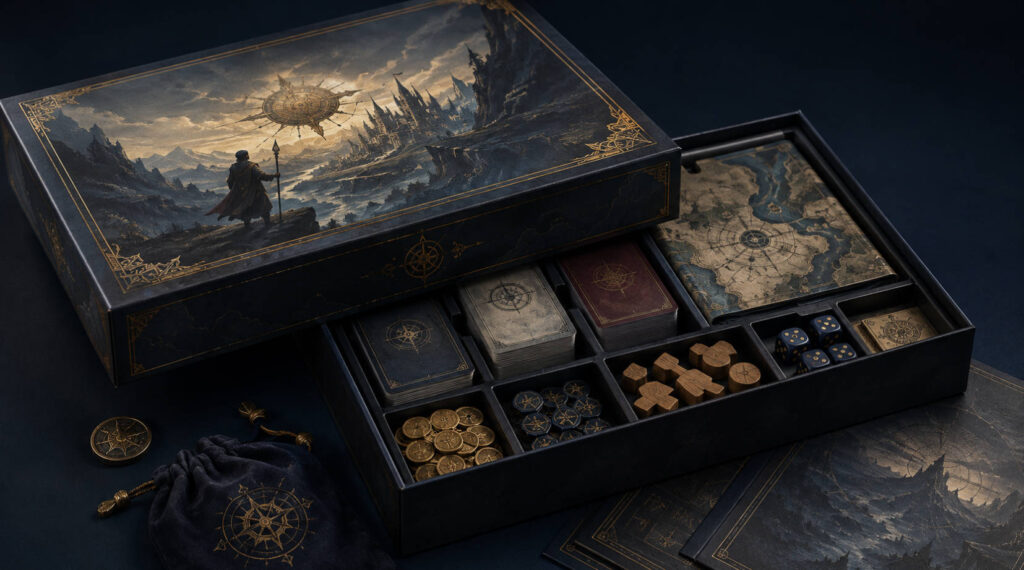
Custom game box packaging does much more than hold cards, boards, dice, or miniatures. It protects valuable components, communicates the game’s story, supports retail display, and shapes a player’s first impression before they even open the box.
At Bonito Packaging, we view every board game box and custom card game box as a complete user experience. A well-made box should look compelling on the shelf, survive transport, organize components intelligently, and remain useful through years of play. When these functions work together, packaging becomes an extension of the game—not an afterthought.
Why Custom Game Box Packaging Matters
For a shopper, the box is often the first physical interaction with a game. In a crowded retail store, it must communicate genre, quality, player count, age range, and gameplay appeal within seconds. In e-commerce, it must arrive in excellent condition and create a satisfying unboxing moment.
For publishers and game brands, effective board game packaging delivers three important outcomes:
– Product protection: Prevents crushed corners, scuffed surfaces, loose components, and damaged cards.
– Retail impact: Helps the game stand out on shelves and makes it easier for retailers to display.
– Brand value: Makes the game feel more professional, collectible, and worth its price point.
A visually impressive box that fails during shipping can lead to disappointment and negative reviews. Conversely, a strong but generic box may protect the product while missing the opportunity to create excitement. The best custom packaging balances both priorities from the beginning.
Start With the Game, Not the Artwork
Before choosing colors, finishes, or box styles, define what the packaging must contain and protect. This early planning stage prevents expensive redesigns after artwork, inserts, or production tooling have already been finalized.
A practical packaging brief should answer the following questions:
– What type of game is it: card game, board game, tabletop strategy game, miniature game, or collector’s edition?
– How many components must fit inside?
– Are the components lightweight, fragile, sharp-edged, oversized, or premium?
– Will players use card sleeves, expansions, or replacement components?
– Is the game sold online, through specialty retailers, in big-box stores, or via crowdfunding?
– What price point and customer expectation should the packaging support?
For example, a compact card game may only require a folding carton, tuck-end box, or sleeve. A strategic board game with a board, miniatures, tokens, and rulebooks may need a rigid setup box with a custom paperboard insert. A deluxe edition may require multiple trays, foil stamping, magnetic closures, or a premium slipcase.
The key is to match the packaging system to the real product experience. Do not choose an oversized box simply to look more expensive. Players notice empty space, components that shift during transport, and boxes that are difficult to store.
Choose the Right Game Box Structure
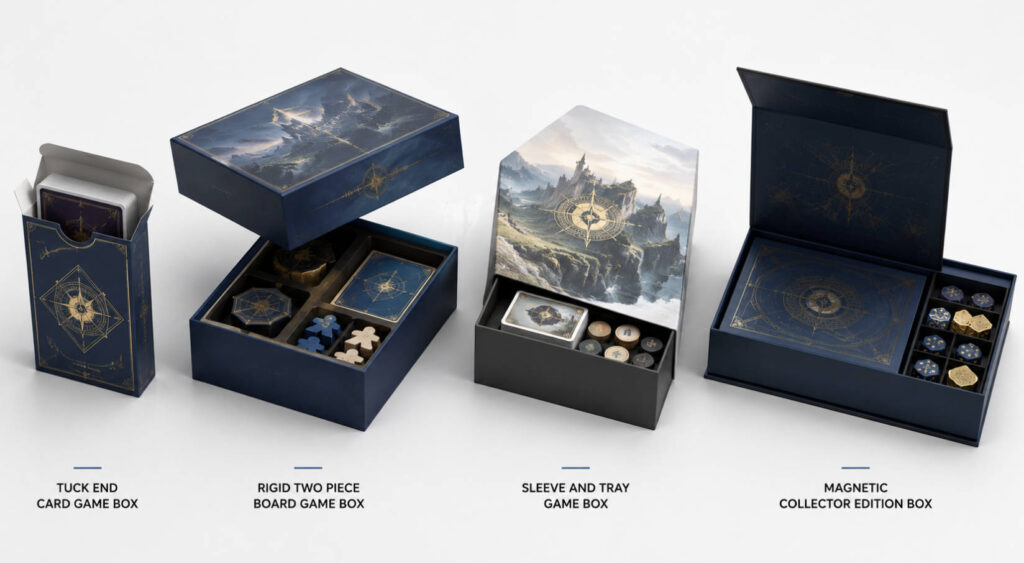
The right structure depends on the game’s component volume, weight, retail channel, and desired perceived value. Each format serves a different purpose.
| Game box type | Best for | Main advantages | Key consideration |
|---|---|---|---|
| Tuck-end paperboard box | Small card games | Lightweight, economical, fast to produce | Less suitable for heavy components |
| Telescopic rigid box | Board games and strategy games | Strong, premium, highly customizable | Higher material and shipping cost |
| Two-piece setup box | Mid- to high-end tabletop games | Excellent shelf presence and durability | Requires accurate insert planning |
| Sleeve and tray box | Gift sets and premium editions | Strong unboxing experience | Needs careful friction and fit testing |
| Magnetic rigid box | Collector editions and licensed products | High-end appearance and reusability | Best reserved for premium pricing |
| Corrugated shipping carton | Bulk transport and e-commerce fulfillment | Strong outer protection | Should support, not replace, product packaging |
For most standard board games, a rigid two-piece setup box offers the best balance of durability, print quality, and perceived value. It protects corners better than lightweight paperboard and creates a familiar, reusable format for players.
For card games with limited accessories, a compact paperboard box may be more appropriate. It reduces material use, lowers shipping weight, and keeps the product aligned with customer expectations.
Get the Dimensions Right
Box dimensions affect product protection, warehouse efficiency, retail display, and player satisfaction. A box that is too tight can bend rulebooks, damage cards, or make the lid difficult to close. A box that is too large wastes materials, raises freight costs, and can make the game feel misleadingly underfilled.
When developing custom game packaging, assess three dimensions:
Internal dimensions
The internal space must accommodate all components, the insert, protective tolerances, and possible card sleeves. If players are likely to sleeve cards, build that allowance into the packaging design rather than treating it as an optional extra.
External dimensions
The outer dimensions should work for retailer shelves, storage furniture, and shipping cartons. Games that sit awkwardly on shelves or cannot stack securely may receive less favorable placement in stores.
Box depth
Depth is especially important for board game packaging. A box that is too shallow may compress components. A box that is too deep can create excessive empty space and cause items to move. Proper depth helps the box stack safely, feel balanced in the hand, and remain practical for home storage.
Expert recommendation: Benchmark several games in the same category before finalizing dimensions. Look at how they are displayed, stacked, transported, and stored. Then design a format that fits the category while still expressing your brand identity.
Design Inserts That Improve Gameplay
A custom insert is not merely a protective divider. It can make setup faster, reduce cleanup time, prevent missing pieces, and make players feel that the game has been thoughtfully designed.
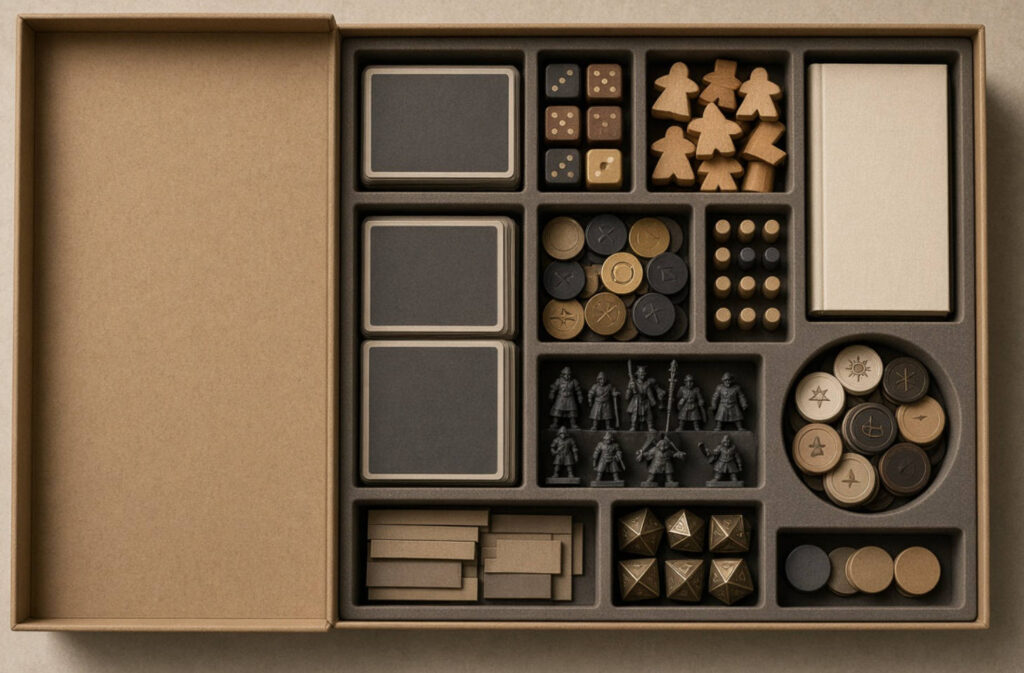
An effective game box insert should:
– Keep fragile or premium components from moving during transport.
– Separate cards, dice, boards, miniatures, tokens, and rulebooks.
– Allow the game to be stored vertically or horizontally when possible.
– Make it easy to identify where each item belongs.
– Support fast setup and pack-away after a game session.
– Leave sufficient room for sleeved cards or future expansions if relevant.
Paperboard inserts are versatile, recyclable, and suitable for many board games. Molded pulp can support brands with a sustainability-oriented positioning. Plastic trays can offer precise cavities and a polished appearance, while EVA foam is best reserved for fragile, high-value, or collector-grade components.
The best insert is not always the most complex one. A simple, intuitive layout often delivers a better user experience than an elaborate insert with too many narrow compartments. Test whether a first-time player can understand where components belong without reading instructions.
Make the Front, Spine, and Back Work Together
A game box must communicate differently depending on which panel a shopper sees. Retailers may display games face-out, spine-out, stacked, or inside a counter display. Every visible panel should therefore have a clear job.
Front panel: Create immediate interest
The front should focus on a recognizable title, strong visual theme, and a clear emotional hook. Avoid overcrowding the artwork with too much copy.
Include the most essential information:
– Game title and publisher logo
– Main illustration or visual theme
– Player count, age range, and playtime icons
– A concise tagline when it clarifies the game concept
Spine panels: Stay visible when shelved
The game title should appear clearly on the spine. Include the logo, age rating or player icons where appropriate, and enough contrast for quick recognition from a distance.
Back panel: Explain the value
Think of the back as a compact product page. It should help a shopper understand what the game is, who it is for, and why it is different.
Use short copy, not dense paragraphs. A high-performing back panel often includes:
– A short overview of the gameplay premise
– Three key selling points in bullet format
– A photo or rendered image of the game in play
– A component overview
– Required warnings, certifications, barcode, and legal information
– A QR code linking to a demo video, tutorial, or rules page when appropriate
Use Print Finishes With Purpose
Premium finishes can increase shelf appeal and tactile value, but they should reinforce the game’s theme rather than become decoration for its own sake.
Common finishing options for custom board game boxes include:
– Matte lamination: Creates a refined, low-glare appearance.
– Gloss lamination: Enhances color vibrancy and produces a brighter look.
– Soft-touch coating: Adds a velvety tactile feel suited to premium editions.
– Spot UV: Highlights logos, titles, or selected artwork with glossy contrast.
– Foil stamping: Adds metallic visual impact to titles, emblems, or collector markings.
– Embossing or debossing: Creates a physical texture that improves perceived quality.
For example, a fantasy collector’s edition may use soft-touch lamination with gold foil and embossed iconography. A family card game may achieve better results with vibrant colors, durable gloss lamination, and a clean, playful layout.
Choose one dominant premium feature. Too many effects can weaken visual hierarchy, complicate production, and increase cost without improving the customer experience.
Engineer Packaging for Shipping and Fulfillment
A game box should be designed for real transport conditions, not only for a product photoshoot. Board games may travel through factories, warehouses, ports, fulfillment centers, retail backrooms, and last-mile delivery networks before reaching the customer.
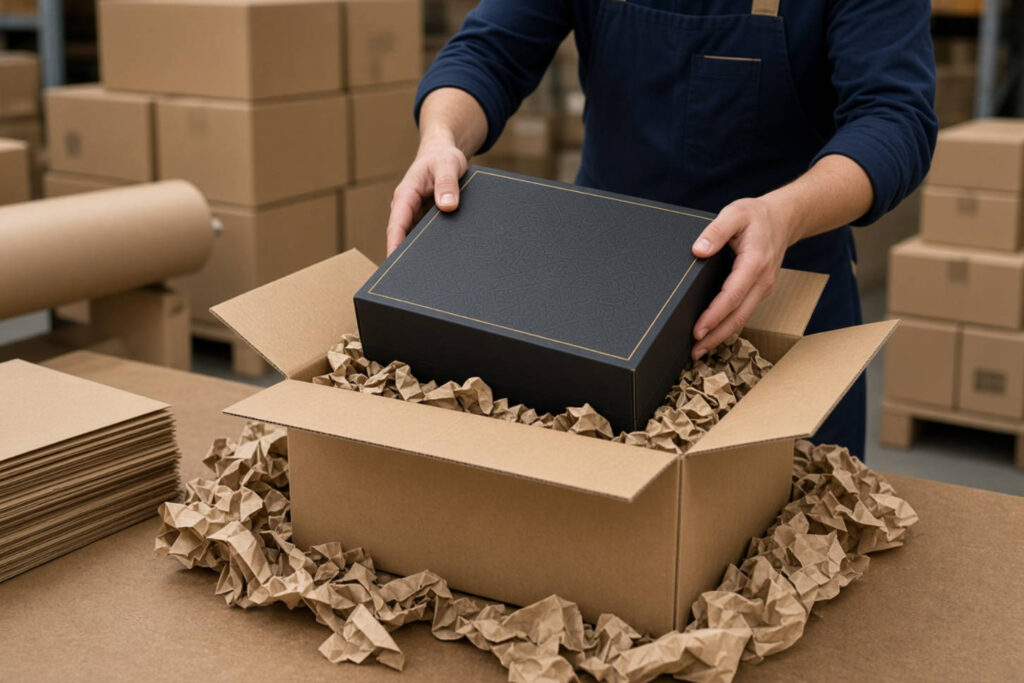
A robust shipping plan should include:
1. A correctly sized corrugated outer carton that provides protective clearance around the game box.
2. Void fill or cushioning materials such as kraft paper, paper pads, air pillows, foam sheets, or bubble wrap where necessary.
3. Surface protection between coated boxes to prevent scuffing, ink transfer, and rubbing.
4. Moisture protection through shrink wrap, polybags, liner bags, or desiccants for humid and long-distance shipping conditions.
5. Stacking and handling instructions where the product requires additional care.
6. Pre-production testing through sample packing, compression checks, drop tests, and transport simulations.
For bulk exports, it is also important to consider carton strength, pallet configuration, container loading, and climate exposure. These details are especially relevant for premium rigid boxes, laminated surfaces, and games with delicate components.
A Practical Game Packaging Development Workflow
A structured workflow reduces rework and helps publishers make better production decisions.
1. Audit game components: Measure every item, including boards, cards, sleeves, manuals, tokens, and inserts.
2. Define retail and shipping requirements: Identify whether the game is intended for e-commerce, retail shelves, crowdfunding fulfillment, or a mix of channels.
3. Select the box structure: Choose paperboard, rigid board, sleeve-and-tray, magnetic box, or another suitable format.
4. Develop insert concepts: Prioritize protection, organization, setup speed, and storage flexibility.
5. Create artwork and information hierarchy: Design the front, spine, back, and interior with clear shopper communication.
6. Choose material and finishes: Align paper, board thickness, lamination, and embellishments with the target price point.
7. Prototype and test: Check fit, lid closure, stacking, component movement, shipping performance, and shelf visibility.
8. Refine before mass production: Resolve problems at the sample stage, when adjustments are faster and less costly.
This process helps ensure that the final custom game box packaging supports both your product and your business goals.
Create a Better Experience With Bonito Packaging
A memorable game deserves packaging that protects its components and strengthens its story. Whether you need a compact custom card game box, a durable rigid board game box, a premium collector’s edition, or export-ready shipping packaging, the right structural decisions can improve shelf appeal, unboxing satisfaction, and long-term product value.
Bonito Packaging helps brands develop high-end custom paper packaging from concept through production. Share your game components, target market, box style, and quantity requirements with our team to begin a tailored packaging consultation.
FAQ
1. What is the best material for a board game box?
Rigid paperboard is often the preferred material for standard and premium board games because it offers strong corner protection, excellent print quality, and a reusable feel. Lightweight paperboard is usually better for compact card games.
2. Should a game box leave room for sleeved cards?
Yes. If players are likely to use card sleeves, the packaging should include enough extra space to store sleeved cards comfortably. This prevents lid pressure, bent cards, and customer frustration.
3. Are custom inserts necessary for game packaging?
Custom inserts are highly recommended for games with multiple components, delicate miniatures, tokens, or cards. They reduce movement in transit and make setup and storage easier for players.
4. Which print finish is best for premium game boxes?
Soft-touch lamination, foil stamping, spot UV, and embossing are popular for premium editions. The best option depends on the game’s visual identity, target price, and expected retail position.
5. How can I prevent board game boxes from being damaged during shipping?
Use a strong corrugated shipping carton, leave protective clearance around the product box, fill voids with cushioning material, protect surfaces from rubbing, and test the final pack-out before mass shipment.
6. What information should appear on a board game box?
The front and spine should clearly show the game title and essential player information. The back should explain the game concept, include key selling points, show components or gameplay, and display required legal and barcode information.
References
1. PakFactory. “Tips to Effectively Package and Ship Your Board Games.” Covers box selection, inserts, print finishes, protective spacing, and shipping considerations. [Read the source] [pakfactory]
2. League of Gamemakers. “Packaging Your Game So Stores Can, Y’Know, Sell It.” Discusses shelf visibility, front and back panel design, spine information, box depth, and retail usability. [Read the source] [leagueofgamemakers]
3. Long Win Display. “How to Effectively Package a Game Box: A Practical Guide From a Custom Packaging Manufacturer.” Covers component analysis, structure selection, insert design, shipping protection, and packaging workflow considerations. [Read the source] [longwindisplay]
Hot Tags: Custom Game Box Packaging, Manufacturers, Customized, Custom, Suppliers, Buy, Cheap, Quality, Advanced, Durable, in Stock, Made in China, Price, Quotation, Free Sample
 English
  Spanish
  French
  German
  Russian
  Japanese
  Portuguese
  Arabic