
Content Menu
● Understanding Magnetic Rigid Boxes In Subscription Context
● Why Magnetic Rigid Boxes Drive Stronger Subscriber Response
>> Magnetic Rigid Boxes Versus Standard Subscription Packaging
● Matching Box Type To Subscription Model
● Customization Dimensions That Shape Subscriber Experience
>> Finishes And Surface Details
>> Interior Architecture And Inserts
● Balancing Cost, Durability, And Perceived Value
● Design Framework For High‑Impact Magnetic Rigid Boxes
● Experience‑Driven Content For Packaging Buyers
● Manufacturing Process Insight For Rigid Boxes
● Sustainability And Long‑Term Brand Presence
● Practical Checklist For Subscription Brands
● Summary And Next Steps For Brands
>> 1. Are magnetic rigid boxes always the best choice for recurring deliveries?
>> 2. How can brands decide whether the cost of magnetic rigid boxes is justified?
>> 3. What should brands focus on when designing inserts for these boxes?
>> 4. Can magnetic rigid boxes support environmental goals?
>> 5. How does the manufacturing process influence the final subscriber experience?
Magnetic rigid boxes can transform a recurring delivery into a premium experience that subscribers look forward to every month. When these boxes are thoughtfully designed around the subscription model, they not only protect products but also increase perceived value, emotional connection, and long‑term loyalty.

Understanding Magnetic Rigid Boxes In Subscription Context
Magnetic rigid boxes are sturdy, pre‑assembled boxes with a hinged lid and integrated magnets that create a distinctive “click” when closed. They are widely used for luxury goods, gifts, and collectible items because they feel substantial in the hand and look refined on a shelf.
Subscription services range from entry‑level lifestyle boxes to high‑end beauty, technology, and fine food programs. For recurring deliveries with premium positioning, a magnetic rigid box makes each shipment feel like a curated, collectible package rather than a routine parcel.
Brands that rely on recurring revenue can use this packaging to underline a long‑term relationship: every box becomes a reminder that the subscription is special, worth sharing, and worth keeping.
Why Magnetic Rigid Boxes Drive Stronger Subscriber Response
Compared with standard corrugated mailers, magnetic rigid boxes create a different emotional response at the door and at the moment of opening.
Key advantages:
– Higher perceived value
The weight, rigid structure, and smooth surfaces communicate quality before a subscriber sees the product inside.
– Memorable tactile experience
The magnet closure adds a physical “click” and sense of precision that people notice and often show to others.
– Reusability in home or office
Many subscribers keep these boxes as storage or display pieces; the brand remains visible long after delivery.
These elements work together in the unboxing moment. A well‑staged interior, combined with the reassuring feel of the magnets, helps subscribers feel that the contents are curated specifically for them.
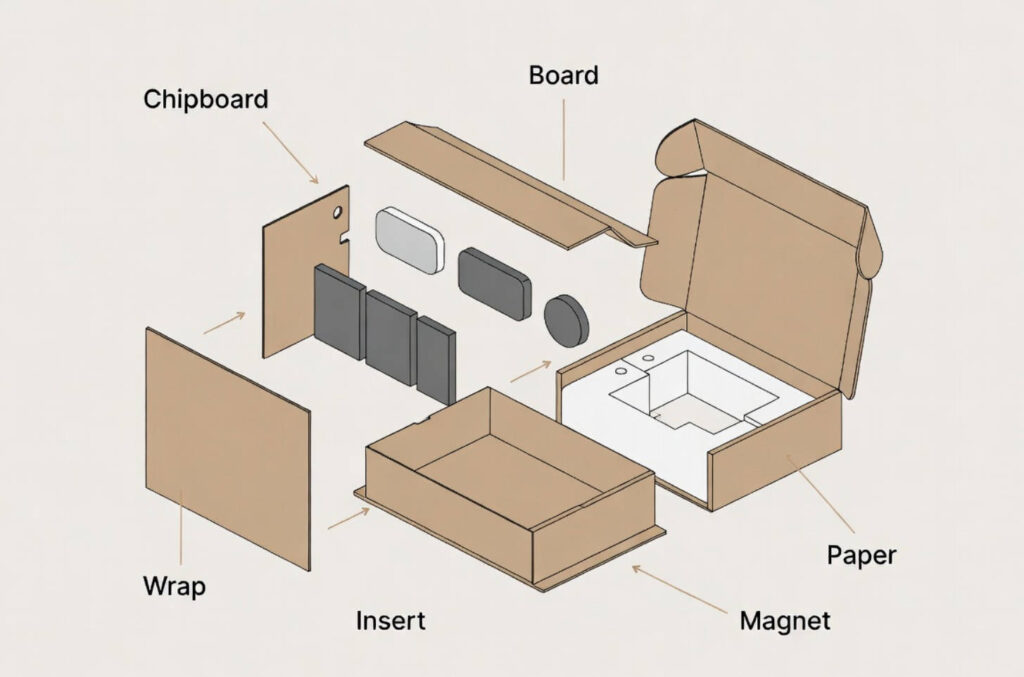
Magnetic Rigid Boxes Versus Standard Subscription Packaging
| Aspecto | Caixa rígida magnética | Standard Corrugated Mailer |
|---|---|---|
| Perceived value | Premium, suitable for higher‑priced tiers | Functional, everyday deliveries |
| Tactile impression | Distinct closing action, smooth lid movement | Basic opening with tear or flap |
| Reutilização | Often kept as storage or gift box | Usually recycled or discarded |
| Visual presentation | Clean edges, flat surfaces for refined finishes | More utilitarian and textured |
| Unit cost | Higher and best aligned with premium subscriptions | Lower, ideal for cost‑sensitive programs |
For subscription brands with stronger margins and a focus on loyalty, this shift in perception and behavior can justify investing in a more advanced box style.
Matching Box Type To Subscription Model
Not every subscription model needs magnetic rigid boxes, and not every box needs the same structure. The choice should support the audience, price point, and content of each recurring delivery.
Well‑matched use cases include:
– Luxury beauty and skincare sets with concentrated formulas or limited editions.
– Fine food and drink selections such as wine clubs, premium tea assortments, and artisanal snacks.
– Technology accessories and devices where hardware and cables require organized inserts.
– Jewelry and collectible items that benefit from protective and display‑ready packaging.
– Corporate programs such as executive gift sets or employee onboarding kits.
Magnetic rigid boxes work especially well when a subscription is positioned as a treat, a milestone, or a collectible series. They reinforce the idea that each shipment belongs to a curated collection rather than a one‑off purchase.
Customization Dimensions That Shape Subscriber Experience
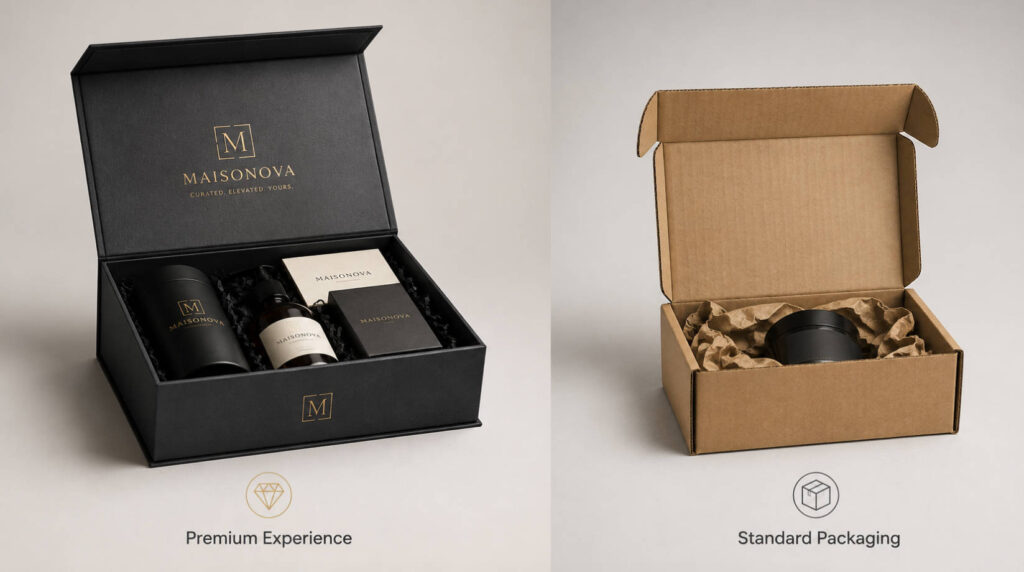
From a packaging specialist’s viewpoint, true customization is much more than adding a logo or a single brand color. Magnetic rigid boxes allow fine‑tuned control over structure, materials, finishes, and interior layout.
Projeto estrutural
The structure of the box defines how subscribers interact with it and how products are staged.
– Book‑style, clamshell, drawer, and shoulder‑neck formats support different storytelling and access patterns.
– Single or double magnets, visible or hidden, influence closing force and tactile feedback.
– Lid depth and base height can be matched to typical assortments so the box closes cleanly even with varied product mixes.
Materials And Board Grades
Rigid boxes use thicker board than folding cartons, and material choices directly affect feel and durability.
– Board grade and thickness support product weight and transit conditions.
– Outer paper wraps can be uncoated for a natural touch or laminated and textured for a sleek finish.
– Recycled or certified materials can be used to align with environmental commitments.
Finishes And Surface Details
Finishing choices communicate brand personality and quality level without requiring heavy on‑box text.
– Foil accents, spot coatings, embossing and debossing create depth and contrast.
– Subtle patterns or blind embossing on lids make boxes camera‑ready for photos and video.
– Interior printing can add color and pattern inside the lid for an unexpected moment when subscribers first open the box.
Interior Architecture And Inserts
The interior of a magnetic rigid box is where subscribers see how carefully the items are curated.
– Inserts made from foam, paperboard, or molded pulp can secure each item in a consistent position.
– Compartments and dividers keep fragile products separated and visible.
– Small bridges, platforms, or risers can ensure that smaller products do not disappear visually at the bottom of the box.
Interior design determines the reveal sequence, starting from the top layer and moving toward deeper compartments. This staging shapes how subscribers interpret the contents and the value of the subscription.
Balancing Cost, Durability, And Perceived Value
Magnetic rigid boxes cost more per unit than simpler mailers, and they are heavier in shipping. The decision to use them should be anchored in a balanced view of price, durability, and long‑term subscriber behavior.
Key considerations:
– Pricing tier and margin
Higher subscription prices with stronger margins can better absorb the incremental cost of premium packaging.
– Transit distance and protection needs
Long‑distance shipping and delicate items favor rigid structures with secure inserts.
– Warehouse space and handling
Pre‑assembled rigid boxes require more storage volume and careful handling in fulfillment.
Brands can model packaging cost as a percentage of subscription price, then estimate how much increased loyalty or word‑of‑mouth would be needed to support an upgrade to magnetic rigid boxes. In practice, many find that stronger emotional response and reuse justify the change at higher tiers.

Design Framework For High‑Impact Magnetic Rigid Boxes
A practical way to design magnetic rigid boxes for recurring deliveries is to follow a structured framework that connects packaging decisions to subscriber experience.
Step 1: Clarify subscription positioning
Confirm which tiers or product lines will receive magnetic rigid boxes and what feeling each box should create at first sight and first touch.
Step 2: Map the unboxing sequence
Outline what subscribers see when they open the lid, lift any tissue or inserts, and reach deeper layers. Use this sequence to plan product placement and visual hierarchy.
Step 3: Select structure and materials
Choose box format, board grade, wrap paper, and magnet configuration to match the intended impression and product assortment.
Step 4: Design interior architecture
Plan inserts, cutouts, and compartments so that items stay in place during transit but feel inviting once the box is opened.
Step 5: Prototype and test with real users
Create samples and conduct small tests with actual subscribers or target customers. Gather feedback on opening comfort, visual impact, and reuse interest, then refine the design before large‑scale production.
Experience‑Driven Content For Packaging Buyers
Decision‑makers for recurring deliveries include founders, brand managers, and procurement teams. They often spend time comparing different box styles and finishes before committing to a new standard.
Clear, experience‑driven information helps them understand:
– How magnetic rigid boxes support the message they want subscribers to receive.
– Which structural options and finishes fit specific product categories.
– What materials and inserts are appropriate for their geography, freight profile, and storage conditions.
– How manufacturing processes safeguard quality from the first board cut to final inspection.
Providing detailed, easy‑to‑scan packaging information builds confidence and makes it easier for buyers to select magnetic rigid boxes for their programs.
Manufacturing Process Insight For Rigid Boxes
Behind every magnetic rigid box is a series of carefully controlled production stages. Understanding this journey can reassure subscription brands that their packaging will arrive consistent and reliable over time.
Materials Preparation
Rigid boxes start with board and wrap paper. Board thickness and density are checked to ensure strength, while paper is inspected for color consistency and surface quality.
Cutting, Grooving, And Forming
Board blanks are cut to precise dimensions and often grooved to create sharp, clean edges. Errors at this stage can lead to misaligned lids or uneven corners, so inspections are frequent.
Wrapping And Assembly
Wrap paper is glued and folded around the board, then magnets are positioned and fixed in place. Careful alignment prevents visible bumps and keeps lids closing smoothly.
Printing, Finishing, And Curing
Print and finishing steps apply logos, patterns, foil, and coatings. Alignment, color balance, and surface uniformity are checked so all boxes in a batch look and feel the same.
Quality Control And Pack‑Out
Multiple checkpoints verify dimensions, closure strength, and visual appearance. Finished boxes are packed with protective measures to prevent damage before they reach fulfillment centers.
Sharing this kind of manufacturing insight helps brands appreciate the craft behind magnetic rigid boxes and trust them for long‑term recurring use.
Sustainability And Long‑Term Brand Presence
Many recurring delivery programs consider environmental impact alongside aesthetics and cost. Magnetic rigid boxes can support these goals when designed with care.
Materials And Lifecycle
– Recycled and responsibly sourced boards reduce resource impact.
– Inks and coatings can be selected for lower environmental footprint.
– Inserts can be designed from recyclable or compostable materials.
Reuse And Secondary Use
Because rigid boxes feel substantial, subscribers often repurpose them for storage, gifting, or display. This extended life keeps the brand present and reduces waste from single‑use containers.
Subscription brands that communicate these choices in their packaging and content can connect with buyers who appreciate thoughtful design and material use.
Practical Checklist For Subscription Brands
For teams planning a shift or upgrade to magnetic rigid boxes, the following checklist helps structure the project:
1. Define subscription tiers and audience expectations.
2. Document products, sizes, and typical assortments in each shipment.
3. Estimate packaging budget per box and acceptable weight for shipping.
4. Select box structure, board grade, and wrap materials that match the tier.
5. Plan inserts and internal layout for protection and presentation.
6. Decide on finishes, colors, and interior printing to support brand story.
7. Create samples and run small unboxing trials with target users.
8. Review feedback and finalize specifications for mass production.
Using this checklist helps align packaging decisions with real subscriber expectations and practical fulfillment constraints.
Summary And Next Steps For Brands
Magnetic rigid boxes give subscription services a chance to turn every delivery into a tangible demonstration of quality and care. Their structure, materials, finishing options, and interior design can be tuned to product type, pricing, and audience expectations.
When brands treat these boxes as part of the overall experience rather than a simple container, they create memorable unboxing moments, stronger emotional connections, and packaging that subscribers are proud to keep at home or work.
For teams considering a transition, the most effective approach is to start with a clear vision of the ideal delivery experience, then design the magnetic rigid box to express that vision at the very first touch.
Perguntas frequentes
1. Are magnetic rigid boxes always the best choice for recurring deliveries?
They are a strong choice for higher‑priced and premium tiers where presentation, tactility, and reusability are central to the value story. For more budget‑conscious or highly utilitarian programs, simpler mailers may still be appropriate, with magnetic rigid boxes reserved for special editions or VIP tiers.
2. How can brands decide whether the cost of magnetic rigid boxes is justified?
Brands can compare packaging cost per shipment against product margin, expected lifetime value, and brand positioning. If the program relies on emotional connection, gift‑like presentation, and shareable moments, investing in magnetic rigid boxes can support those outcomes.
3. What should brands focus on when designing inserts for these boxes?
Important factors include product protection, clear visibility when the box is opened, and flexibility for different assortments or seasonal variations. Inserts should keep fragile items secure without making removal difficult or cluttered.
4. Can magnetic rigid boxes support environmental goals?
Yes. Box design can incorporate recycled or certified materials, careful selection of inks and coatings, and interior layouts that encourage reuse. Brands can also communicate guidance on disposal or reuse to subscribers outside the box itself.
5. How does the manufacturing process influence the final subscriber experience?
Consistent quality checks during cutting, wrapping, printing, and assembly ensure that lids close smoothly, magnets align correctly, and surfaces remain clean. When these steps are rigorously controlled, subscribers receive boxes that feel precise and reliable shipment after shipment.
References
1. Recharge. “How to Nail Product Packaging for Subscription Boxes.”
[https://getrecharge.com/blog/how-to-nail-product-packaging-for-subscription-boxes/] [custompackagingpro]
2. GetProductiv. “The Complete Guide to Subscription Box Packaging.”
[https://getproductiv.com/blog/subscription-box-packaging-guide] [getproductiv]
3. LinkedIn. “12 Subscription Box Packaging Ideas That Win Over Customers.”
[https://www.linkedin.com/pulse/12-subscription-box-packaging-ideas-win-over-customers-xquqc]
4. SOKPACK. “The Complete Guide to Rigid Box Manufacturing.”
[https://sokpack.com/the-complete-guide-to-rigid-box-manufacturing-at-sokpack/] [packprintmatrix]
5. BoxAgency. “Rigid Box Manufacturing Process: Materials, Tooling & Quality Control in Custom Packaging.”
[https://boxagency.co/blog/rigid-box-manufacturing-process/] [boxagency]
6. CN Horda. “Common Quality Defects in Rigid Box Manufacturing and Their Root Causes.”
[https://www.cnhorda.com/industry-news/common-quality-defects-in-rigid-box-manufacturing-and-their-root-causes] [sokpack]
7. Packaging Seller Blog. “Subscription Box Packaging: How to Stand Out in a Crowded Market.”
[https://blog.packagingseller.com/subscription-box-packaging-stand-out/] [blog.packagingseller]
8. PackPaa. “12 Creative Subscription Box Packaging Design Ideas.”
[https://packpaa.com/subscription-box-packaging-design-ideas/] [holacustomboxes]
9. FetchingPack Insights. “Best Subscription Box Packaging Ideas for Brand Unboxing.”
[https://insights.fetchingpack.com/best-subscription-box-packaging-ideas-for-brand-unboxing] [morganchaney]
10. Hola Custom Boxes. “Best Subscription Box Packaging Examples.”
[https://holacustomboxes.com/blogs/best-subscription-box-packaging-examples] [linkedin]
Hot Tags: Magnetic Rigid Box, Rigid Boxes, Premium Folding Cartons, Manufacturers, Customized, Custom, Suppliers, Buy, Cheap, Quality, Advanced, Durable, in Stock, Made in China, Price, Quotation, Free Sample
 English
  Spanish
  French
  German
  Russian
  Japanese
  Portuguese
  Arabic