
Content Menu
● What Are Custom Packaging Inserts?
● Why Custom Inserts Matter for Modern E‑Commerce Brands
● Types of Custom Packaging Inserts
>> Structural (Protective) Inserts
● Print Media Inserts: Turning Every Order Into a Micro‑Campaign
● How Custom Inserts Improve Brand Perception and Loyalty
>> Emotional Impact and Perceived Value
>> Social Proof and Unboxing Culture
● Practical Design Tips From a Packaging Manufacturer
>> 1. Start With Your Product’s Physical Reality
>> 2. Align Insert Materials With Your Brand Story
>> 3. Make the Insert Work for Marketing, Not Just Protection
● Data‑Backed Business Benefits of Packaging Inserts
● Shipping Fragile Goods Without Fear
● Step‑by‑Step Process to Develop Custom Inserts With a Manufacturer
● CTA: Partner With a Specialist for Custom Packaging Inserts
● FAQs About Custom Packaging Inserts
>> 1. What are the main types of custom packaging inserts?
>> 2. How do packaging inserts reduce damage and returns?
>> 3. Are custom packaging inserts worth the investment for smaller brands?
>> 4. How can I make my inserts more sustainable?
>> 5. What should I include on a print packaging insert for maximum impact?
Custom packaging inserts are one of the most overlooked but powerful tools for turning a simple shipment into a memorable, repeatable brand experience—especially for e‑commerce brands competing in a crowded, post‑purchase battlefield. As a packaging manufacturer working hands‑on with global brands, I’ve seen how a well‑designed insert can protect fragile products, communicate your story, and quietly boost repeat sales at the same time. [printify]
What Are Custom Packaging Inserts?
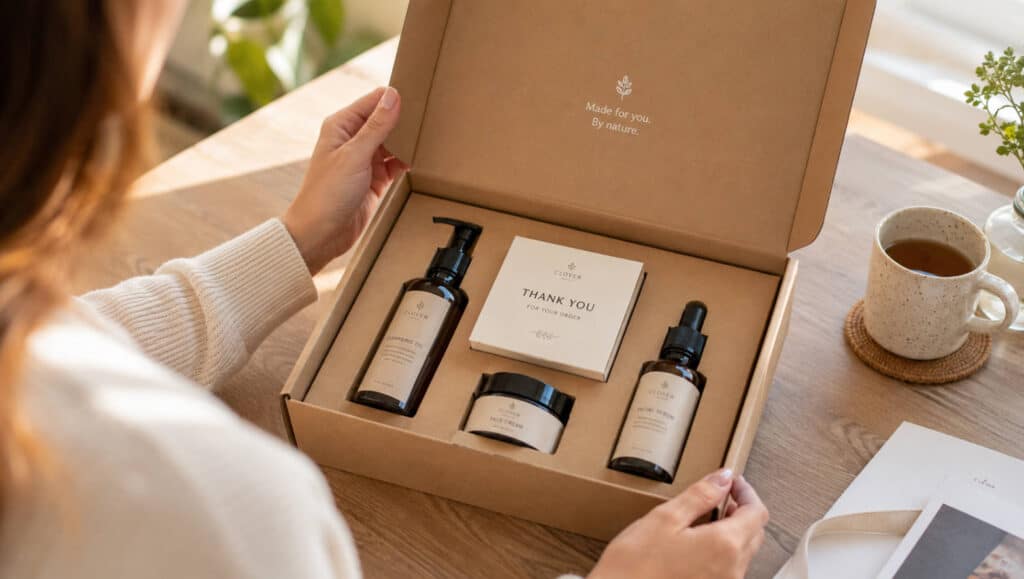
Custom packaging inserts are structural or printed components added inside your packaging to protect products, communicate information, and enhance the unboxing experience. They can be made from materials like cardboard, molded pulp, foam, or premium paper and are designed to fit your product and brand perfectly. [customboxmakers]
From a manufacturer’s perspective, inserts sit at the intersection of engineering and storytelling. Done well, they stabilize products in transit while also acting as a mini billboard for your message, offers, and brand values. [printify]
Why Custom Inserts Matter for Modern E‑Commerce Brands
In 2026, more than ever, your packaging is often the first real-world touchpoint between your customer and your brand. That moment when a box is opened—camera in one hand, product in the other—determines whether you gain a fan, a refund, or a forgettable transaction. [shopify]
Several independent studies and brand reports show just how high the stakes are:
– It can cost up to five times more to acquire a new customer than to retain an existing one. [uprinting]
– Around 68% of consumers say they’ll switch brands if they feel a company is indifferent to them. [uprinting]
– Approximately 35% of consumers seek out unboxing videos, and over half of them go on to purchase after watching. [printify]
Custom inserts give you a practical way to show you care—protecting products, adding value, and creating moments worth sharing. [printify]
Types of Custom Packaging Inserts
Different products, price points, and shipping routes call for different types of inserts. Choosing the right structure and material is the foundation of both protection and presentation. [customboxmakers]
Structural (Protective) Inserts
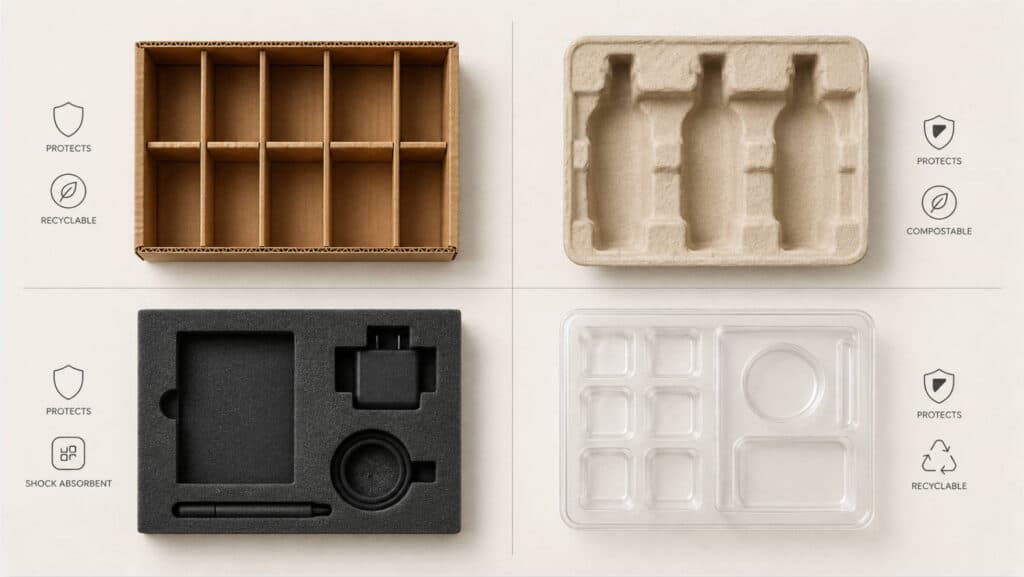
Cardboard inserts
Cardboard partitions and trays are ideal when:
– You’re shipping multiple items in one box
– There’s noticeable void space between product and box walls
– You want a fully recyclable, paper‑based solution that aligns with sustainability goals [customboxmakers]
Cardboard inserts are especially popular in cosmetics sets, beverage multipacks, and gift bundles where each item needs a dedicated “seat.” [customboxmakers]
Molded pulp inserts
Molded pulp is formed into custom shapes that cradle your product. It works best when: [printify]
– Products are fragile or irregularly shaped (glass bottles, electronics, ceramics)
– You need all-around protection and cushioning
– Sustainability and eco‑friendly perception are core brand values [gentlever]
Because pulp inserts can be engineered in different densities, they provide tailored protection without relying on plastic. [customboxmakers]
Foam inserts
Foam inserts are extremely lightweight and offer excellent surface protection. They’re suited to: [printify]
– High‑value items where surface scratches or cosmetic damage are unacceptable
– Products requiring tight tolerances and gentle cushioning (instruments, electronics, luxury items) [packmojo]
Foam can also be laminated with printed top layers, merging protection with branding. [packmojo]
Plastic inserts
Plastic trays and blisters are:
– Highly customizable
– Great for keeping pieces organized and separated
– Less ideal if maximum impact resistance or sustainability is the primary goal [customboxmakers]
They’re commonly used in mass retail where visibility and cost efficiency are prioritized. [gentlever]
Print Media Inserts: Turning Every Order Into a Micro‑Campaign
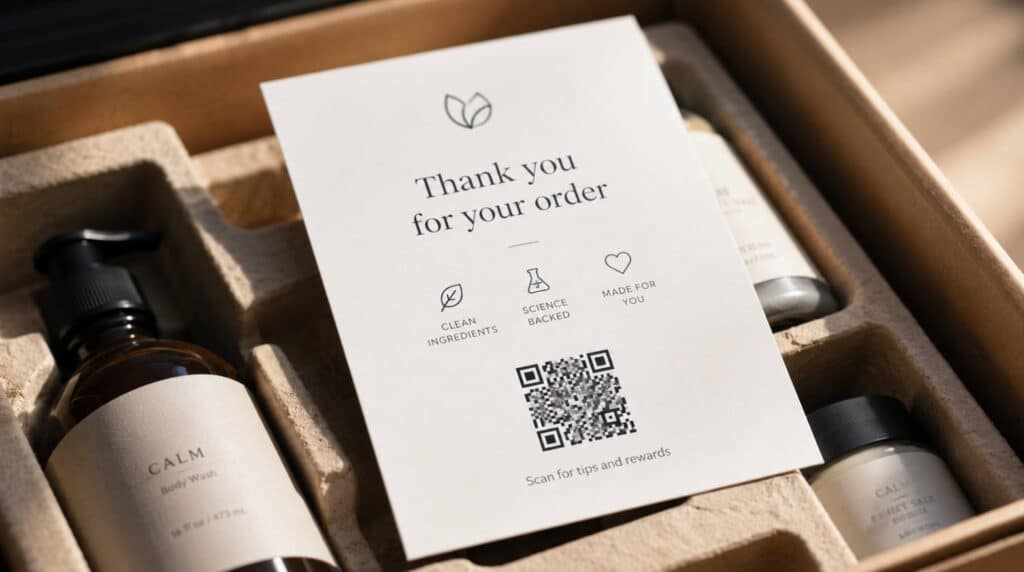
Print inserts don’t just fill space—they extend your marketing into the box. These can include: [printify]
– Branded thank‑you cards
– Product care guides and usage tips
– Discount coupons or loyalty cards
– Referral program reminders
– Sticker sheets and small freebies that encourage sharing [logomaker]
Industry data and printer reports show that including discount codes, care instructions, and clear customer service contacts in inserts improves both repeat purchase rates and customer satisfaction. In our own projects at Bonito Packaging, we’ve seen clients lift return visit and review rates simply by adding a QR‑enabled card linking to tutorials and review pages. [logomaker]
How Custom Inserts Improve Brand Perception and Loyalty
From a user‑experience standpoint, inserts directly influence how customers feel during unboxing. [printify]
Emotional Impact and Perceived Value
A basic cardboard box with a loose product and a generic receipt sends a message: “This shipment is a cost center; we did the minimum.” In contrast, a well‑constructed insert and a short, on‑brand note communicate: “You matter. We planned this experience for you.” [shopify]
This emotional contrast has measurable consequences:
– Brands that invest in high‑end packaging and inserts see more organic social media sharing and unboxing content. [uprinting]
– Customers are more likely to remember and recommend brands that delight them during the post‑purchase moment. [printify]
Social Proof and Unboxing Culture
Unboxing videos have become a staple of modern e‑commerce marketing. When your packaging inserts: [packagingfulfillment]
– Look visually appealing
– Present products neatly
– Include small surprises or messages
you increase the odds that customers will capture and share that moment. In effect, your insert strategy doubles as a user‑generated content engine. [uprinting]
Practical Design Tips From a Packaging Manufacturer
Drawing on both industry best practices and our production experience at Bonito Packaging, here are key steps to designing inserts that work in the real world.
1. Start With Your Product’s Physical Reality
Before thinking about graphics, evaluate:
– Dimensions and tolerances of each SKU
– Weight and fragility
– How items will be stacked, dropped, and handled through the logistics chain [packmojo]
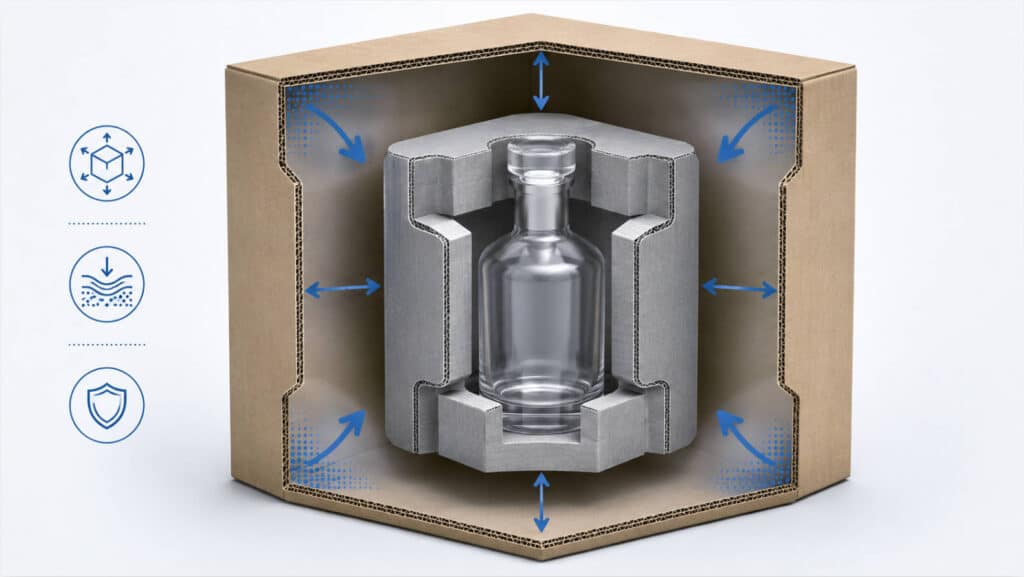
Manufacturers typically recommend a buffer of at least 0.5 inches between the product and box walls for paper‑based inserts to absorb shocks and prevent edge crush. This is especially important for heavier items or cross‑border shipping. [packmojo]
2. Align Insert Materials With Your Brand Story
If your positioning emphasizes sustainability, molded pulp and premium paperboard inserts signal that commitment more clearly than plastic trays. For luxury and high‑ticket items, layered foam with a soft‑touch finish immediately elevates perceived value. [packagingfulfillment]
The key is consistency: the insert’s material, color, texture, and finish should all feel like part of a single cohesive packaging system. [altitudemarketing]
3. Make the Insert Work for Marketing, Not Just Protection
Every visible surface is an opportunity. Consider:
– Printing a short welcome or brand story inside the insert
– Adding icons and microcopy (e.g., “Scan to learn how to care for your product”)
– Incorporating QR codes that link to tutorials, care guides, or loyalty programs [logomaker]
Many brands have successfully used this space to encourage reviews, social follows, and referrals, turning inserts into low‑cost, high‑ROI media channels. [uprinting]
Data‑Backed Business Benefits of Packaging Inserts
To move beyond “nice to have,” it helps to look at the numbers and trends around packaging and post‑purchase experiences.
– Global e‑commerce continues to climb, with estimates suggesting around one‑quarter of consumer purchases will happen online by 2027. [shopify]
– Customers increasingly expect online purchases to match or exceed the personalized feeling of in‑store shopping, including branded packaging and thoughtful add‑ons. [shopify]
– Sustainability remains a top packaging trend in 2026, with brands actively shifting to eco‑friendly materials and recyclable systems. [packagingfulfillment]
Packaging inserts sit at the intersection of these trends: they allow you to personalize, protect, and communicate while using materials that align with environmental expectations. [packagingfulfillment]
From our manufacturing vantage point, clients who adopt consistent insert strategies typically see:
– Lower damage and return rates thanks to better protection
– Higher lifetime value as discounts and loyalty CTAs drive repeat orders
– Stronger brand differentiation in saturated categories like cosmetics, fashion, and specialty foods [uprinting]
Shipping Fragile Goods Without Fear
One of the most compelling stories in the original Packlane article involves artisan bread shipped across the country. With carefully engineered custom inserts, the brand reported 20% more revenue, 25% more subscribers, and zero cases of damaged bread, transforming what sounds risky into a repeatable premium offering. [printify]
We see similar patterns when brands invest in custom inserts for:
– Glass cosmetics bottles in subscription boxes
– Ceramic mugs and tableware sold direct‑to‑consumer
– Electronics accessories shipped internationally
By designing inserts that cradle each item and lock them in place, brands reduce breakage while justifying higher price points through premium presentation. [customboxmakers]
Step‑by‑Step Process to Develop Custom Inserts With a Manufacturer
Working directly with a packaging manufacturer like Bonito Packaging gives you access to both design expertise and production feasibility. Here’s a practical process we recommend:
1. Clarify your goals
Are you prioritizing reduced breakage, sustainability, unboxing aesthetics, cross‑selling, or all of the above? [uprinting]
2. Audit your product and logistics
Share dimensions, weights, fragility, and shipping profiles so we can model real‑world stresses. [packmojo]
3. Choose a primary insert type
Based on goals and constraints, decide between cardboard partitions, molded pulp, foam, or hybrid structures. [customboxmakers]
4. Prototype and test
Produce sample inserts and run drop, vibration, and stacking tests to validate protection performance before full rollout. [packmojo]
5. Integrate branding and messaging
Once the structure is proven, add graphics, color, and print elements that support your brand story and CTAs. [logomaker]
6. Monitor and optimize
Track damage rates, review volume, repeat purchases, and unboxing mentions, then refine your inserts over time. [altitudemarketing]
This structured approach ensures that your inserts aren’t just beautiful—they’re profitable and reliable at scale.
CTA: Partner With a Specialist for Custom Packaging Inserts
If you’re ready to move beyond generic void fill and build custom packaging inserts that protect your products, tell your story, and delight your customers, this is the moment to act. As a dedicated premium paper packaging manufacturer, Bonito Packaging can help you: [altitudemarketing]
– Audit your current packaging and damage rates
– Design structural and print inserts aligned with your brand and budget
– Produce high‑quality, scalable solutions for both small and large runs [altitudemarketing]
FAQs About Custom Packaging Inserts
1. What are the main types of custom packaging inserts?
The primary types include cardboard partitions, molded pulp trays, foam cushions, and plastic trays, each offering different levels of protection, sustainability, and visual appeal. For many brands in 2026, cardboard and pulp are preferred due to their recyclable nature and alignment with eco‑friendly positioning. [gentlever]
2. How do packaging inserts reduce damage and returns?
Inserts lock products in place, prevent collisions, and add protective buffers between the product and the box walls. By controlling movement and absorbing shock, they significantly lower breakage rates, which in turn cuts replacement and return costs. [packmojo]
3. Are custom packaging inserts worth the investment for smaller brands?
Yes. Even simple printed cards or low‑cost cardboard inserts can elevate perceived value and support repeat purchases. Because it’s more expensive to acquire new customers than to retain existing ones, investing in post‑purchase experiences like inserts often delivers strong ROI. [uprinting]
4. How can I make my inserts more sustainable?
Choose paper‑based materials such as FSC‑certified cardboard or molded pulp, minimize mixed materials that are hard to recycle, and clearly label recycling instructions on the insert itself. You can also optimize structures to use less material while maintaining protection, reducing both waste and shipping weight. [packagingfulfillment]
5. What should I include on a print packaging insert for maximum impact?
Focus on one or two primary goals: a brief thank‑you and brand story, essential product info (care or setup), and a clear CTA such as a discount code, QR link, or review request. Keep the design clean, with bold headings and concise copy so customers can understand the value at a glance. [logomaker]
References
1. Packlane – “How to Grow Your E‑commerce Brand with Custom Packaging Inserts”
<https://packlane.com/blog/custom-packaging-inserts/> [printify]
2. Printify – “Custom Packaging Inserts to Skyrocket Your Brand”
<https://printify.com/blog/packaging-inserts/> [printify]
3. LogoMaker – “How to Nail Packaging Inserts for Your Products”
<https://www.logomaker.com/blog/how-to-nail-packaging-inserts-for-your-products/> [logomaker]
4. CustomBoxMakers – “What Are Packaging Inserts? A Detailed Guide”
<https://www.customboxmakers.com/what-are-packaging-inserts/> [customboxmakers]
5. Shopify – “产品包装终极指南(2026)”
<https://www.shopify.com/zh/blog/ecommerce-packaging> [shopify]
6. UPrinting – “Packaging Inserts That Drive Sales and Loyalty”
<https://www.uprinting.com/blog/packaging-inserts-good-for-investment/> [uprinting]
7. PackMojo – “Perfect Box Inserts: Spacing Tips”
<https://packmojo.com/help/custom-box-inserts-spacing/> [packmojo]
8. Gentlever – “What Are Packaging Inserts? Types, Functions & Selection Tips”
<https://gentlever.com/what-are-packaging-inserts/> [gentlever]
9. Altitude Marketing – “SEO Strategies for Packaging Brands”
<https://altitudemarketing.com/blog/seo-for-packaging-brands/> [altitudemarketing]
10. Packaging Fulfillment – “Custom Packaging Trends to Watch in 2026”
<https://www.packagingfulfillment.com/custom-packaging-trends-to-watch-in-2026/> [packagingfulfillment]
Hot Tags: Custom Packaging, Manufacturers, Customized, Custom, Suppliers, Buy, Cheap, Quality, Advanced, Durable, in Stock, Made in China, Price, Quotation, Free Sample
 English
  Spanish
  French
  German
  Russian
  Japanese
  Portuguese
  Arabic