
Content Menu
● Why Packaging Design Trends Matter in 2026
● 1. Ultra-Clean Minimalism With Strong Product Clarity
● 2. Tactile Paper Packaging That Feels Human
● 3. Sustainable Custom Packaging With Proof, Not Vague Claims
>> How to Design More Responsible Paper Packaging
● 4. QR Codes That Turn Packaging Into a Digital Experience
>> QR Code Packaging Checklist
● 5. Heritage Typography and Modern Craft Details
● 6. Bold Color and Controlled Maximalism
● How to Choose the Right Packaging Trend
● Work With Bonito Packaging on Custom Paper Packaging
>> 1. What are the biggest packaging design trends for 2026?
>> 2. Is sustainable paper packaging always recyclable?
>> 3. Which custom packaging is best for e-commerce brands?
>> 4. How can a QR code improve packaging performance?
>> 5. Should a premium brand use minimalist or detailed packaging?
>> 6. What finishing options make custom paper packaging look more premium?
Packaging design trends for 2026 are moving beyond surface-level decoration. The strongest custom packaging now combines clear brand communication, tactile material choices, credible sustainability decisions, and digital experiences that continue after unboxing.
For brands selling online, through retail, or into global B2B markets, packaging is no longer simply a protective layer. It is a physical brand touchpoint, a product-information platform, and often the first moment a customer judges quality. At Bonito Packaging, we see the best results when a design trend is adapted to a brand’s real product, channel, budget, and customer expectations—not copied blindly.
Why Packaging Design Trends Matter in 2026
A packaging refresh can help a product feel relevant, premium, and more memorable. But trends should support business goals such as stronger shelf visibility, a better unboxing experience, reduced material waste, or improved repeat purchases.
In 2026, several forces are reshaping packaging design:
– Consumers increasingly evaluate the environmental impact of packaging.
– E-commerce brands need packaging that protects products while creating a shareable delivery experience.
– Buyers expect brands to communicate product origin, usage, and sustainability information clearly.
– Digital touchpoints, including QR codes, are turning a box into a bridge between physical and online experiences.
– Premium brands are using texture, structure, and finishing details to create perceived value before the product is opened.
McKinsey’s 2025 consumer-packaging research found that environmental impact remains very important to a significant share of consumers across markets, with 40% to 80% of respondents saying they may be willing to pay more for sustainable packaging. This does not mean every package should look plain or “eco.” It means brands need to make material decisions that are both practical and easy for customers to understand. [mckinsey]
1. Ultra-Clean Minimalism With Strong Product Clarity
Minimalist packaging remains one of the most reliable packaging design trends because it makes product information easier to find and gives brands a more confident visual identity.
However, modern minimalism is not empty packaging. It is intentional packaging. Every visual element must earn its space.
A high-performing minimalist custom box may use:
– One dominant brand color or a neutral paper base
– A single clear typeface system
– Large product names or category labels
– Clean spacing and controlled negative space
– One premium finishing detail, such as embossing, debossing, spot UV, or foil stamping
– A short, useful brand message rather than excessive decorative copy
For example, a skincare brand can use a matte white folding carton, black typography, a subtle embossed logo, and a color-coded side panel for product variants. This design feels modern, makes the product easier to browse, and simplifies production across an expanding SKU range.
2. Tactile Paper Packaging That Feels Human
As digital tools and AI-generated visuals become more common, brands are increasingly looking for packaging that feels physical, warm, and made with care. This has pushed tactile paper packaging into the spotlight.
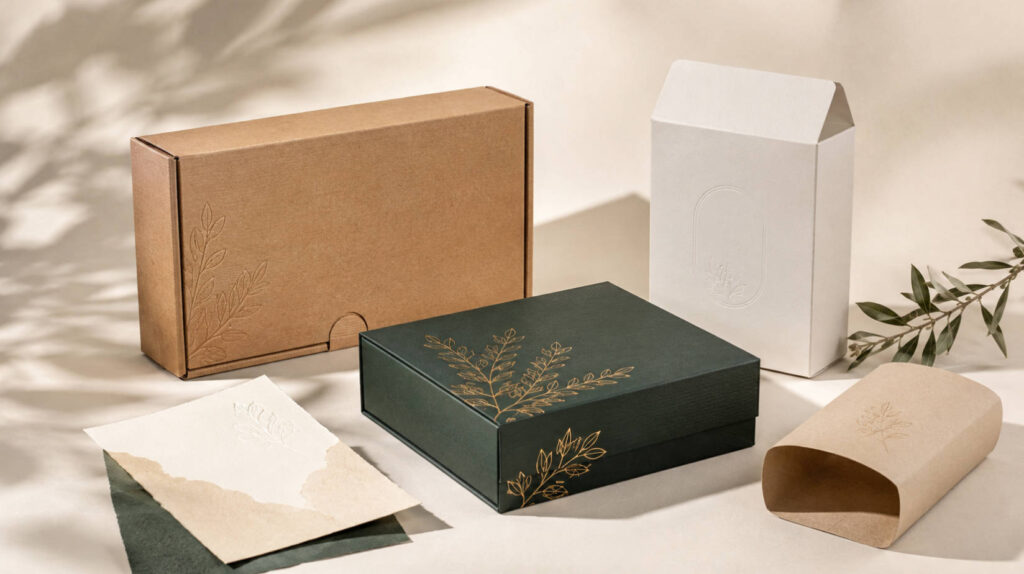
Uncoated paper, kraft board, textured specialty paper, letterpress-inspired graphics, grainy illustrations, and hand-drawn details can make a package feel more personal. These choices are especially effective for coffee, candles, beauty products, artisan foods, wellness products, stationery, and gift packaging.
The goal is not to make every package look handmade. The goal is to create a sensory signal that supports the brand’s positioning.
| Design element | Customer impression | Suitable packaging application |
|---|---|---|
| Uncoated paperboard | Natural, honest, approachable | Folding cartons, sleeves, product inserts |
| Kraft corrugated board | Functional, earthy, e-commerce friendly | Mailer boxes, shipping boxes, subscription boxes |
| Embossed logo | Premium, refined, tactile | Rigid boxes, cosmetic boxes, gift boxes |
| Debossed pattern | Crafted, understated, distinctive | Luxury boxes, apparel boxes, presentation boxes |
| Soft-touch lamination | Smooth, modern, high-end | Beauty packaging, technology packaging, premium retail cartons |
| Foil stamping | Exclusive, celebratory, giftable | Wine boxes, jewelry boxes, seasonal packaging |
A textured finish should always reinforce the product story. A premium tea brand may benefit from natural fiber paper and botanical line art. A technology accessory brand may benefit more from a smooth matte surface, sharp typography, and one metallic foil accent.
3. Sustainable Custom Packaging With Proof, Not Vague Claims
Sustainability is no longer a decorative theme. It is a material, design, logistics, and communication decision.
Paper and paperboard remain important packaging materials in the waste stream. The U.S. Environmental Protection Agency reported that paper and paperboard represented 67.4 million tons of municipal solid waste in 2018, while about 46 million tons were recycled—a 68.2% recycling rate. Corrugated boxes had a reported recycling rate of 96.5% in the same dataset.
These figures do not mean that every paper package is automatically sustainable. A responsible packaging decision must consider material sourcing, coatings, inks, product protection, transport efficiency, and local recycling infrastructure.
How to Design More Responsible Paper Packaging
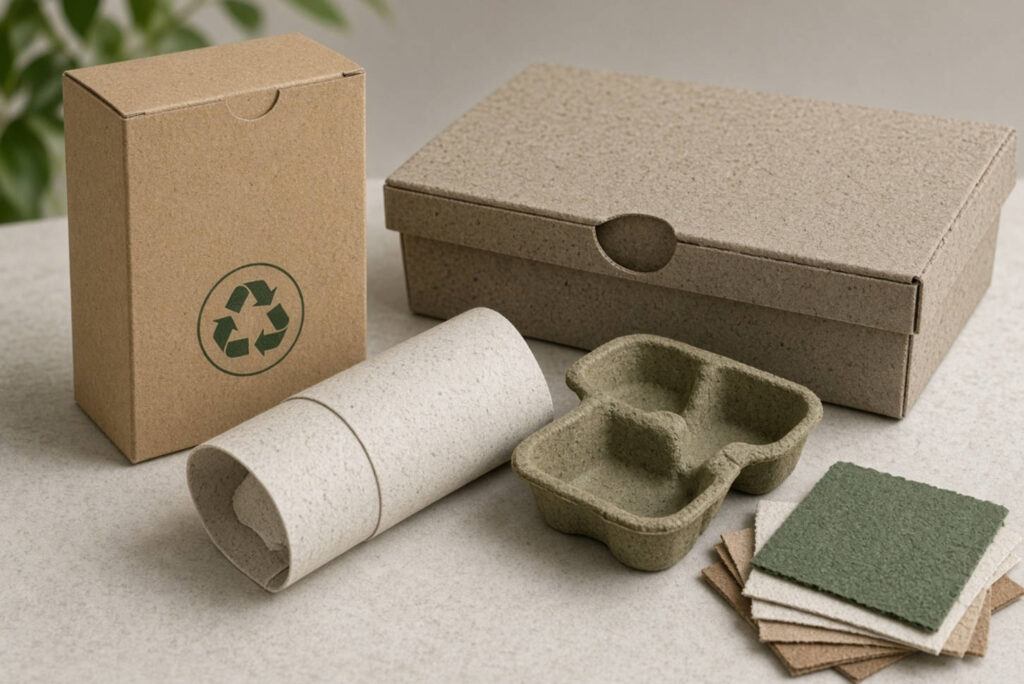
1. Start with right-sizing. Use a box that protects the product without unnecessary void space, inserts, or oversized dimensions.
2. Prefer material simplicity. When possible, avoid combining paperboard with difficult-to-separate plastic layers, magnets, or excessive mixed materials.
3. Use recycled or responsibly sourced paper options. Select materials according to the product’s required strength, print quality, and intended market.
4. Avoid unverified green claims. Do not label packaging “eco-friendly” without explaining the specific material or disposal benefit.
5. Make disposal guidance clear. A concise recycling message can help customers understand what to do with the package after use.
6. Test protection before launch. A sustainable package that fails during shipping can create more waste through damaged products, replacements, and returns.
A useful on-pack message is more credible when it is specific. For instance, “Carton made with recycled paper content” is more meaningful than a generic leaf icon or the phrase “green packaging.”
4. QR Codes That Turn Packaging Into a Digital Experience
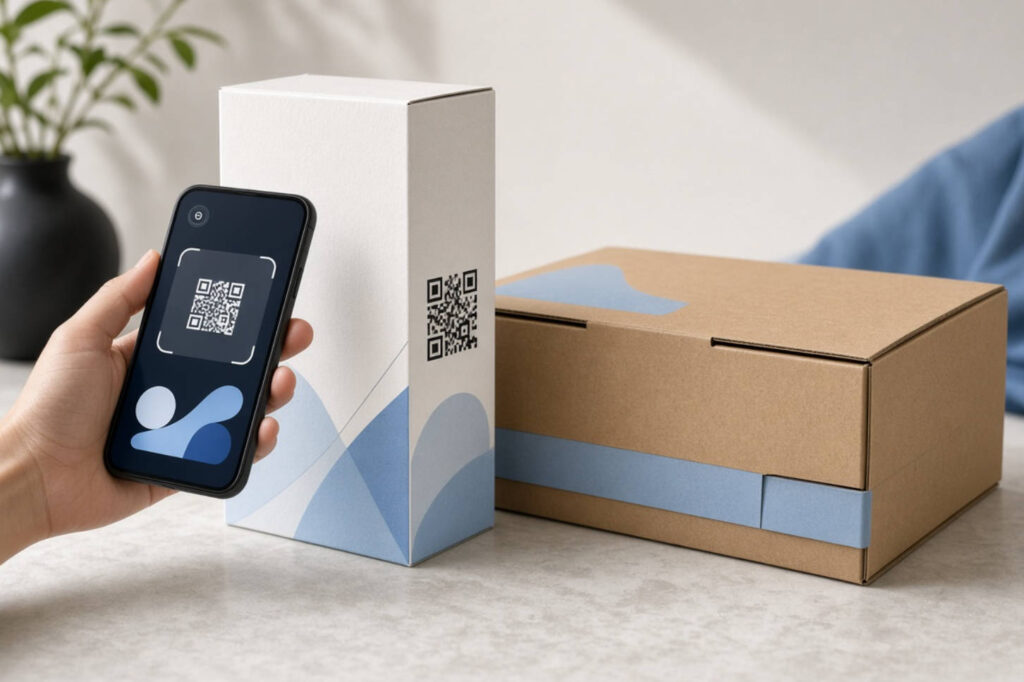
QR codes have matured from simple website links into practical packaging tools. They can connect a physical package with digital content that has more room to explain, demonstrate, and convert.
Recent packaging trend reporting highlights QR codes and scannable markers as tools for augmented reality, authenticity verification, sourcing stories, and deeper customer engagement. [vistaprint]
For custom paper packaging, a QR code can lead to:
– Product setup or usage videos
– Ingredient, sourcing, or factory transparency information
– Product registration and warranty pages
– Reorder pages for consumable products
– Loyalty programs and exclusive offers
– Product authentication tools
– Customer reviews or user-generated-content campaigns
– Multilingual product information for export markets
The QR code must deliver a clear customer benefit. A code that only sends visitors to a homepage usually wastes valuable packaging space. Instead, tell customers exactly what they will receive: “Scan for setup video,” “Scan for care instructions,” or “Scan to verify your product.”
QR Code Packaging Checklist
– Place the code on a clean, flat area with sufficient contrast.
– Keep it away from folds, seams, glossy glare, and curved edges.
– Test it on actual printed samples, not only on a screen.
– Use a short call-to-action next to the code.
– Direct users to a mobile-first landing page.
– Track scans by campaign, SKU, market, or sales channel.
For a B2B manufacturer, a QR code on custom packaging can also direct distributors to technical documents, compliance information, installation manuals, or reorder portals.
5. Heritage Typography and Modern Craft Details
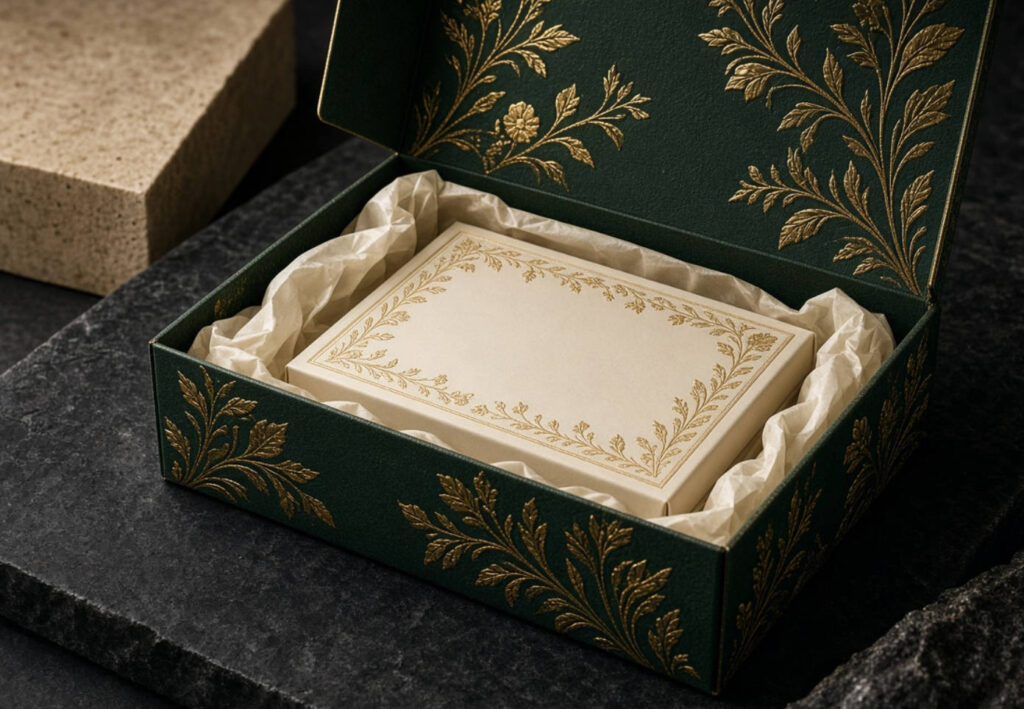
Heritage-style packaging continues to grow because it signals craft, tradition, and product expertise. This trend often uses serif fonts, fine line illustrations, botanical details, structured labels, and engraved artwork.
The key is balance. A heritage design should feel considered, not old-fashioned.
Strong applications include:
– Specialty coffee and tea
– Wine, spirits, and gourmet foods
– Natural skincare and personal care products
– Premium confectionery
– Boutique apparel and accessories
– Gift boxes and seasonal collections
For instance, a chocolate brand could use deep green uncoated paper, gold foil details, a central cocoa-pod illustration, and a side panel that explains the flavor profile. The package feels premium while still giving customers useful product information.
This direction works particularly well with rigid boxes, folding cartons, paper sleeves, and branded inserts because these formats offer space for story-led design.
6. Bold Color and Controlled Maximalism
Minimalism is not the only answer. In crowded retail and social-media-driven categories, bold colors and expressive typography can create fast recognition.
The difference between effective maximalism and visual clutter is hierarchy. Customers should still be able to identify the brand, product type, key benefit, and product variant in seconds.
Use bold packaging design when your brand personality is energetic, playful, youth-oriented, expressive, or disruptive. Consider color blocking, oversized type, unexpected illustration, vivid internal printing, or bright shipping-box interiors.
A subscription box brand, for example, could use a clean outer mailer with a bright, illustrated inside print. The exterior remains professional during delivery, while the interior creates a memorable unboxing reveal.
How to Choose the Right Packaging Trend
The best packaging design trend is the one that supports your brand without damaging usability, product protection, or long-term consistency.
Before developing custom packaging, ask these questions:
1. What should customers understand within the first three seconds?
2. Will the package be seen primarily on a shelf, in an e-commerce photo, or during delivery?
3. Does the structure protect the product through shipping and handling?
4. Which material and finish best reflect the product’s price point?
5. Can customers clearly identify essential information?
6. Does the design work across multiple product variants?
7. Does the package make realistic sustainability claims?
8. Can the design be manufactured consistently at your required quantity?
A trend is successful when it improves the customer experience and gives the brand a more ownable visual system. It fails when it makes the product harder to understand, more expensive to manufacture, or indistinguishable from competitors.
Work With Bonito Packaging on Custom Paper Packaging
Packaging trends can inspire a new direction, but execution determines whether the final box feels premium, protects the product, and supports your commercial goals.
Bonito Packaging helps brands turn packaging concepts into practical custom paper packaging solutions—from custom mailer boxes and folding cartons to rigid gift boxes, paper tubes, retail packaging, and branded inserts. Our team can help you evaluate structure, paper material, printing method, finishes, and packaging details before full production.
Ready to create packaging that looks current and works in the real world? Contact Bonito Packaging to discuss your custom packaging project and request a tailored quotation.
Frequently Asked Questions
1. What are the biggest packaging design trends for 2026?
Key packaging design trends include minimalist layouts, tactile paper textures, verified sustainability communication, heritage-inspired typography, bold color systems, interactive QR codes, and packaging designed for stronger unboxing experiences.
2. Is sustainable paper packaging always recyclable?
No. Recyclability depends on the full construction, including coatings, laminations, adhesives, inks, and local recycling systems. A paper-based package with complex mixed materials may be harder to recycle than a simpler mono-material paper solution.
3. Which custom packaging is best for e-commerce brands?
Custom corrugated mailer boxes are often a strong option for e-commerce because they provide product protection, branding space, and a good unboxing experience. The ideal flute, board grade, dimensions, and internal protection depend on the product’s size, fragility, and shipping route.
4. How can a QR code improve packaging performance?
A QR code can provide product tutorials, authenticity checks, care instructions, loyalty offers, product registration, and reorder options. It works best when customers receive a clear benefit from scanning it.
5. Should a premium brand use minimalist or detailed packaging?
Either approach can work. Minimalist packaging is effective when the brand needs clarity, modernity, and visual restraint. Detailed packaging is effective when craftsmanship, ingredients, heritage, or storytelling are central to the brand. Material quality and finishing often matter more than design complexity.
6. What finishing options make custom paper packaging look more premium?
Popular premium finishing options include embossing, debossing, foil stamping, spot UV, soft-touch lamination, textured paper, custom inserts, inside printing, edge painting, and rigid-box construction.
References
1. Packlane. “[Top Packaging Design Trends to Look Out For in 2023].” Accessed August 2026.
2. McKinsey & Company. “[Sustainability in Packaging—Across the Value Chain, and in 2025 and Beyond].” Published 2025.
3. United States Environmental Protection Agency. “[Paper and Paperboard: Material-Specific Data].” Data covering 2018 municipal solid waste figures.
4. VistaPrint. “[Packaging Design Trends for 2026].” Accessed August 2026.
Hot Tags: Custom Packaging, Manufacturers, Customized, Custom, Suppliers, Buy, Cheap, Quality, Advanced, Durable, in Stock, Made in China, Price, Quotation, Free Sample
 English
  Spanish
  French
  German
  Russian
  Japanese
  Portuguese
  Arabic