
Content Menu
● Why Packaging Is Changing So Quickly
● Sustainable Paper Packaging Must Be Designed, Not Claimed
>> Build for Real-World Recyclability
>> Premium Does Not Need to Mean Excessive
● Smart Packaging: Start With Useful Interaction
>> High-Value Uses for Smart Custom Packaging
● The E-Commerce Packaging Revolution
>> A Practical E-Commerce Packaging Framework
● AI, Automation, and Faster Packaging Decisions
● Custom Packaging Trends That Matter Most
>> 1. Right-Sized Protective Structures
>> 2. Paper-Based Premium Presentation
>> 3. Minimalist Design With Better Information
>> 4. Purpose-Driven Personalization
>> 5. Packaging as a Trust Layer
● How to Future-Proof Your Packaging Program
● Create Packaging That Works Beyond the Box
● FAQs
>> 1. What is the future of custom packaging?
>> 2. Is paper packaging always sustainable?
>> 3. What is smart packaging?
>> 4. What custom packaging is best for e-commerce?
>> 5. How can premium packaging reduce shipping costs?
>> 6. When should a brand use QR codes on packaging?
Custom packaging is no longer simply a protective container. For modern brands, it is a product experience, a logistics tool, a sustainability decision, and an increasingly important source of supply-chain information.
At Bonito Packaging, we see the future of custom paper packaging moving toward a more practical balance: premium design, right-sized protection, responsible material choices, scalable customization, and digitally connected customer experiences. The brands that succeed will not adopt technology for novelty alone. They will use it to reduce friction, protect products, build trust, and make every unboxing moment more memorable.
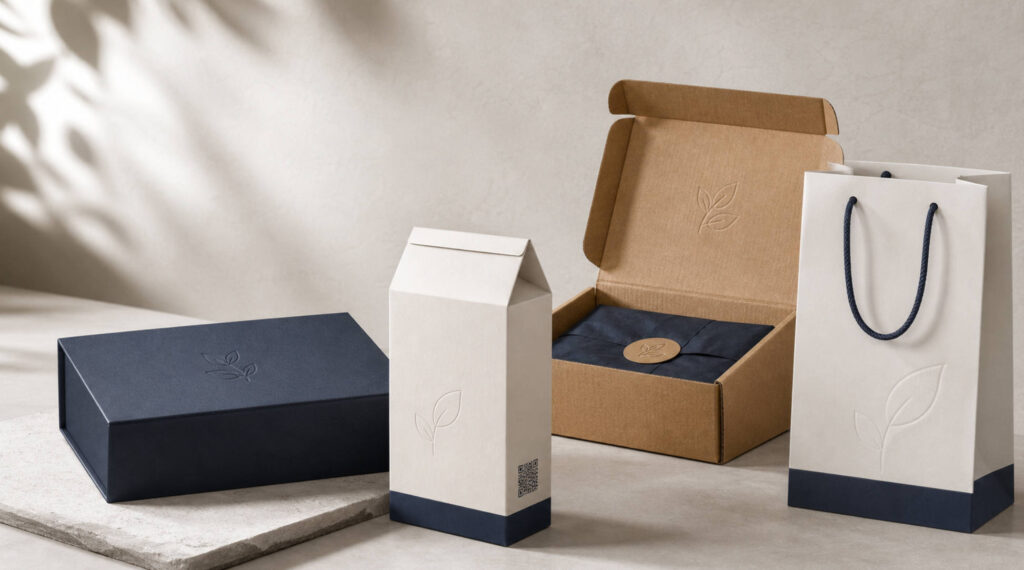
Why Packaging Is Changing So Quickly
Packaging decisions are now shaped by three overlapping pressures: e-commerce growth, rising expectations for responsible materials, and the need for more differentiated brand experiences.
For online brands, packaging must survive warehousing, fulfillment, shipping, and last-mile delivery. For retail brands, it still needs to earn attention on a crowded shelf. For both, it must communicate product value in seconds.
The result is a major shift in how brands evaluate custom packaging. Instead of asking, “What is the cheapest box?”, more teams are asking:
– Does this packaging protect the product with minimal material?
– Can it reinforce our premium brand positioning?
– Is it practical to recycle or recover in our target market?
– Can it support QR codes, authentication, instructions, or loyalty experiences?
– Will it work consistently at our expected order volume?
– Can our packaging supplier help us prototype, refine, and scale the design?
The future of packaging technology is not one material or one device. It is a better system connecting structural engineering, graphic design, manufacturing, fulfillment, compliance, and customer experience.
Sustainable Paper Packaging Must Be Designed, Not Claimed
Sustainability is becoming more specific. A package cannot credibly be described as “eco-friendly” merely because it contains paper, recycled content, or a green color palette. Brands need to consider the full package design: materials, coatings, adhesives, inks, product protection, shipping efficiency, and end-of-life collection.
Paper-based packaging has strong potential because it can be renewable, recyclable, printable, versatile, and suitable for premium presentation. However, its circular performance depends on technical choices.
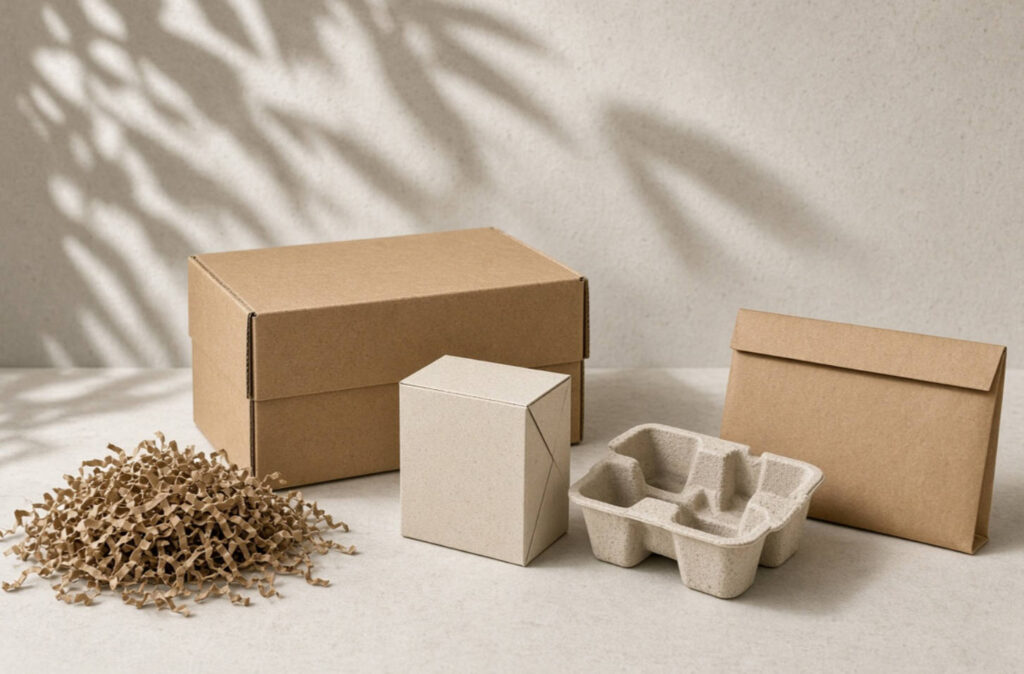
Build for Real-World Recyclability
A beautifully printed carton can become difficult to recycle if it uses incompatible layers, excessive plastic lamination, problematic adhesives, or hard-to-separate components. The most responsible approach is to design the package around the recycling systems available in the markets where it will be sold.
For custom paper packaging, practical design priorities include:
– Use right-sized packaging to reduce empty space, filler demand, and shipping volume.
– Select paperboard or corrugated materials appropriate to the product’s weight and fragility.
– Avoid unnecessary mixed-material construction where a paper-based alternative can deliver the required performance.
– Review coatings, inks, adhesives, foil, windows, magnets, and inserts as early as possible.
– Include clear disposal guidance when it is accurate and relevant to the destination market.
– Test whether the package protects the product before reducing material weight.
European packaging requirements are also becoming more influential for global exporters and brand owners. The EU Packaging and Packaging Waste Regulation began applying on 12 August 2026, reinforcing the need for companies selling into Europe to understand recyclability, material composition, documentation, and market-specific obligations.
Premium Does Not Need to Mean Excessive
Premium packaging is often mistaken for heavier packaging. In reality, premium perception comes from intentional details: confident structure, tactile materials, clean finishing, precise color control, logical opening mechanisms, and a consistent brand story.
A luxury skincare brand, for example, may not need a large rigid box with multiple layers of foam. A well-engineered folding carton with a custom paper insert, soft-touch coating, embossed logo, and clear product information can offer a refined experience while using fewer components.
Smart Packaging: Start With Useful Interaction
Smart packaging is moving from experimental technology to more accessible brand infrastructure. QR codes, NFC tags, serialized labels, RFID systems, and connected product pages can link a physical package to digital content.
But smart packaging should solve a real customer or operational problem. Adding a QR code without a meaningful destination creates little value.
High-Value Uses for Smart Custom Packaging
| Technology | Best Use Case | Customer or Business Benefit |
|---|---|---|
| QR code | Product instructions, campaigns, loyalty, replenishment | Low-cost access to digital content |
| Dynamic QR code | Market-specific landing pages, campaign tracking | Flexible analytics and content updates |
| NFC tag | Premium goods, authentication, high-engagement products | Fast tap-to-connect experience |
| RFID | Warehouse, retail inventory, logistics | Improved tracking and operational visibility |
| Serialized code | Anti-counterfeiting and traceability | Product-level verification and control |
For many brands, a printed QR code is the most practical first step. It can direct a customer to setup instructions, product-care guidance, a refill program, authenticity verification, social content, a reorder page, or a localized landing page.
The key is to connect the code to a clear promise. For example:
“Scan to verify your product, see material guidance, and unlock your next-order reward.”
That message is more useful than a generic “Scan Me” icon. It tells customers what they gain, reduces uncertainty, and gives the brand a measurable interaction point.
Connected packaging is expected to expand because brands increasingly need better traceability, transparency, and direct consumer engagement. QR codes, NFC, RFID, and barcodes are central tools in that development.
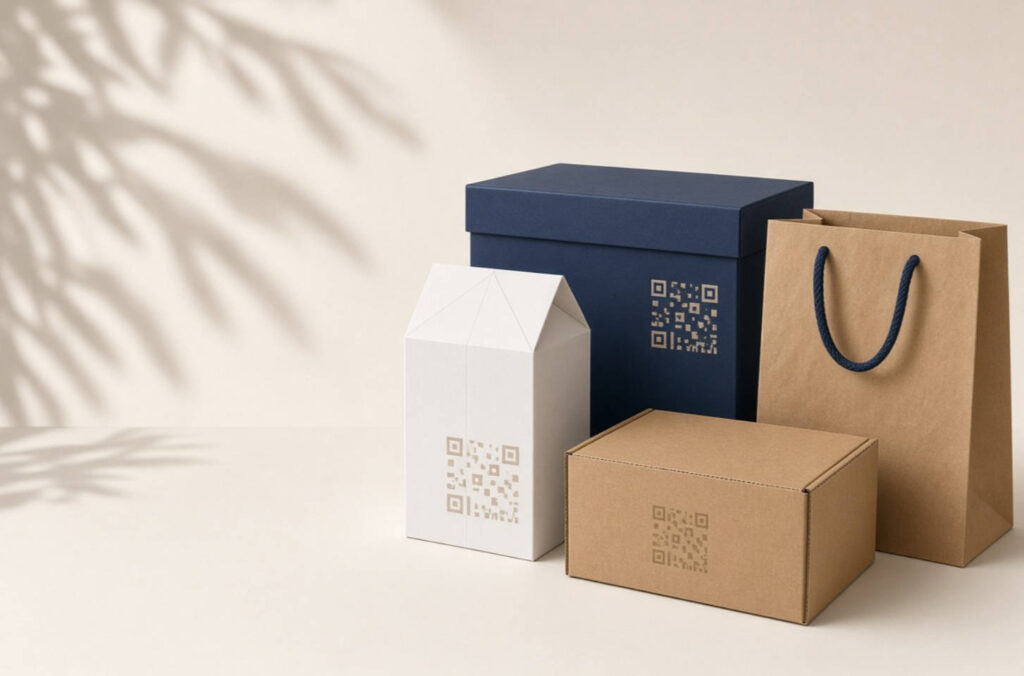
The E-Commerce Packaging Revolution
E-commerce packaging has a harder job than traditional retail packaging. It must protect the item through multiple handling points while keeping dimensional weight, void fill, returns, and damage risk under control.
This is why right-sizing will remain one of the most valuable packaging innovations over the next decade.
A shipping box that is too large increases freight costs and requires more filler. A box that is too small creates compression risk and can damage the product or frustrate the customer during unboxing. The best e-commerce packaging matches protection to the actual shipping environment.
A Practical E-Commerce Packaging Framework
Before approving a custom mailer, corrugated shipping box, or subscription box, evaluate these five areas:
1. Product risk
Identify breakage points, sensitive surfaces, sharp edges, liquid leakage risk, and compression sensitivity.
2. Shipping journey
Map whether the product ships individually, in a master carton, through parcel networks, or on pallets.
3. Dimensional efficiency
Measure usable internal space, not just external box dimensions. Minimize unnecessary air without compromising protection.
4. Opening experience
Add easy-open features, tear strips, tamper-evident elements, or resealable structures when they create genuine value.
5. Returns readiness
If customers may return products, consider a structure that can be closed again without excessive tape or replacement packaging.
A well-designed custom corrugated box can reduce damage, simplify fulfillment, reinforce branding, and improve the unboxing experience at the same time. That is a better outcome than treating protective packaging and branded packaging as separate projects.
AI, Automation, and Faster Packaging Decisions
Artificial intelligence will not replace packaging engineers, designers, or quality-control teams. It will make their work faster when used correctly.
In the near future, AI-supported packaging workflows can help brands and manufacturers evaluate size options, predict material usage, develop visual concepts, organize artwork versions, identify common production risks, and improve demand forecasting.
For custom packaging buyers, the most immediate benefit is faster decision-making. Instead of moving through long, disconnected stages, teams can use digital collaboration to align product dimensions, structural requirements, artwork, finishes, samples, and production specifications earlier.
At Bonito Packaging, the strongest packaging projects begin with detailed inputs:
– Product dimensions and weight
– Desired packaging type and opening style
– Target market and shipping method
– Brand guidelines and artwork requirements
– Required finishes, inserts, and functional features
– Expected order quantity and launch date
The more precise the brief, the faster a manufacturer can recommend the right material, structure, and production method.
Custom Packaging Trends That Matter Most
Not every packaging trend deserves investment. The strongest trend is one that improves performance, customer understanding, brand value, or operational efficiency.
1. Right-Sized Protective Structures
Custom corrugated boxes, die-cut mailers, and paper inserts will increasingly replace generic oversized packaging. This helps brands reduce void space while improving product fit and presentation.
2. Paper-Based Premium Presentation
Rigid boxes, folding cartons, magnetic closure boxes, drawer boxes, and textured paper finishes will remain important for cosmetics, jewelry, electronics, apparel, gifts, and high-value consumer goods.
3. Minimalist Design With Better Information
Minimalism is not the absence of information. It means clearer hierarchy. Customers should quickly find the brand, product name, key benefits, use instructions, and disposal guidance without visual overload.
4. Purpose-Driven Personalization
Variable printing, seasonal sleeves, event-specific packaging, and limited-edition designs allow brands to create relevance without redesigning every component. The best personalization is targeted, not random.
5. Packaging as a Trust Layer
For premium, regulated, or counterfeiting-prone products, packaging can support traceability through serial numbers, tamper-evident features, QR verification, and product-origin content.
How to Future-Proof Your Packaging Program
A future-ready package does not need every new technology. It needs the right combination of performance, appearance, manufacturability, and adaptability.
Use this checklist before moving into production:
– Define the package’s primary job: protection, retail display, gifting, shipping, or all four.
– Prioritize product protection before decorative finishes.
– Choose a packaging format that suits your order volume and fulfillment process.
– Design for the waste-management reality of your destination market.
– Use structural samples to test size, opening, fit, and perceived quality.
– Confirm artwork specifications, color expectations, and finishing tolerances.
– Consider digital features only when they create a clear benefit.
– Build room for future line extensions, campaigns, or market variations.
The most successful brands treat packaging as an evolving asset. They review shipping damage, customer feedback, returns, warehouse efficiency, material changes, and conversion performance over time.
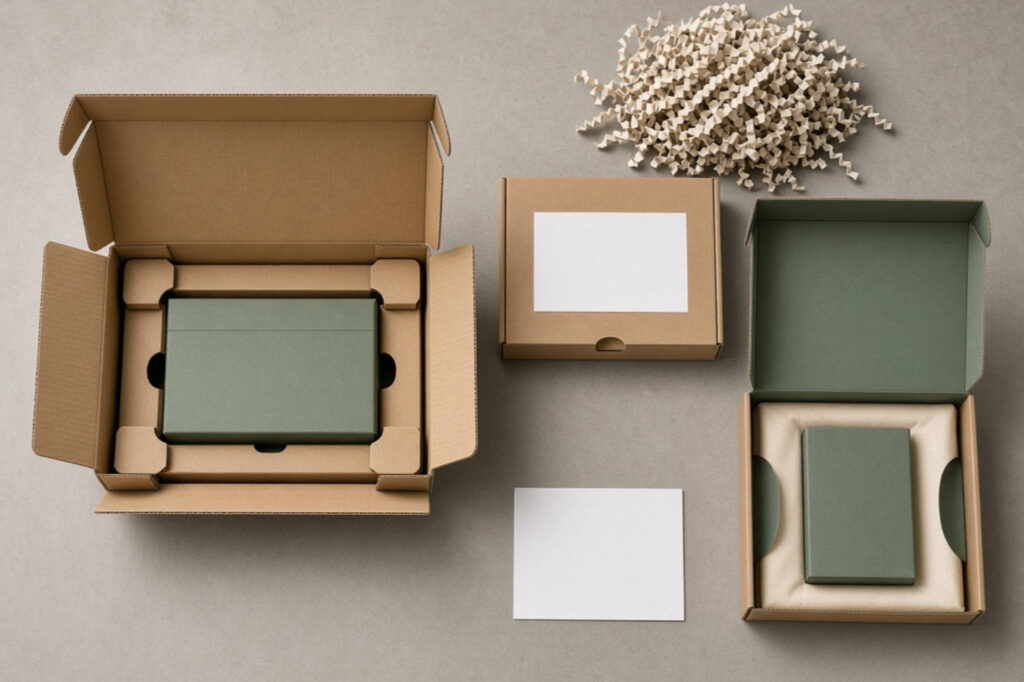
Create Packaging That Works Beyond the Box
The future of packaging design belongs to brands that combine functional engineering with human experience. A well-made custom package can protect a product, reduce wasteful space, communicate quality, guide the customer, and create a reason to remember the brand.
Bonito Packaging helps brands develop high-end custom paper packaging, including rigid boxes, folding cartons, corrugated packaging, custom inserts, and branded retail packaging. Whether you are launching a new product or improving an established packaging line, our team can help turn your packaging brief into a production-ready solution.
Request a custom packaging quote today and let’s create packaging that protects your products, supports your brand, and is designed for the market ahead.
FAQs
1. What is the future of custom packaging?
The future of custom packaging centers on right-sized structures, recyclable and paper-based material solutions, digital connectivity, more efficient production, and better customer experiences. Packaging will increasingly function as both a physical protector and a brand communication channel.
2. Is paper packaging always sustainable?
No. Paper packaging can be a strong sustainability option, but its impact depends on fiber sourcing, package weight, coatings, inks, adhesives, components, product protection, and local recycling infrastructure. A paper package should be designed for its actual use and end-of-life pathway.
3. What is smart packaging?
Smart packaging uses digital or functional technology—such as QR codes, NFC tags, RFID, sensors, or serialized codes—to provide information, support tracking, improve authentication, or create customer interactions.
4. What custom packaging is best for e-commerce?
The best e-commerce packaging depends on the product. Corrugated boxes are often suitable for heavier or fragile items, while custom mailer boxes work well for apparel, subscription products, and lightweight goods. The package should be tested for protection, fit, fulfillment speed, and customer opening experience.
5. How can premium packaging reduce shipping costs?
Premium packaging can reduce shipping costs by using right-sized dimensions, engineered paper inserts, efficient carton structures, and lighter materials where product protection allows. Reducing unused volume can lower material use and improve freight efficiency.
6. When should a brand use QR codes on packaging?
Use QR codes when they lead customers to something valuable, such as product instructions, authenticity verification, loyalty rewards, care information, recycling guidance, or localized content. Avoid using them solely as decoration.
References
1. European Commission. “[New EU Rules on Packaging Enter into Application].” Accessed August 24, 2026.
2. Loftware. “[From QR Codes to Connected Experiences: The New Era of Food and Beverage Packaging].” Accessed August 24, 2026.
3. 4evergreen. “[Circularity by Design Guideline, Version 4].” Accessed August 24, 2026.
4. PakFactory. “[The Future of Packaging Technology and Design].” Accessed August 24, 2026.
5. McKinsey & Company. “[Winning in Sustainable Packaging in 2025: Bringing It All Together].” Accessed August 24, 2026.
6. European Circular Economy Stakeholder Platform. “[EU Packaging and Packaging Waste Regulation: When Will It Come Into Effect and What Does It Cover?].” Accessed August 24, 2026.
Hot Tags: Custom Packaging, Manufacturers, Customized, Custom, Suppliers, Buy, Cheap, Quality, Advanced, Durable, in Stock, Made in China, Price, Quotation, Free Sample
 English
  Spanish
  French
  German
  Russian
  Japanese
  Portuguese
  Arabic