
Content Menu
● Understanding Custom Packaging From a Brand Builder’s Perspective
● Why Thoughtful Packaging Is Worth the Investment
>> Emotional impact and perceived value
>> Differentiation in crowded categories
>> Consistency across channels
● Core Decisions Before You Design Anything
>> Clarify product and channel requirements
>> Align packaging with positioning
● Choosing the Right Packaging Style
● Getting Box Size and Structure Right
● Designing Visual Elements That Tell Your Story
>> Make the difference visible
● Don’t Neglect Inner Packaging and Inserts
● Integrating Sustainable Considerations Without Greenwashing
● A Practical Step‑by‑Step Workflow for Creating Your Packaging
● Lessons Learned From Real‑World Brand Implementations
● Questions fréquemment posées
>> 1. How do I decide which box type is best for my product?
>> 2. What information should always appear on my packaging?
>> 3. How can I improve sustainability without compromising protection?
>> 4. Why is inner packaging so important for customer experience?
>> 5. At what stage should I involve my packaging manufacturer in the design process?
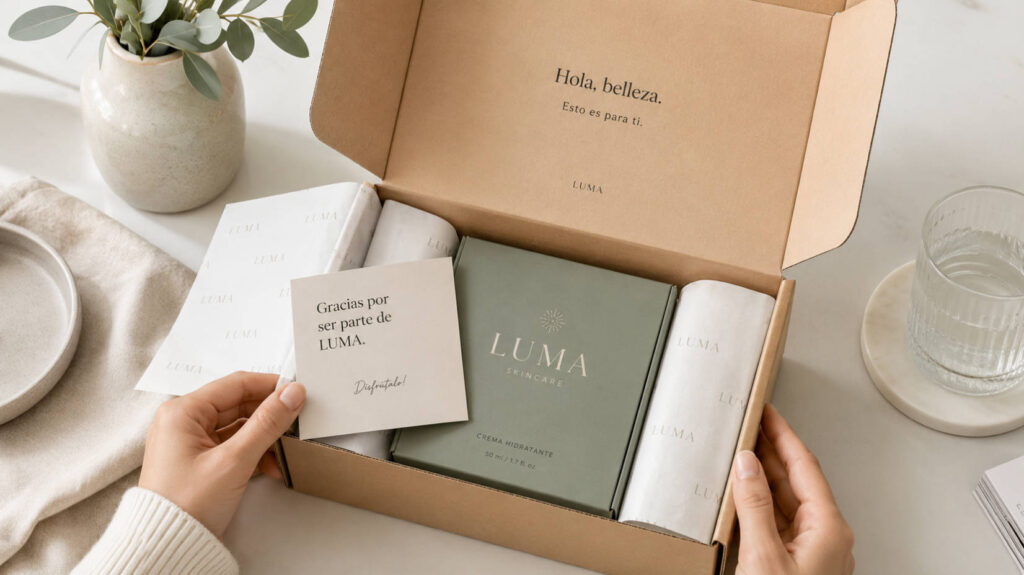
When you treat emballage sur mesure as a strategic extension of your brand instead of just a box, it starts to work like a silent salesperson for every order you ship. As a packaging manufacturer working with export-oriented brands every day, I’ve seen well‑designed paper packaging increase repeat orders, reduce damage rates, and even open doors to new retail channels. [packoi]
Understanding Custom Packaging From a Brand Builder’s Perspective
Custom packaging is the tailored combination of paper boxes, inserts, and printed elements designed specifically for your product, rather than generic off‑the‑shelf containers. It aligns dimensions, materials, and graphics with your product’s weight, fragility, and positioning so that what arrives in your buyer’s hands feels like a deliberate, premium experience. [pluspackaging]
For small and mid‑size brands, custom packaging is often the first physical touchpoint after an online order. The unboxing moment can either reinforce trust built during the browsing and checkout process or quietly erode it if the packaging feels cheap, oversized, or poorly protected. [packoi]
Why Thoughtful Packaging Is Worth the Investment
Emotional impact and perceived value
When a customer opens a well‑designed paper box that fits tightly around the product, uses consistent colors, and includes a few thoughtful internal details, the perceived value of what’s inside increases immediately. Brands in beauty, jewelry, and specialty food repeatedly report that distinctive boxes help them command higher price points and support premium positioning. [brillpack]
Differentiation in crowded categories
Custom packaging gives you a physical canvas for your brand story in categories where products may look similar. Subscription boxes, handcrafted accessories, and artisanal food brands have used unique box structures, illustration styles, and finishes to stand apart on shelves and in social media, even when the core product is comparable to competitors. [creativemarket]
Consistency across channels
Using the same visual language on your outer cartons and inner product boxes makes your brand feel more established across online and offline channels. A customer who discovers you through a marketplace and later visits your store should recognize your brand immediately from the packaging alone. [pluspackaging]
Core Decisions Before You Design Anything
Clarify product and channel requirements
Before choosing a box style or artwork, define:
– Product type, weight, and fragility. [packhit]
– Primary sales channels (direct shipping, retail shelves, wholesale, or a mix). [packoi]
– Expected storage and transport conditions (long‑distance shipping, humid climate, multi‑layer pallets). [msl-indy]
In practice, heavy electronics shipped internationally call for reinforced corrugated shipper boxes, while lightweight cosmetics sold in boutiques benefit more from laminated paperboard product boxes inside an elegant outer carton. [brillpack]
Align packaging with positioning
Ask yourself: what message should the packaging communicate before the product is even touched? Minimalist kraft paperboard with a restrained color palette supports a natural or eco‑conscious image, while high‑gloss coated boards, foil stamping, and bold typography push a modern, luxury feel. [confetti]
Choosing the Right Packaging Style
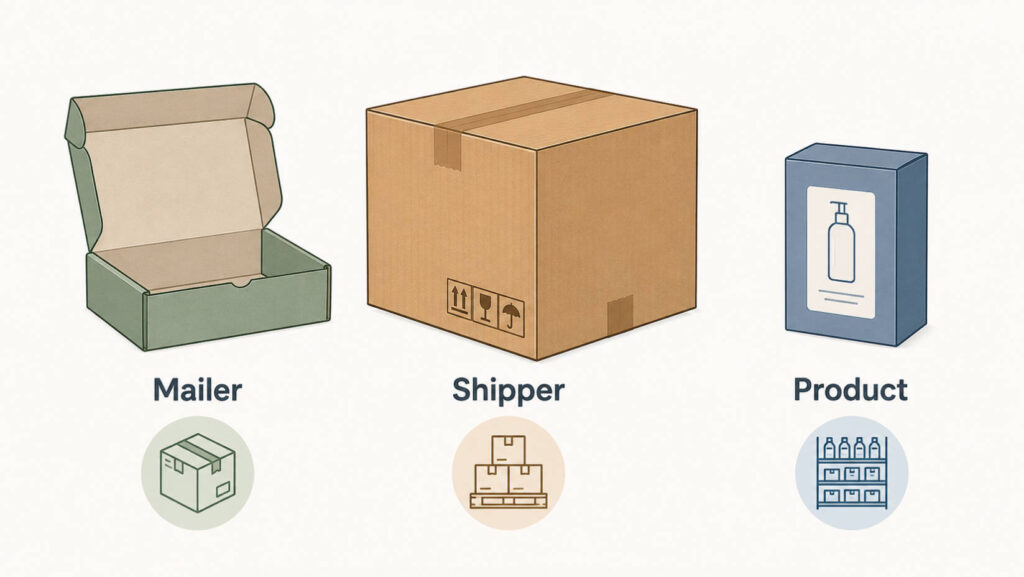
From a manufacturing perspective, three box families cover most scenarios for paper-based solutions. [pluspackaging]
| Box type | Best use cases | Key advantages |
|---|---|---|
| Boîtes postales | Subscription sets, e‑commerce parcels | Sturdy, self‑locking, ship‑ready, strong branding space. packoi |
| Shipper boxes | Bulkier goods, multi‑unit shipments | Reinforced structure, cost‑efficient for heavy loads. packoi |
| Product boxes | Individual items on retail shelves | Premium look, compact, ideal for primary product display. packoi |
When guiding clients, we start by matching their real logistics data—average order size, damage rate, warehouse constraints—to a specific construction rather than choosing purely on aesthetics. This prevents “beautiful but impractical” designs that look great in mockups yet fail in transit. [msl-indy]
Getting Box Size and Structure Right
A well‑sized box reduces waste, shipping cost, and breakage. [prosource]
There are two main approaches:
– Custom dimensions: Fully tailored internal and external measurements around your product and any inserts. [packoi]
– Stock sizes: Pre‑engineered dimensions selected from a catalog of common formats. [pluspackaging]
For fragile glassware or irregular shapes, fully custom inner cavities, paper inserts, or molded pulp trays often pay for themselves through reduced damage claims. For standardized products—like books or uniform cosmetics—stock sizes combined with custom printing can strike a balance between cost and brand impact. [packhit]
Designing Visual Elements That Tell Your Story
Once structure and size are defined, the visual layer brings the packaging to life. [packoi]
Key design components
– Color palette that matches your existing branding and product category expectations. [pluspackaging]
– Logo placement that remains visible in stacked, shelved, or shipped conditions. [creativemarket]
– Typography hierarchy for product names, benefits, and legally required information. [creativemarket]
– Illustrations or patterns that carry your narrative (origin, craftsmanship, sustainability, or innovation). [confetti]
From the manufacturing side, we pay close attention to ink coverage, print tolerances, and finishing compatibility at this stage, because extremely dense color areas or complex gradients can influence both cost and quality on large production runs. [confetti]
Make the difference visible
The most effective packaging projects build visual cues around what actually sets the product apart—unique ingredients, origin, production method, or user experience—rather than generic slogans. For example, a skincare brand focused on inclusive beauty used illustrations representing diverse skin tones on its subscription box to reinforce its core mission, turning the outer packaging into a visible value statement. [brillpack]
Don’t Neglect Inner Packaging and Inserts
Many brands invest heavily in the external box while leaving the interior a plain void. That’s a missed opportunity. [brillpack]
Internal elements might include:
– Printed tissue, paper wraps, or dividers that keep products from shifting. [packoi]
– Informational mini‑guides with usage tips or care instructions. [packoi]
– Stickers or small branded cards that users often photograph and share. [brillpack]
One packaging client added handwritten‑style notes and themed stickers to each shipment; they later reported that organic recommendations from happy customers were strong enough that they did not need paid acquisition campaigns for certain product launches. [linkedin]
Integrating Sustainable Considerations Without Greenwashing
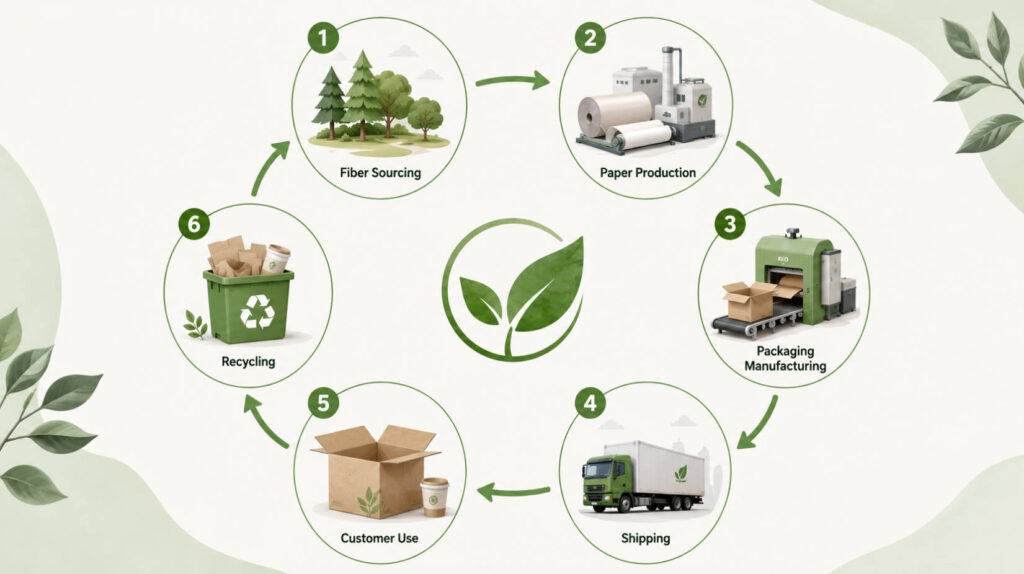
Paper‑based packaging plays a central role in reducing environmental impact when designed with intent. [packagingdigest]
Experienced designers and ecologists highlight several practical principles:
– Use commonly recyclable materials like paper and paperboard whenever possible. [packagingdigest]
– Favor single‑material structures that are easier to sort and recycle. [linkedin]
– Right‑size boxes to improve product‑to‑package ratios and reduce void fill. [packagingdigest]
– Avoid unnecessary laminations and plastic windows that complicate recycling streams. [medium]
Lifecycle assessments in packaging projects show that lighter, simpler constructions can sometimes offset the need for more complex materials, especially when distribution is optimized and damage rates stay low. Compostable or high‑recycled‑content paper solutions now increasingly meet performance requirements for many non‑food categories, especially when paired with appropriate distribution systems. [linkedin]
A Practical Step‑by‑Step Workflow for Creating Your Packaging
Drawing on daily work with manufacturing partners, here is a streamlined, realistic workflow that brands can follow:
1. Audit your product and logistics data
Map product dimensions, weights, current damage rates, average order sizes, and main destinations. [msl-indy]
2. Define your packaging objectives
Decide whether your primary goal is cost reduction, premiumization, visual differentiation, or sustainability improvements. [msl-indy]
3. Select structural styles and materials
Choose between mailer, shipper, or product boxes and match appropriate paper grades or board types. [pluspackaging]
4. Develop structural prototypes
Test fit, stacking strength, and ease of assembly using white samples before adding any graphics. [brillpack]
5. Create artwork aligned with brand strategy
Build design layouts that respect print limitations and include all required information, leaving room for future variants. [creativemarket]
6. Test pre‑production samples with real users
Ship small batches to existing customers or internal stakeholders and collect feedback on visuals, usability, and protection. [linkedin]
7. Finalize specifications and scale production
Lock in dimensions, board grades, print methods, and finishing processes based on sample performance and budget. [packhit]
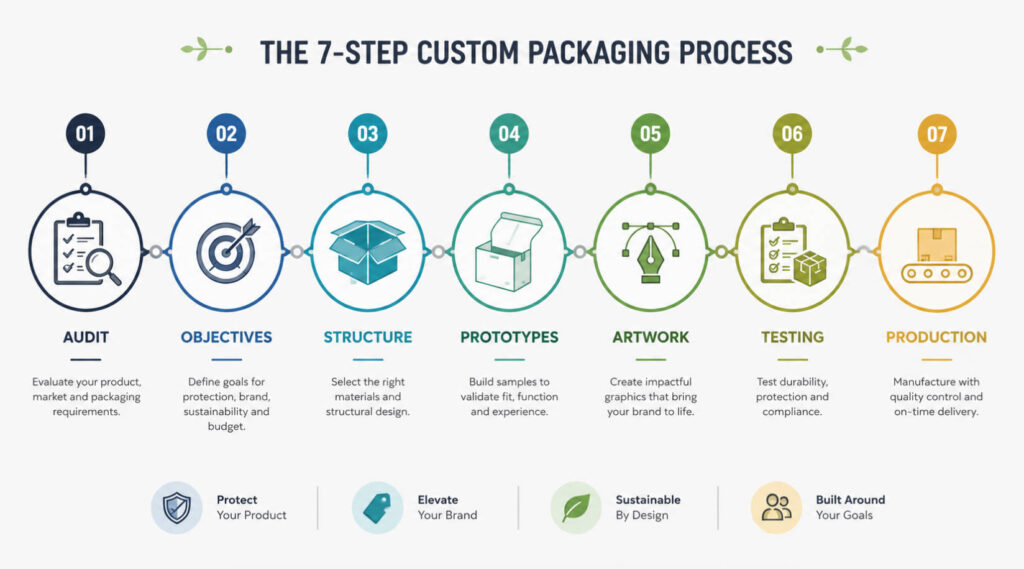
This process keeps creative decisions grounded in practical constraints, which is essential when packaging must function consistently across export markets and diverse transport networks. [msl-indy]
Lessons Learned From Real‑World Brand Implementations
Working with growing brands across categories, a few patterns consistently emerge:
– Brands that treat packaging as a long‑term platform rather than a one‑off design asset achieve more cohesive collections and smoother new product launches. [linkedin]
– Visual simplicity often performs better in production, especially at higher volumes, leading to fewer misprints and faster lead times. [creativemarket]
– Clear sustainability claims backed by material data and certifications build more trust than vague eco‑friendly messaging. [linkedin]
From the manufacturing line, we see the strongest results when marketing teams and production engineers collaborate early, instead of passing a finished design downstream and trying to force it into existing machinery or material limits. [pluspackaging]
Questions fréquemment posées
1. How do I decide which box type is best for my product?
Start by analyzing your product’s weight, fragility, and primary sales channels, then match them to the strengths of mailer, shipper, or product boxes. Lightweight items that ship individually often work well in branded mailers, while heavier or bulk shipments need reinforced shippers, and premium retail items benefit from dedicated product boxes. [brillpack]
2. What information should always appear on my packaging?
At minimum, include clear product identification, key benefits, legally required information for your category, and essential handling or care instructions. Many brands also add origin stories, material details, or sustainability indicators to help customers understand what makes the product and its packaging different. [creativemarket]
3. How can I improve sustainability without compromising protection?
Focus on right‑sizing boxes, simplifying to single‑material paper structures, and choosing widely recyclable or compostable materials that work in your key markets. Then validate performance through prototype testing to ensure products remain well‑protected during shipping and storage. [packagingdigest]
4. Why is inner packaging so important for customer experience?
Internal materials—such as printed tissue, paper inserts, and short guides—shape the emotional impact of unboxing and help protect products from movement or impact. Thoughtful inner elements often generate positive word‑of‑mouth, social sharing, and stronger brand recall. [linkedin]
5. At what stage should I involve my packaging manufacturer in the design process?
Involve your manufacturing partner as soon as you start defining structure and materials, ideally before locking in artwork. Early collaboration ensures your designs respect production tolerances, material availability, and cost constraints, reducing revision cycles and lead time later. [packhit]
References
1. Packlane – “A Beginner’s Guide: How to Create Custom Packaging” (Majida Halaweh). [packoi]
2. Creative Market – “How to Design Amazing Custom Packaging: A Technical Guide” (guest post for Packlane). [creativemarket]
3. Plus Packaging – “How to Create Custom Packaging: Step-by-Step Guide.” [pluspackaging]
4. Packaging Digest – “10 Ways to Design Sustainable Packaging with Intent.” [packagingdigest]
5. MSL – “Sustainable Packaging Guide 2026: Cut Waste, Skip Greenwashing.” [msl-indy]
6. LinkedIn Article – “Best Practices for Eco-Friendly Packaging Design.” [linkedin]
7. Brillpack – “Beginner’s Guide to Creating Customized Packaging That Stands Out.” [brillpack]
8. Packhit – “How to Make Custom Packaging?” [packhit]
9. Malin Lernhammar – “How to Design Sustainable Packaging (tips from an ecologist).” [medium]
10. Confetti Design – “Sustainable Packaging Design: Complete Guide to Eco-Friendly …” [confetti]
Hot Tags: Custom Packaging, Manufacturers, Customized, Custom, Suppliers, Buy, Cheap, Quality, Advanced, Durable, in Stock, Made in China, Price, Quotation, Free Sample
 English
  Spanish
  French
  German
  Russian
  Japanese
  Portuguese
  Arabic