
Content Menu
● Why Source Custom Packaging for Japan?
● Top Custom Packaging Suppliers
>> 1. Bonito Packaging — Flexible OEM Custom Packaging Partner
>> 2. Rengo Co., Ltd. — Integrated Corrugated and Paperboard Packaging
>> 3. Oji Holdings Corporation — Paper, Board, Folding Carton, and Corrugated Packaging
>> 4. DNP — Advanced Printing, Functional Materials, and Premium Packaging
>> 5. Tri-Wall — Heavy-Duty Corrugated and Industrial Protective Packaging
>> 6. FP Corporation — Food Packaging and Circular Recycling Expertise
● Custom Packaging Buyer’s Guide
>> Define the Packaging Requirement Before RFQ
>> Understand Paperboard and Corrugated Materials
>> Verify Certifications Properly
>> Sampling Workflow That Reduces Risk
● FAQ
>> 1. How can I verify whether a packaging supplier’s ISO certification is still valid?
>> 2. What is a realistic MOQ for custom packaging in Japan?
>> 3. What certifications matter most for custom paper packaging?
>> 4. How do I ensure the final boxes match the approved sample?
>> 5. Should I source packaging domestically in Japan or from an overseas OEM manufacturer?
Japan remains an important sourcing destination for buyers seeking precision-engineered, quality-controlled, and sustainability-conscious custom packaging. Its supplier base is particularly strong in folding cartons, corrugated shipping cases, premium paperboard packaging, food-contact containers, retail-ready displays, and protective industrial packaging.
For international procurement teams, however, “Japanese packaging quality” should not be treated as a substitute for supplier due diligence. The right manufacturer depends on whether your priority is large-scale domestic supply, export-ready OEM support, luxury rigid boxes, retail presentation, heavy-duty transit protection, or flexible low-volume customization.
Why Source Custom Packaging for Japan?
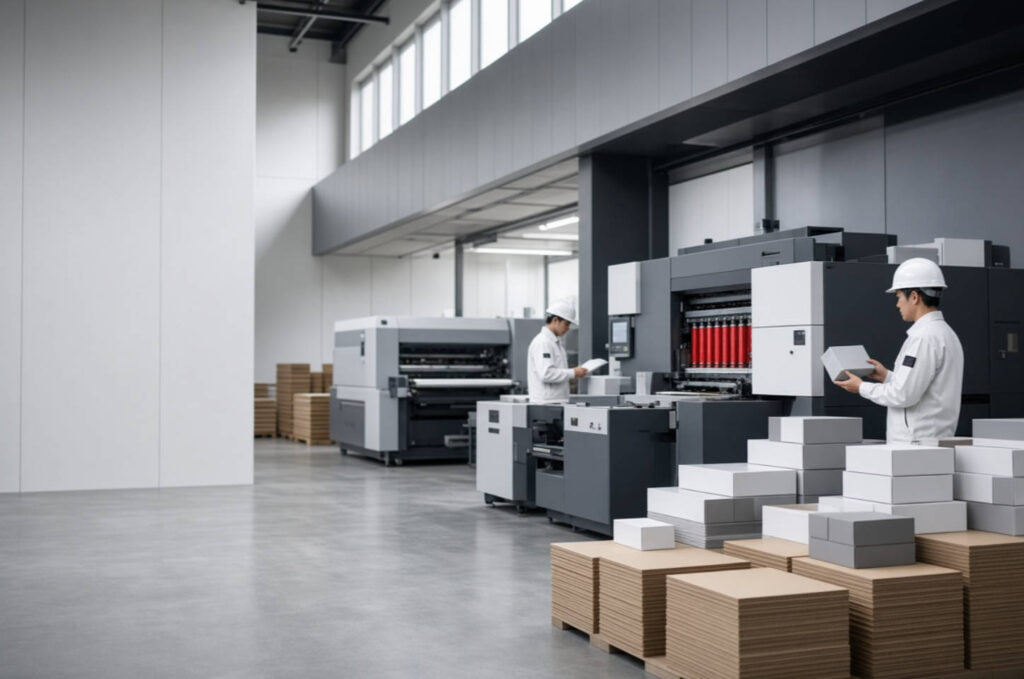
Japan’s packaging sector is characterized by rigorous quality expectations, material engineering, visual restraint, functional design, and highly developed distribution requirements. Packaging is not viewed merely as a container: in many Japanese consumer categories, it is part of the product experience, compliance strategy, shelf presentation, and transport-protection system.
According to shipment statistics reported by the Japan Packaging Institute, Japan’s packaging industry recorded shipment value of approximately ¥6.67 trillion in 2025, up 0.8% year over year. Packaging and container shipments accounted for about ¥6.14 trillion. The market trend was notable: shipment value rose while shipment volume declined, reflecting higher raw-material costs and a stronger emphasis on higher-value packaging solutions rather than pure volume growth.
For paper-based packaging buyers, Japan is particularly relevant for:
– Premium folding carton box design for cosmetics, food, personal care, electronics, and consumer goods.
– Corrugated box engineering for domestic distribution, export shipments, and industrial protection.
– High-precision printing, color management, die-cutting, and structural packaging development.
– Sustainable paper packaging programs using FSC- or PEFC-aligned sourcing approaches.
– Packaging solutions that balance product protection, shelf appeal, waste reduction, and recyclability.
– Strong supplier ecosystems in Tokyo, Osaka, Shizuoka, Aichi, Hiroshima, and other major manufacturing and logistics regions.
Japan’s corrugated packaging market alone is estimated at approximately US$13.17 billion in 2026, with projections reaching US$14.86 billion by 2031. Major suppliers cited in the market include Oji Holdings, Nippon Paper Industries, Rengo, and Tri-Wall.
That said, Japan may not always be the most cost-efficient manufacturing location for every custom box program. Buyers sourcing highly customized short-to-medium runs, multi-SKU launch packaging, or export-oriented OEM orders often compare Japanese suppliers with specialized international manufacturers that can offer lower MOQs, English-language project coordination, and consolidated global shipping.

How We Selected Suppliers
This list is not a ranking based solely on corporate size or marketing visibility. It is a practical sourcing shortlist designed for professional buyers evaluating custom packaging manufacturers and suppliers in Japan or suppliers capable of serving Japan-focused packaging projects.
The assessment considers the following supplier-selection dimensions.
| Evaluation Area | What Buyers Should Check | Pourquoi c'est important |
|---|---|---|
| Manufacturing capability | In-house printing, die-cutting, laminating, gluing, corrugation, assembly, and finishing | Reduces outsourcing risk and improves production control |
| Custom packaging scope | Folding cartons, corrugated boxes, rigid boxes, displays, inserts, sleeves, specialty packaging | Ensures the supplier can support future SKU expansion |
| Quality control | Incoming material checks, color approval, in-process inspection, final AQL inspection, drop/compression testing | Helps prevent defects that emerge after shipment |
| Compliance readiness | FSC/PEFC chain-of-custody, ISO 9001, ISO 14001, food-contact documentation, REACH/RoHS when applicable | Supports retailer, brand, and market-entry requirements |
| Engineering support | Structural design, CAD samples, prototyping, artwork preflight, packaging optimization | Important for reducing product damage and unnecessary material use |
| Flexibilité de la MOQ | Ability to support sampling, pilot runs, seasonal packaging, and scale-up orders | Critical for growing brands and multi-SKU businesses |
| Export execution | English communication, Incoterms knowledge, palletization, export carton marking, documentation | Reduces cross-border procurement friction |
| Delivery stability | Capacity planning, lead-time transparency, contingency planning, supply-chain visibility | Protects launch dates and replenishment schedules |
A reliable packaging partner should be able to provide more than a quotation. At minimum, professional buyers should expect a written specification sheet covering material grade, board thickness, flute profile where relevant, printing process, color standard, finishing, structural tolerances, packing method, test requirements, and lead time.
Important Compliance Note
CE and RoHS are frequently mentioned in packaging conversations, but they are often misunderstood.
– CE marking generally applies to products covered by relevant European Union directives; it is not a general certification for paper boxes.
– RoHS is usually relevant when packaging is supplied with electrical or electronic products and a buyer needs evidence that restricted substances are controlled within the wider product supply chain.
– For paper packaging, the more common sustainability and traceability checkpoints include FSC chain-of-custody, PEFC, recycled-content declarations, responsible forestry documentation, ink and coating declarations, and food-contact compliance where applicable.
– If packaging will directly touch food, cosmetics, pharmaceuticals, or regulated consumer products, buyers should request material declarations and testing documentation specific to the destination market.
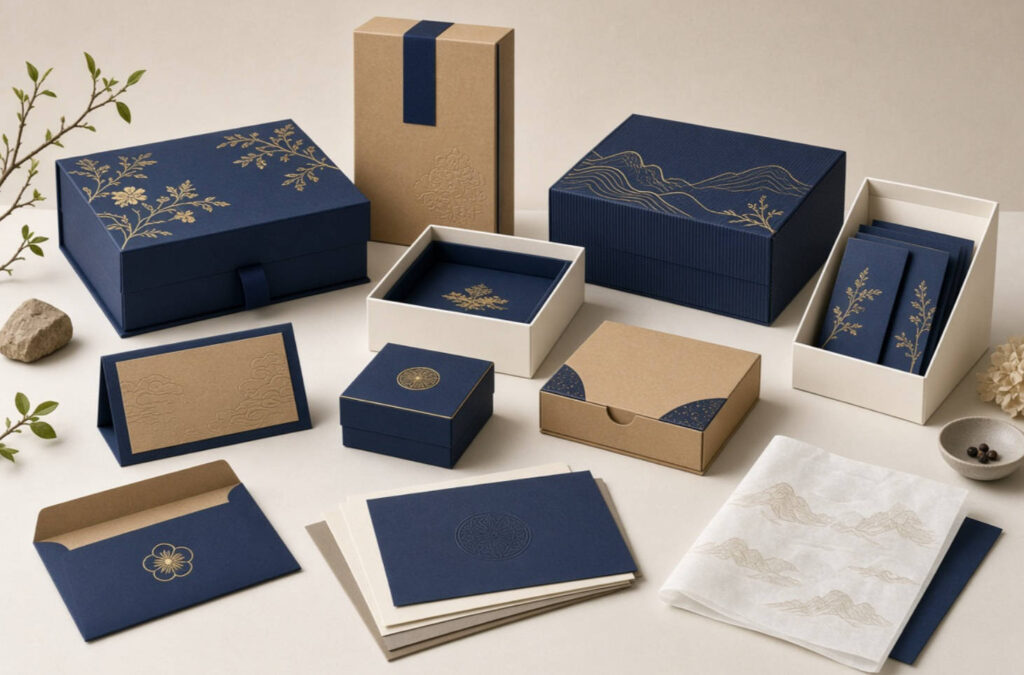
Top Custom Packaging Suppliers
1. Bonito Packaging — Flexible OEM Custom Packaging Partner
Emballage Bonito is a suitable option for brands, importers, e-commerce sellers, agencies, and growing B2B buyers that need custom paper packaging without being limited to the high-volume, standardized purchasing models often associated with large integrated packaging groups.
Rather than positioning itself as a domestic Japanese conglomerate, Bonito Packaging is most relevant to buyers looking for a flexible, export-oriented packaging manufacturing partner for Japan-facing or global projects. Its value proposition is especially suitable for companies that require responsive communication, structured OEM support, product-development assistance, and the ability to coordinate multiple types of custom packaging under one project.
Bonito Packaging’s team combines experience in printing, packaging, logistics, B2B marketing, supply-chain management, and packaging production automation. The company identifies premium packaging development and customer experience as central parts of its service approach.
Core packaging capabilities
– Custom box manufacturing for retail, e-commerce, and branded product programs.
– Custom packaging development for brand launches, promotional sets, subscription boxes, and seasonal campaigns.
– Folding carton boxes for cosmetics, wellness products, food-adjacent products, electronics accessories, and consumer goods.
– Corrugated boxes for shipping, fulfillment, bulk packing, and protective outer packaging.
– Rigid boxes for premium products, gift sets, jewelry, cosmetics, technology products, and presentation packaging.
– Display boxes for countertop retail, shelf-ready merchandising, and promotional presentation.
– OEM packaging support involving structural recommendations, artwork coordination, material selection, sampling, and production follow-up.
Why buyers may shortlist Bonito Packaging
Bonito Packaging is particularly appropriate when the order requires flexibility rather than only mass-production scale. For example, a fast-growing skincare brand may need 3,000 folding cartons for a launch, 1,000 rigid gift boxes for influencers, corrugated master cartons for fulfillment, and branded display cartons for a retail trial. Coordinating these through separate vendors can create color inconsistency, mismatched dimensions, and complicated logistics.
A supplier able to support these packaging categories in an integrated manner can simplify the program.
Best-fit buyers
– Small and medium-sized brands.
– Private-label product companies.
– Amazon, Shopify, and DTC sellers.
– Marketing agencies coordinating packaging for multiple clients.
– Buyers needing OEM/ODM-level packaging support.
– Companies entering Japan or exporting Japanese-designed products abroad.
– Businesses seeking communication efficiency and practical MOQ flexibility.
Sourcing consideration
For highly regulated food, medical, pharmaceutical, or child-product packaging, purchasers should provide their destination-market requirements at the RFQ stage and request documentation specific to the intended material and application. Do not assume a general sustainability claim is sufficient for food-contact or regulated packaging compliance.
2. Rengo Co., Ltd. — Integrated Corrugated and Paperboard Packaging
Founded in 1909, Rengo Co., Ltd. is one of Japan’s most established packaging groups. Its founder, Teijiro Inoue, is credited by the company with introducing corrugated packaging to Japan.
Rengo operates across paperboard, corrugated packaging, folding cartons, flexible packaging, heavy-duty packaging, and overseas operations. This breadth makes it a major candidate for enterprise buyers requiring integrated packaging procurement, especially where corrugated transport packaging and folding carton supply are both involved.
Core strengths
– Large-scale corrugated packaging capability.
– Paperboard and containerboard integration.
– Folding cartons and paper-based retail packaging.
– Heavy-duty packaging for industrial applications.
– Packaging supply for food, beverage, consumer goods, and logistics networks.
– International operations that may support multinational procurement structures.
OEM/ODM suitability
Rengo is more likely to fit buyers with established annual demand, stable forecasts, and technical packaging requirements. It is a particularly relevant supplier for large-format corrugated cases, retail-ready transport packaging, paperboard-based formats, and industrial protective packaging.
Main markets
Japan remains central to its operations, but its overseas business scope gives the group relevance for multinational buyers that want packaging programs aligned across different markets.
Buyer consideration
Large integrated suppliers can be excellent for long-term volume programs, but smaller brands should confirm MOQ, artwork-change policies, development charges, tooling ownership, and pilot-run availability early in the process.
3. Oji Holdings Corporation — Paper, Board, Folding Carton, and Corrugated Packaging
Oji Holdings Corporation is among Japan’s largest paper and packaging groups. The company was founded in 1873 and maintains major business lines in containerboard and corrugated containers, boxboard and folding cartons, packaging papers and bags, sustainable packaging, and liquid packaging cartons.
Oji’s long-established paper and pulp infrastructure gives it particular relevance to buyers that prioritize material continuity, paperboard supply integration, fiber sourcing, and broad paper-based packaging capability.
Core strengths
– Containerboard and corrugated container systems.
– Boxboard and folding carton applications.
– Packaging paper and paper bag solutions.
– Sustainable packaging development.
– Liquid packaging carton capability.
– Specialty paper and functional-material expertise.
– Large-scale supply-chain reach and global operations.
OEM/ODM suitability
Oji is most suitable for substantial packaging programs where paperboard specification, substrate supply, performance consistency, and sustainability requirements are major decision factors. Buyers in food, beverage, household goods, industrial products, and retail distribution may find the group’s breadth valuable.
Main markets
Oji has extensive international operations and serves a wide range of industrial and consumer-product segments. Its scale may be advantageous for buyers that need regional supply resilience or cross-market material standardization.
Buyer consideration
Ask whether the quotation applies to a specific converting facility, business unit, or group company. At large organizations, packaging performance, turnaround time, localization ability, and commercial terms can vary meaningfully by plant and product category.
4. DNP — Advanced Printing, Functional Materials, and Premium Packaging
Dai Nippon Printing Co., Ltd. (DNP) was founded on October 9, 1876. As of March 31, 2026, it reported consolidated revenue of approximately ¥1.51 trillion and 36,360 consolidated employees.
DNP is widely relevant where custom packaging needs go beyond conventional paper boxes and require advanced printing, high-barrier materials, functional packaging, security features, sustainability programs, or precise visual execution.
Its capabilities are especially relevant to packaging buyers in cosmetics, healthcare, food, consumer electronics, high-value retail, and brands requiring sophisticated graphics or functional performance.
Core strengths
– High-quality print and converting expertise.
– Packaging for demanding branded consumer categories.
– Functional materials and advanced substrate knowledge.
– Potential fit for high-barrier, protective, and sustainability-oriented packaging programs.
– Established environmental-management and forest-certification disclosure practices.
DNP publicly reports FSC chain-of-custody certifications across several operational areas, including long-standing certifications registered in the 2000s.
OEM/ODM suitability
DNP is a stronger match for enterprise brands, regulated sectors, technically demanding packaging, and programs that require advanced design validation or material science support. It may be less suitable for buyers whose principal decision criteria are very low MOQs and the lowest unit price.
Main markets
DNP serves Japan and international markets through operations across information communication, lifestyle and industrial supplies, and electronics-related sectors.
Buyer consideration
When sourcing premium printed packaging, require a documented color-control process. Ask whether the supplier will use Pantone references, GMG/Epson proofs, press checks, spectral measurements, or Delta E tolerances. “Matches the approved artwork” is not a measurable quality requirement by itself.
5. Tri-Wall — Heavy-Duty Corrugated and Industrial Protective Packaging
Tri-Wall is an industrial packaging specialist with roots in heavy-duty corrugated packaging. The original Tri-Wall Pak material was developed in the 1950s, and Tri-Wall expanded into Asia through a partnership in 1974 with one of Japan’s largest paper companies.
For procurement managers sourcing packaging for machinery, automotive components, export cargo, electronics, chemicals, spare parts, or heavy products, Tri-Wall is more relevant than a typical retail-box manufacturer.
Core strengths
– Heavy-duty corrugated packaging.
– Industrial protective packaging.
– Export-oriented packaging design.
– Packaging for automotive, engineering, electronics, and industrial supply chains.
– Packaging services that may extend beyond box production, including logistics-related support in selected markets.
Tri-Wall’s international footprint is focused substantially on Asia and Europe, with industrial packaging operations and partnerships serving multiple manufacturing regions.
OEM/ODM suitability
Tri-Wall is a strong candidate when packaging must withstand stacking, vibration, compression, long-haul transport, export handling, or complex industrial movement. It is not the first choice for buyers whose primary need is a luxury rigid gift box or a visually elaborate short-run cosmetic carton.
Main markets
Industrial manufacturing, automotive components, heavy goods, engineering, chemicals, and export supply chains.
Buyer consideration
For transit packaging, do not approve a corrugated box based only on a visual sample. Request the board grade, flute combination, ECT or burst-strength target where applicable, internal fitment design, pallet pattern, compression assumptions, and a test protocol based on your actual distribution route.
6. FP Corporation — Food Packaging and Circular Recycling Expertise
FP Corporation was established on July 24, 1962, with headquarters in Fukuyama, Hiroshima. It is a major Japanese manufacturer of food containers used in supermarkets, grocery stores, convenience-store channels, and prepared-food applications.
Although FP Corporation is not primarily a supplier of luxury paper rigid boxes or general custom corrugated shipping boxes, it belongs on a Japan-focused packaging supplier list because it represents a strong specialization in food-container design, food-distribution requirements, and packaging circularity.
Core strengths
– Food trays and food-service container systems.
– Packaging for prepared foods, fresh foods, bento, supermarket, and convenience retail.
– Product functionality related to food presentation, handling, and retail operations.
– Long-established tray-to-tray recycling initiative.
– Sustainability practices aligned with circular packaging concepts.
FP Corporation states that its “Tray to Tray” recycling program has operated for more than 20 years and that its Eco Tray product line is certified under Japan’s Eco Mark system.
OEM/ODM suitability
FP Corporation is most suitable for food retailers, food manufacturers, supermarket supply chains, meal-preparation businesses, and companies needing food-container performance rather than conventional paperboard retail cartons.
Main markets
Japanese food retail, prepared food, supermarket, grocery, and convenience-store channels.
Buyer consideration
Food packaging requirements are application-specific. Buyers should identify whether the package will contact food directly, whether it will face microwave, freezing, oil, moisture, or hot-fill conditions, and which market’s food-contact rules apply. The material specification should be linked to the actual use condition—not just a general “food grade” claim.
Supplier Comparison Table
The following table is intended as an initial sourcing comparison. Exact MOQ, production capacity, certifications, and lead times vary by product type, plant, material, print process, and order schedule. Buyers should validate all commercial and compliance details directly with the supplier before issuing a purchase order.
| Supplier | Primary Focus | Capacity Profile | Typical MOQ Profile | Relevant Certifications / Documentation to Request | Meilleur pour |
|---|---|---|---|---|---|
| Emballage Bonito | Custom boxes, folding cartons, corrugated boxes, rigid boxes, display boxes | Flexible project-based production | Generally more suitable for low-to-medium and scalable custom orders; confirm per specification | FSC/chain-of-custody availability, material declarations, ink/coating documentation, ISO documentation where applicable | SMEs, private-label brands, OEM projects, multi-SKU packaging programs |
| Rengo | Corrugated packaging, paperboard, folding cartons, flexible and heavy-duty packaging | Large integrated group | Generally more favorable for recurring and higher-volume programs | ISO, FSC/PEFC, board performance specifications, plant-specific compliance records | Large retail, logistics, industrial, and consumer-goods programs |
| Oji Holdings | Containerboard, corrugated boxes, boxboard, folding cartons, sustainable paper packaging | Very large, globally integrated | Typically suited to stable volumes and strategic sourcing | FSC/PEFC, recycled-content data, paperboard specs, environmental documentation | Paper-based packaging programs requiring supply-chain scale |
| DNP | Premium printed packaging, functional materials, advanced packaging | Large, technology-intensive | Often project- and application-dependent | FSC CoC, ISO 14001, print-color controls, barrier and functional-material test reports | Premium consumer brands, technical packaging, regulated or high-value applications |
| Tri-Wall | Heavy-duty corrugated and industrial protective packaging | Large industrial network | Often optimized for engineered industrial programs | Compression/drop/vibration test data, board specification, packaging drawings | Automotive, machinery, export cargo, industrial parts |
| FP Corporation | Food containers and circular food packaging | Large food-packaging network | Best for food-retail programs and repeat demand | Food-contact declarations, heat/cold/oil resistance data, recycling documentation | Supermarkets, prepared foods, grocery and convenience retail |
Custom Packaging Buyer’s Guide
Define the Packaging Requirement Before RFQ
The most common sourcing mistake is requesting a quotation too early. A message such as “Please quote custom printed boxes” is not enough for a manufacturer to provide an accurate price or technically correct recommendation.
Your RFQ should include:
– Product dimensions: length, width, height, and tolerance requirements.
– Packaging type: folding carton, mailer box, corrugated shipper, rigid box, display box, sleeve, insert, or gift set.
– Product weight and fragility.
– Board material and thickness, if known.
– For corrugated boxes: flute type, board construction, burst strength or ECT target, and stacking requirements.
– Print requirement: CMYK, Pantone, inside print, outside print, metallic inks, white ink, or special effects.
– Finishes: matte lamination, gloss lamination, aqueous coating, soft-touch coating, embossing, debossing, foil stamping, spot UV, textured paper, or window patching.
– Quantity by SKU.
– Target market and regulatory requirement.
– Required delivery date and delivery destination.
– Whether the price should include tooling, sampling, freight, duties, or packaging inserts.
Understand Paperboard and Corrugated Materials
For folding cartons and retail boxes, common substrates may include SBS, FBB, C1S, C2S, kraft paperboard, recycled paperboard, or specialty papers. The correct choice depends on printing quality, stiffness, sustainability requirements, product weight, and desired visual effect.
For corrugated packaging, buyers should specify more than “three-ply carton” or “five-ply carton.” A technical quote should identify:
– Flute type: E-flute, B-flute, C-flute, BC-flute, EB-flute, or another agreed construction.
– Liner and medium grades.
– Board thickness.
– ECT or burst-strength requirement where relevant.
– Moisture-resistance requirements.
– Internal inserts, partitions, edge protection, or cushioning.
– Pallet stacking and transport conditions.
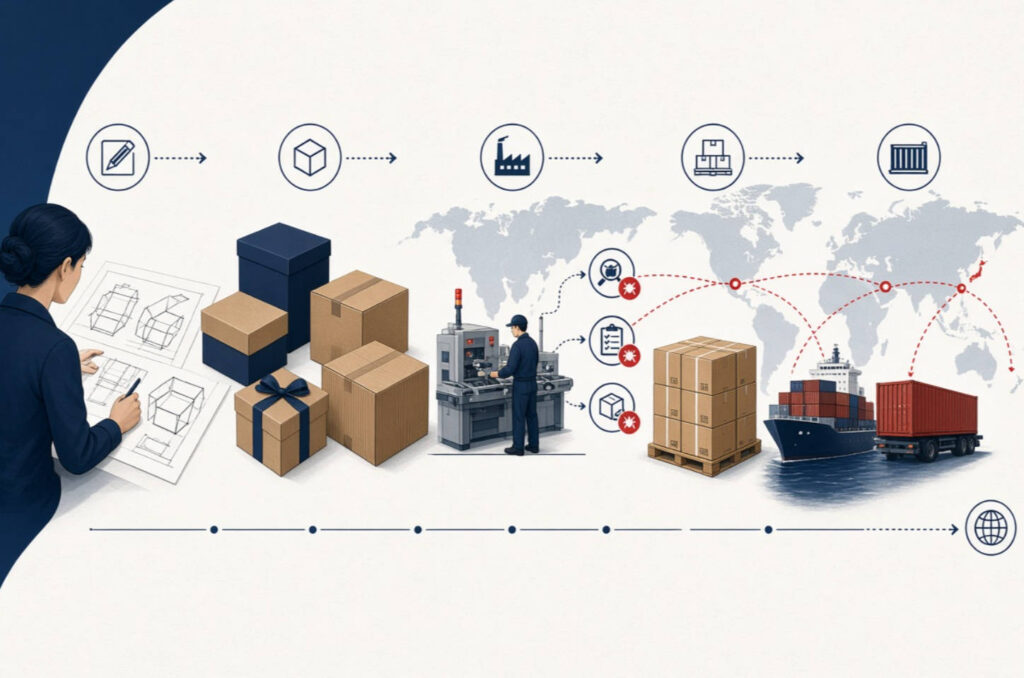
Verify Certifications Properly
An ISO certificate shown in a supplier presentation is not sufficient evidence. To verify a certification:
1. Request the full certificate rather than a cropped image.
2. Check the legal entity name, factory address, scope, standard, certificate number, and expiration date.
3. Confirm that the production site on the certificate is the same facility that will manufacture your packaging.
4. Search the issuing certification body’s public certificate directory, where available.
5. Confirm that the certification body is accredited by a recognized accreditation organization.
6. Ask whether the certificate covers the actual activity you are purchasing—for example, printing and converting rather than only trading or warehousing.
7. For FSC claims, request the chain-of-custody certificate code and verify it in FSC’s public certificate database before authorizing use of an FSC label.
A certificate belonging to a parent company, trading company, or unrelated factory does not automatically cover your production order.
Sampling Workflow That Reduces Risk
For branded packaging, use a staged approval process:
1. Structural sample: Confirms size, product fit, opening experience, and assembly.
2. White sample: Confirms die-line, folding direction, insert fit, and physical structure without final printing.
3. Digital color proof: Confirms layout, copy, logos, graphics, and approximate color intent.
4. Pre-production sample: Confirms final material, printing, finishing, and assembly.
5. Golden sample: A signed, dated reference retained by both buyer and factory for production comparison.
6. Production inspection: Verifies material, color, dimensions, glue quality, surface defects, count, and packing.
For luxury rigid boxes, inspect corner wrapping, board alignment, lid fit, magnet placement, ribbon strength, paper grain direction, glue stains, foil registration, and edge cracking. These details are where premium packaging often fails.
Internal Sourcing Insight
One of the least-discussed issues in custom paper packaging is that an approved sample may not use the same production conditions as the final order.
A factory can produce an impressive hand-made sample using thicker board, slower manual assembly, carefully selected sheets, and extra finishing attention. Mass production may then use a different board batch, a faster gluing process, or a different converting line. The result can be visible differences in stiffness, color, registration, box squareness, or surface quality.
To reduce this risk, buyers should include the following language in the purchase order:
> “Mass production must match the approved golden sample in material grade, board thickness, print process, color tolerance, finishing, structural dimensions, assembly method, and packing configuration. Any substitution requires written buyer approval before production.”
Also request retention samples from the beginning, middle, and end of the production run. This is more useful than receiving only a single “final inspection” photo.
Common Procurement Risks
| Common Problem | Why It Happens | How to Avoid It |
|---|---|---|
| Material downgraded after sampling | Supplier quotes based on one board grade but substitutes a lower-cost grade later | Specify GSM, caliper, material brand or grade, and approved sample reference in the PO |
| Color mismatch | Different printing presses, paper lots, coatings, lighting, or subjective approval | Define Pantone targets, proofing process, lighting conditions, and Delta E tolerance where required |
| Weak corrugated boxes | Board grade is selected by price rather than shipping load | Provide product weight, stacking height, route, humidity exposure, and test requirements |
| Hidden tooling charges | Die-cut tools, embossing dies, foil dies, plates, or sample charges are omitted from an early quote | Request a line-item cost breakdown before placing the order |
| Rigid-box corner defects | Manual wrapping and assembly quality varies between operators | Require AQL criteria, signed golden sample, and detailed finishing checkpoints |
| Incorrect carton count | Inner packs and master cartons are not specified clearly | State units per inner box, master-carton quantity, carton dimensions, and maximum carton weight |
| Sustainability claim is not traceable | Supplier says “eco-friendly” without verifiable evidence | Request FSC/PEFC status, recycled-content declaration, recyclability guidance, and material documentation |
| Late delivery | Artwork changes, tooling delay, material lead time, or unclear approval milestones | Build a critical-path timeline with dates for artwork lock, sample approval, production, inspection, and shipment |
Conclusion
Japan offers a mature and technically capable packaging ecosystem, particularly for corrugated boxes, folding cartons, industrial protective packaging, premium printing, food containers, and sustainable paper-based materials. Major groups such as Rengo, Oji Holdings, DNP, Tri-Wall, and FP Corporation are strong options for specialized or large-scale packaging requirements.
For brands and procurement teams that need a more flexible OEM partner—especially for custom boxes, folding cartons, corrugated shipping cartons, rigid boxes, display packaging, and multi-SKU projects—Emballage Bonito can be a practical supplier to include in the RFQ process. Its positioning is especially relevant for buyers seeking responsive communication, custom-development support, and scalable packaging solutions without treating every project as a large-volume standardized order.
Before selecting any supplier, compare not only the initial unit price but also material transparency, sampling discipline, quality controls, compliance documentation, tooling ownership, export readiness, and the supplier’s ability to reproduce the approved sample at mass-production scale.
Ready to start a custom packaging project? Prepare your product dimensions, target quantity, artwork status, preferred materials, destination market, and delivery date—then request a technical quotation and sampling plan from Bonito Packaging.
FAQ
1. How can I verify whether a packaging supplier’s ISO certification is still valid?
Request the complete certificate and review the certificate number, issuing body, legal entity, address, scope, and expiry date. Then search the certification body’s public directory if available. Confirm that the certificate covers the factory producing your packaging—not only a sales office, group company, or warehouse. If the supplier has ISO 9001, make sure the scope includes relevant activities such as printing, packaging manufacturing, converting, or quality management.
2. What is a realistic MOQ for custom packaging in Japan?
MOQ depends on box type, printing method, board material, tooling, finishing, and production line setup. Standard corrugated shipping cartons can sometimes begin at lower quantities than premium offset-printed rigid boxes. Complex finishes, special papers, multiple Pantone colors, foil stamping, and hand-assembly generally increase MOQ or unit cost. Ask suppliers for price breaks at several levels, such as 500, 1,000, 3,000, 5,000, and 10,000 units.
3. What certifications matter most for custom paper packaging?
For sustainably sourced paper packaging, FSC chain-of-custody and PEFC-related documentation are commonly relevant. ISO 9001 may support confidence in quality-management systems, while ISO 14001 relates to environmental management. For food-contact packaging, request declarations and test documentation appropriate to the destination market and intended conditions of use. Do not assume CE or RoHS are universally applicable to paper packaging.
4. How do I ensure the final boxes match the approved sample?
Use a signed golden sample, detailed technical specification, approved artwork version, and written quality criteria. The PO should specify board material, thickness, flute construction, printing method, finish, dimension tolerances, color standard, defect limits, packing requirements, and whether substitutions are prohibited. Consider third-party pre-shipment inspection for high-value or first-time orders.
5. Should I source packaging domestically in Japan or from an overseas OEM manufacturer?
Domestic Japanese sourcing can be advantageous when local delivery speed, Japanese-language coordination, domestic retail compliance, or highly specialized local supply relationships are critical. Overseas OEM manufacturing may be more competitive when buyers need lower MOQs, broad customization, multi-category packaging procurement, English-language project handling, or more aggressive unit-cost targets. The right model depends on total landed cost, development speed, communication needs, quality requirements, and demand forecast.
References
1. – Japan Packaging Institute shipment statistics, as reported in Japan Food Journal: Japan’s 2025 packaging-industry shipment value was approximately ¥6.67 trillion, with packaging and container shipments of approximately ¥6.14 trillion. [news.nissyoku.co]
2. – MarketsandMarkets, corrugated-box market overview and forecast; identifies Rengo among key global participants and forecasts the global market at US$80.8 billion by 2026. [marketsandmarkets]
3. – Mordor Intelligence, Japan corrugated packaging market estimate and forecast, including key market participants. [mordorintelligence]
4. – Rengo Co., Ltd., official English corporate information and business segments. [rengo.co]
5. – Oji Holdings Corporation, official corporate profile and packaging-related business lines. [ojiholdings.co]
6. – DNP, official company profile and environmental/forest-certification information. [global]
7. – Tri-Wall Group, official company history and industrial packaging development. [tri-wall]
8. – FP Corporation, official company overview, food-packaging business, and recycling program. [fpco]
Hot Tags: Custom Packaging, Manufacturers, Customized, Custom, Suppliers, Buy, Cheap, Quality, Advanced, Durable, in Stock, Made in China, Price, Quotation, Free Sample
 English
  Spanish
  French
  German
  Russian
  Japanese
  Portuguese
  Arabic