
Content Menu
● Why a Child-Resistant Rigid Box Matters for Wellness Brands
● Child-Resistant Packaging vs. Premium Rigid Boxes
>> When the Rigid Box Should Carry the Safety Function
>> When the Inner Container Should Carry the Safety Function
● Start With Product Risk, Not Box Style
● How to Engineer a Child-Resistant Rigid Box
>> 1. Use a Multi-Action Opening Sequence
>> 2. Design for Reliable Reclosure
>> 3. Match Board Strength to the Mechanism
>> 4. Protect the Product Inside the Box
● Premium Design Without Compromising Safety
>> Expert Design Principle: Make Safety Feel Intentional
● Compliance and Testing: Do Not Rely on Assumptions
>> A Practical Validation Workflow
● Common Mistakes in Wellness Packaging Projects
>> Treating “Child-Resistant” as a Visual Feature
>> Using Magnets as the Only Closure
>> Ignoring the Product’s Daily Use Pattern
>> Designing Instructions Too Late
● FAQ
>> 1. Is every rigid box child-resistant?
>> 2. Can a magnetic rigid box be child-resistant?
>> 3. What wellness products may need child-resistant packaging?
>> 4. Can a child-resistant rigid box still look luxurious?
>> 5. Should the outer box or bottle be child-resistant?
>> 6. How do I test a child-resistant package?
>> 7. What information should I provide to a rigid box manufacturer?
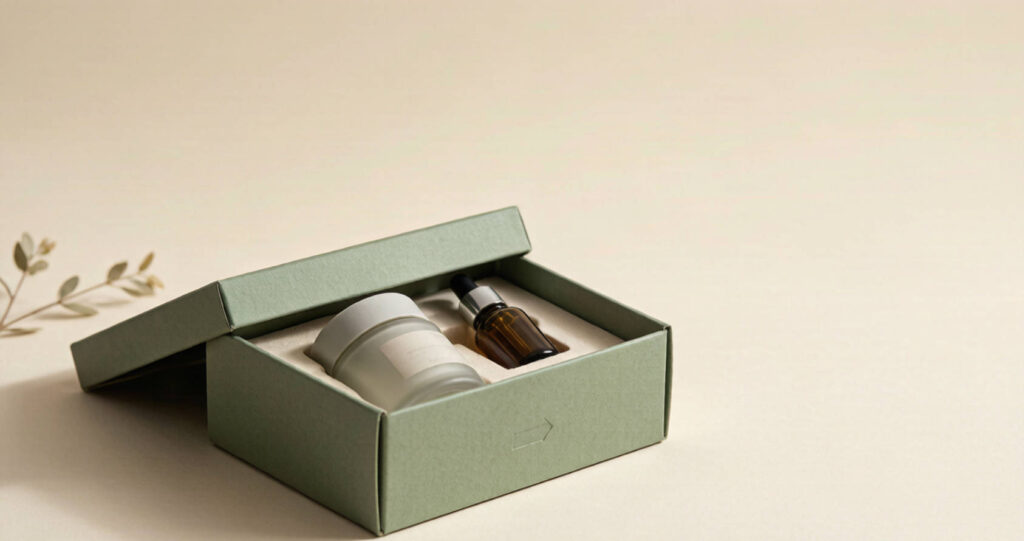
Premium wellness packaging must do more than look refined. A well-designed child-resistant rigid box helps brands protect consumers, support responsible product access, and create a memorable unboxing experience without sacrificing the premium character customers expect.
For wellness brands selling supplements, functional gummies, CBD products, medicinal-style botanicals, essential oil blends, or other regulated products, the challenge is balancing two priorities: child-resistant functionality et luxury rigid box presentation. At Emballage Bonito, we approach this as an integrated engineering and branding project—not simply a printed-box order.
Important note: A child-resistant package is not automatically compliant because it uses a push button, pull tab, magnet, or locking sleeve. Compliance depends on the applicable product category, destination market, complete package configuration, and validated testing.
Why a Child-Resistant Rigid Box Matters for Wellness Brands
The global wellness market has expanded far beyond simple vitamin bottles. Consumers increasingly purchase premium supplements, sleep aids, botanical extracts, functional confectionery, skincare actives, and adult-use wellness products online and in retail environments.
Many of these categories face a shared packaging problem: the product must be easy for the intended adult user to access while making access significantly more difficult for young children.
A standard folding carton may offer basic branding and tamper evidence, but it may not provide sufficient protection for products that require controlled access. A carefully engineered rigid box can add structure, durability, and a more sophisticated opening mechanism.
For premium wellness products, packaging is often evaluated on four levels:
– Safety: Can the package reduce unintended child access?
– Usability: Can adults open, close, and resecure it comfortably?
– Protection : Does it protect jars, bottles, droppers, pouches, and delicate formulations during transport?
– Brand experience: Does it communicate quality, trust, and product value at first touch?
The best custom box design treats these requirements as connected. A difficult-to-open box that frustrates older adults can harm repeat purchases. A beautiful box with an unreliable safety feature can create regulatory and reputational risk. A rigid box that looks luxurious but damages the product in shipping is also not a premium solution.
Child-Resistant Packaging vs. Premium Rigid Boxes
A child-resistant packaging feature is a functional system designed to make access difficult for children under five while remaining reasonably usable for adults. A boîte rigide is a structural packaging format made from thick paperboard, usually wrapped with printed or specialty paper for a high-end appearance.
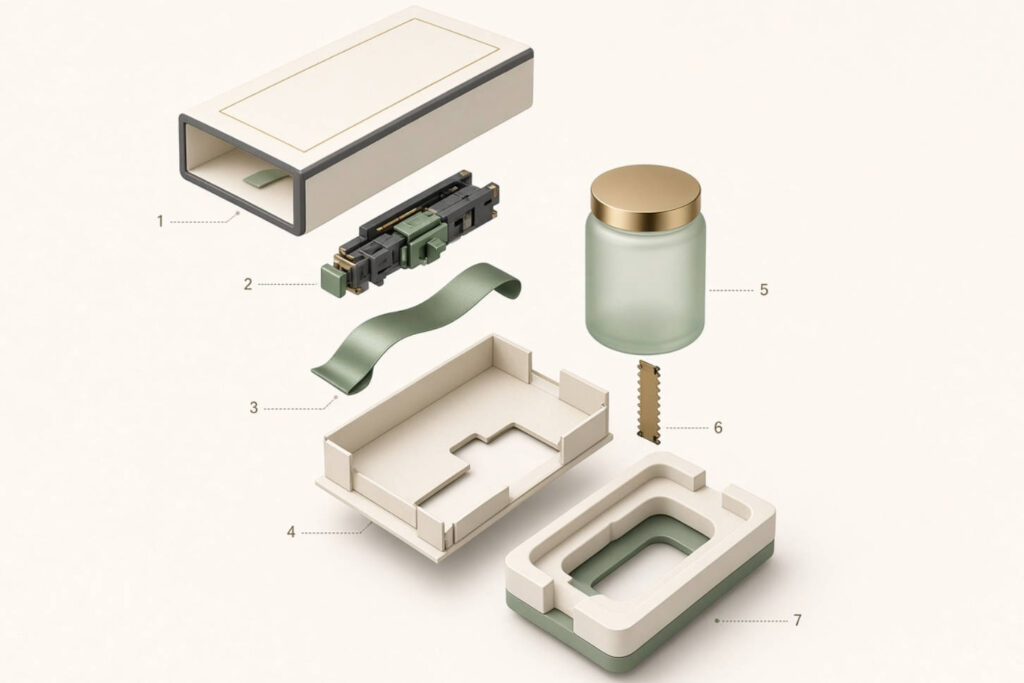
These concepts serve different purposes, but they can be designed together.
| Packaging Element | Primary Purpose | Key Design Focus | Typical Risk if Poorly Designed |
|---|---|---|---|
| Child-resistant mechanism | Restrict child access | Opening sequence, locking force, reclosure | A child can access the product or an adult cannot use it correctly |
| Rigid box structure | Create premium protection and presentation | Board thickness, fit, durability, inserts | Damage, deformation, weak shelf appeal |
| Inner product container | Hold the actual product | Bottle, jar, pouch, vial, blister, closure | Leakage, breakage, product exposure |
| Tamper-evident feature | Show whether the package has been opened | Seal, tear strip, label, shrink band | Consumers cannot easily identify interference |
| Brand graphics | Communicate value and instructions | Legibility, hierarchy, finishes, warnings | Confusing usage, weak conversion, compliance issues |
The critical point is that a rigid box alone is not necessarily child-resistant. In many product configurations, the child-resistant function may be located in the inner jar, bottle cap, pouch zipper, sliding tray lock, or an integrated outer-box mechanism.
When the Rigid Box Should Carry the Safety Function
An outer rigid box may be the right location for the child-resistant mechanism when:
– The product is sold in a refillable inner pouch or tray.
– The product needs a premium gift-style presentation.
– The inner container requires additional protection.
– The brand wants to create a controlled opening ritual.
– Retail display and e-commerce durability are priorities.
– The product’s market positioning justifies a reusable secondary package.
For example, a premium sleep-gummy brand may use a sealed inner pouch inside a drawer-style rigid box. The box can incorporate a press-and-slide mechanism that requires coordinated adult actions before the drawer can open. A molded pulp or paperboard insert then holds the pouch in place, prevents movement, and reinforces the premium presentation.
When the Inner Container Should Carry the Safety Function
In other cases, the primary child-resistant feature should be on the product container itself. This is especially important when consumers may discard the outer box after purchase.
A wellness supplement bottle with a child-resistant cap is usually more practical for daily use than relying only on a secondary rigid box. The rigid box can then focus on:
– Product protection during fulfillment
– Premium brand storytelling
– Ingredient or usage information
– Gift-ready presentation
– Tamper-evident seals
– Sustainable material communication
This distinction is essential. If the product will remain in a household after the outer box has been discarded, the long-term safety strategy should not depend on the outer box alone.
Start With Product Risk, Not Box Style
The strongest packaging projects begin with a product-risk review. Before selecting a magnetic closure, drawer box, hinged lid, or premium soft-touch wrap, define the real use case.
Ask these questions early:
1. What is inside the package?
Capsules, gummies, oils, topical products, powder sachets, and glass dropper bottles all require different protection strategies.
2. Will the product be used repeatedly?
A single-use gift kit needs a different opening system than a 60-day supplement supply.
3. Will consumers retain the outer box?
Reusable rigid boxes can support a safety feature only if users are likely to keep and correctly resecure them.
4. Which markets will the product enter?
Packaging rules differ by product category and jurisdiction. U.S. requirements for certain household substances, for example, are governed by the Poison Prevention Packaging Act and 16 CFR Part 1700.
5. What adult users will handle the package?
Wellness brands should consider older adults, people with reduced dexterity, and customers opening the package for the first time.
6. What happens after repeated opening cycles?
The locking system must work after the expected number of uses—not just during a first prototype demonstration.
A packaging supplier should receive these answers before structural development begins. This allows the design team to recommend mechanisms based on actual risk and use conditions rather than visual preference alone.
How to Engineer a Child-Resistant Rigid Box
A premium rigid box can incorporate child-resistant functionality through intentional structural engineering. The mechanism should be intuitive for adults but not obvious to young children.
1. Use a Multi-Action Opening Sequence
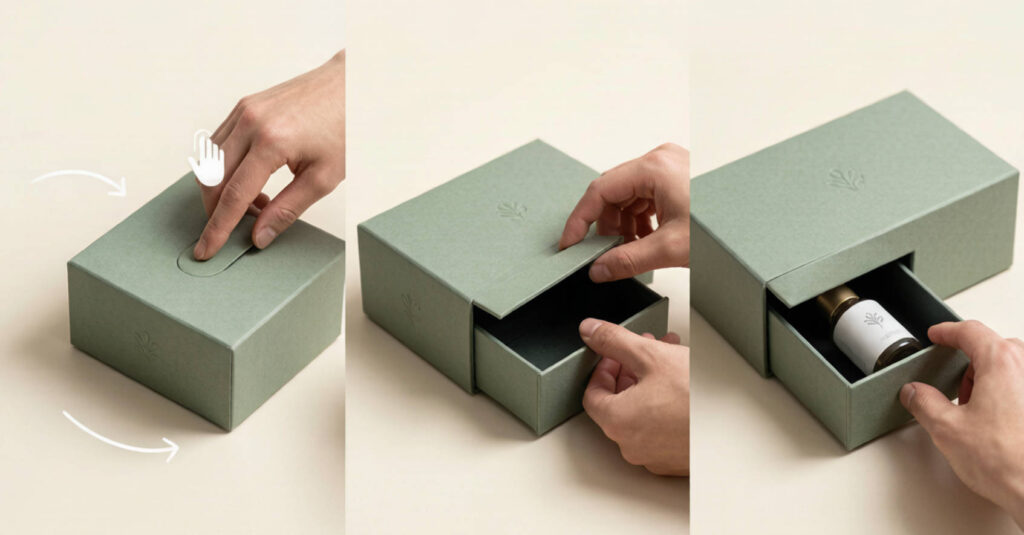
The most common principle is requiring two or more coordinated actions. This may involve pressing a hidden area while sliding a drawer, squeezing two tabs while lifting a lid, or aligning a pull ribbon with a release point.
Possible mechanisms include:
– Press-and-slide drawer boxes
– Squeeze-and-lift hinged rigid boxes
– Push-button release boxes
– Locking sleeve and inner tray systems
– Pull-tab systems with concealed locking points
– Rotational or alignment-based opening structures
The sequence should be easy to explain through concise graphics. However, the instruction design must not make the opening process so visually obvious that it undermines the mechanism.
2. Design for Reliable Reclosure
For repeat-use wellness products, reclosure is as important as first opening. A child-resistant rigid box should return to its locked position without requiring excessive force or complex steps.
A reliable reclosure design should include:
– A clear tactile or audible “click” when locked
– Proper board tolerances around locking components
– Reinforcement in stress points
– Wear-resistant paper and lamination choices
– Opening instructions that explain how to close the box securely
If consumers cannot tell whether the package is properly resecured, the safety benefit can decline after the first use.
3. Match Board Strength to the Mechanism
Rigid boxes commonly use greyboard or chipboard wrapped with art paper, specialty paper, textured paper, or other decorative materials. The exact board specification depends on box size, product weight, opening design, shipping method, and desired feel.
For child-resistant rigid box packaging, board strength affects more than appearance. The locking mechanism must retain its geometry through repeated use.
A structurally weak board can cause:
– Misalignment between the lid and locking tab
– A loose drawer that slides open too easily
– Cracking around press points
– Reduced reclosure performance
– A visibly damaged premium package
At Bonito Packaging, material selection should be evaluated alongside prototype testing. A board that works for a standard magnetic gift box may not perform reliably in a multi-action child-resistant structure.
4. Protect the Product Inside the Box
The rigid box should not be designed as an empty shell. Internal packaging determines how safely the wellness product travels and how premium it feels when opened.
Common insert options include:
| Type d'insertion | Meilleur pour | Premium Benefit | Sustainability Consideration |
|---|---|---|---|
| Paperboard insert | Bottles, sachets, jars | Clean, printable, cost-efficient | Often recyclable depending on finish |
| Molded pulp insert | Jars, bottles, fragile items | Natural texture and secure fit | Strong fiber-based option |
| EVA foam insert | High-value glass items | Soft, precise, luxury appearance | Less favorable for recyclability |
| Paper-wrapped foam | Premium gift sets | Elevated visual finish | Consider material separation |
| Corrugated insert | E-commerce shipping kits | Strong shock absorption | Commonly recyclable |
| Fabric or microfiber insert | Beauty and luxury wellness kits | High tactile value | Use selectively for reuse-oriented packaging |
For a wellness bottle, the insert should prevent rotation and vertical movement. For a glass dropper bottle, it should limit impact and keep the bottle upright. For gummies or sachets, it should prevent a loose, low-value appearance inside the box.
Premium Design Without Compromising Safety
Luxury packaging details can improve perceived value, but they should never interfere with child-resistant performance.
Useful premium finishes include:
– Soft-touch lamination for a smooth, modern surface
– Embossing or debossing for tactile brand recognition
– Marquage à la feuille for logos, product names, and limited-edition details
– Spot UV for contrast on matte surfaces
– Textured specialty paper for natural, botanical, or clinical-luxury positioning
– Edge painting for high-end drawer boxes and gift sets
– Custom inserts for an organized opening experience
Use these carefully around functional areas. For instance, heavy lamination or thick foil near a bend, locking tab, or press point may change the folding behavior of the material. Decorative elements should be validated on production-grade samples, not only on visual mockups.
Expert Design Principle: Make Safety Feel Intentional
Premium wellness consumers do not want packaging that feels medical, cheap, or inconvenient. The solution is to make the safety interaction part of the brand experience.
A refined press-and-slide box can feel like opening a precision-made product. A discreet instruction icon can reinforce trust without dominating the visual layout. A secure closing sound can communicate quality as well as protection.
The goal is not to hide the safety function. The goal is to make it clear, elegant, and purposeful.
Compliance and Testing: Do Not Rely on Assumptions
For products subject to child-resistant packaging regulations, the full package configuration must be evaluated. This includes the container, closure, outer box, inserts, and the way consumers access the contents.
In the United States, the Consumer Product Safety Commission describes special packaging as packaging that is significantly difficult for children under five to open while remaining reasonably accessible for adults. Under the relevant performance criteria, child testing and adult testing are both important. The packaging must also continue to work for the expected life of the product.
For brands, this creates a practical rule:
> Do not print “child-resistant” on packaging until the complete commercial package design has been reviewed and, where required, tested against the relevant standard.
A prototype can demonstrate a concept. It does not prove regulatory performance.
A Practical Validation Workflow
1. Define the product and market.
Identify product classification, active ingredients, sales regions, user profile, and intended product life.
2. Map the complete packaging system.
Include the primary container, child-resistant element, secondary rigid box, seal, insert, and instructions.
3. Create structural prototypes.
Test opening force, locking accuracy, reclosure, transit resistance, and user comprehension.
4. Run adult usability reviews.
Check whether first-time users can understand the opening and reclosing process.
5. Conduct required third-party testing.
Use qualified testing resources appropriate to the relevant regulation and product category.
6. Lock production specifications.
Finalize board grade, tolerances, material finishes, adhesive locations, and quality-control checkpoints.
7. Maintain compliance records.
Keep test documentation, packaging specifications, approved artwork, and version-control records.
This workflow helps prevent a common and expensive mistake: developing a beautiful custom rigid box, completing print production, and discovering too late that a minor structural detail affects safety performance.
Common Mistakes in Wellness Packaging Projects
Treating “Child-Resistant” as a Visual Feature
A lock icon, warning phrase, or child-resistant-looking closure does not make a package compliant. Performance and test results matter.
Using Magnets as the Only Closure
Magnetic rigid boxes are elegant, but a simple magnetic flap is usually not a child-resistant system. If the package requires controlled access, the magnet should support the experience—not replace the protective mechanism.
Ignoring the Product’s Daily Use Pattern
A premium box may be ideal for a one-time gifting experience but impractical for a product used every morning. Design must follow the user journey.
Designing Instructions Too Late
Opening instructions affect usability and safety. Plan their location, size, language, icons, and contrast during the packaging design stage.
Testing Only a Prototype
Production materials, board thickness, wrap paper, adhesive placement, and tolerance variation can change performance. Confirm that the tested design reflects the commercial package configuration.
Work With Bonito Packaging
A child-resistant rigid box should feel safe, premium, functional, and unmistakably on-brand. It requires early collaboration between the wellness brand, packaging designer, compliance team, testing partner, and manufacturer.
Bonito Packaging manufactures custom paper packaging for premium brands, including rigid setup boxes, drawer boxes, hinged-lid boxes, magnetic boxes, custom inserts, and luxury printed packaging. We can help translate your product requirements into a production-ready packaging structure with high-end materials, precision printing, and a consistent unboxing experience.
Request a custom child-resistant rigid box consultation from Bonito Packaging today. Share your product dimensions, target market, inner container details, expected usage cycle, desired finishes, and estimated order quantity. Our team can help you evaluate structural directions before moving into sampling and mass production.
FAQ
1. Is every rigid box child-resistant?
No. A standard rigid box is a premium secondary packaging format, not automatically a child-resistant package. It needs a properly engineered opening and reclosing mechanism and may require testing depending on the product and market.
2. Can a magnetic rigid box be child-resistant?
A magnetic closure by itself is generally not enough. It can be combined with a separate multi-action locking design, such as a press-and-slide or squeeze-and-lift mechanism, if the complete package is appropriately designed and validated.
3. What wellness products may need child-resistant packaging?
Requirements depend on the product category, ingredients, dosage, destination market, and applicable regulations. Products such as certain medicines, supplements, cannabis-derived products, essential oils, and concentrated household-style wellness products may require additional packaging review.
4. Can a child-resistant rigid box still look luxurious?
Yes. Premium finishes such as textured paper, foil stamping, embossing, soft-touch lamination, precision inserts, and refined opening instructions can create a luxury experience while supporting a functional safety design.
5. Should the outer box or bottle be child-resistant?
It depends on whether consumers will keep the outer box throughout the product’s use. For daily-use products, the primary container often needs its own protective closure. The rigid box can add protection, branding, and presentation.
6. How do I test a child-resistant package?
Testing requirements vary by market and product category. Brands should work with qualified testing and compliance professionals to assess the complete production-ready packaging configuration, not only a visual prototype.
7. What information should I provide to a rigid box manufacturer?
Provide product dimensions and weight, inner-container specification, target sales market, child-resistant requirements, number of expected opening cycles, product fragility, desired material and finish, artwork, order quantity, and fulfillment conditions.
References
1. U.S. Consumer Product Safety Commission. [Poison Prevention Packaging Act (PPPA) Business Guidance]. Explains the purpose of the PPPA and its definition of special packaging. [cpsc]
2. U.S. Consumer Product Safety Commission. [Business Guidance FAQ: Special Packaging]. Provides child and adult performance criteria for child-resistant and adult-friendly packaging. [cpsc]
3. Electronic Code of Federal Regulations. [16 CFR Part 1700: Poison Prevention Packaging]. Contains U.S. regulatory provisions for special packaging. [ecfr]
4. Cornell Law School, Legal Information Institute. [16 CFR § 1700.15: Poison Prevention Packaging Standards]. Describes performance specifications for special packaging. [law.cornell]
5. Cornell Law School, Legal Information Institute. [16 CFR § 1700.20: Testing Procedure for Special Packaging]. Provides test procedures for child-resistant packaging. [law.cornell]
6. U.S. Food and Drug Administration. [Child-Resistant Packaging Statements in Drug Product Labeling]. Discusses verification and record-retention considerations for child-resistant packaging statements in drug product submissions. [fda]
7. U.S. Environmental Protection Agency. [Child-Resistant Packaging for Pesticides]. Illustrates how complete package configurations and validated testing affect child-resistant packaging evaluation. [epa]
Hot Tags: Rigid Box, Manufacturers, Customized, Custom, Suppliers, Buy, Cheap, Quality, Advanced, Durable, in Stock, Made in China, Price, Quotation, Free Sample
 English
  Spanish
  French
  German
  Russian
  Japanese
  Portuguese
  Arabic